


The Bible provides a master story, is bigger than our conflicts, forms us and feeds us.
The Bible, I’ve come to see, is a doorway into an amazing universe, but it took me a while to grasp this. I was raised a missionary kid in Cuba and Mexico as steeped in the Bible as I can imagine being. On top of Bible-saturated church activities, our family added biblical devotions. And readings of a verse by every family member before eating while the food smelled heavenly nearly killed us, because there were nine children. I read the Bible through by age 9.
By age 12 I was entering an agnosticism that would persist into young adulthood. The gaps between how I experienced life and what my church taught the Bible meant had stirred wrestlings with whether God existed and Jesus was alive.
Around then I encountered The Lion, the Witch and the Wardrobe by C. S. Lewis. Going behind the coats in the wardrobe delivered you into the land of Narnia.
I was soon ablaze with love: love for Narnia, for main characters—Peter, Susan, Edmund and Lucy—for the great lion Aslan, Lewis’ version of Jesus, for the feeling that it all hung together, meant something and was going someplace wonderful, even amid and often because of battles and betrayals and deaths topped off not least by Aslan’s resurrection after the White Witch slaughtered him.
The Bible didn’t do that for me. Narnia did.
Fifty years later, the Bible hasn’t become Narnia for me, but it does, as I’ll soon elaborate, now send its own shivers up my spine. Within the Bible unfolds the story of God, Jesus, the Abrahams and Sarahs called beyond their old lives, disciples struggling to make sense of one walking beside them after dying, those who found fire falling on them that first Pentecost, and the story, if we enter it, of every last one of us.
Entering a Bible as big as the universe is important for many reasons.
A first is that we all live by a master story, a story within which our values, motivations, goals and views of what’s real and true are shaped.
Currently it’s hard to know what the U.S. master story is, as financial, political, moral and security crises complicate the American Dream.
When human master stories unravel, we need a more reliable one. The Bible provides a rock of a master story. Step as if through a wardrobe into its world and you’ll find the Bible knows all about failed master stories; it’s full of them and shows us how easily they betray us. Then it tells us that if we enter God’s—and ultimately Jesus’—story, we’ll grasp that even failure, as human master stories label it, can become success—as in the gospel down becomes up, enemies are loved, justice flows to widows who cry out, the lowly are raised, the least of these are cherished, the cross as death symbol in the Roman Empire’s master story becomes life symbol in the Christian master story.
Second, the Bible is bigger than our conflicts. Like Narnians, we, too, are riven by battles, including maybe most frighteningly our growing temptation to see different understandings across religions and within Christianity as our good battling their evil. And how we view the Bible becomes one more thing to fight about.
But my marriage, of all things, has invited me to grasp that the Bible is big enough to nurture multiple perspectives and needs. Precisely as I was for a time rejecting the Bible, the girl who was to become my wife, Joan, was finding the Bible and faith meaning little.
During her teens, however, Gerry Keener, a Mennonite student at Houghton College, led a Campus Life club at which through life-changing Scripture study Joan grasped the possibility of a more intimate relationship with God through Christ. This new awareness that Scripture could mean something now led to Joan’s passionate involvement in the charismatic movement, within which the Holy Spirit deepened her study of the Bible as God’s living Word.
We met at Eastern Mennonite University in Harrisonburg, Va., at the peak of my agnostic phase and her charismatic one.
Two-plus years later, we were married.
A doomed effort to blend oil and water, thought friends. But through studying at EMU and then Eastern Baptist (now Palmer) Seminary, I learned forms of Bible study that allowed me to ask hard questions, trust that the Bible was big enough for them and try the adventure of following the Jesus the Bible reveals.
Meanwhile, Joan continued to cherish charismatic teachings that God and the Bible could so vitally shape daily life. But as crises were met with, “Pray harder,” Joan also concluded that aspects of charismatic interpretation she had been taught made the Bible too small.
Together we came to believe that the Mennonite church I was raised in and to which Gerry had introduced Joan offered resources for our different, shifting yet mutually enriching journeys with Scripture. We came to cherish the Anabaptist-Mennonite understanding that we see biblical truth through individual lenses but only in part. So we need each other and the entire community—congregational, denominational or church universal—to help us interpret Scripture.
Such perspectives now inspire me as I think, for instance, of all the traditions or even absence thereof present at Eastern Mennonite Seminary in Harrisonburg, where I’m dean.
We need each other to grasp the richness of the Bible’s master story. Each Christian tradition emphasizes different things. Sometimes they reach conflicting conclusions, as when Mennonites at EMS see adult baptism and Methodists infant baptism as what the Bible’s master story invites. So to say the Bible is bigger than our conflicts is not to say it ends them.
But the Bible itself, like the church worldwide today, is full of traditions and teachings.
The Bible overflows with anecdotes of biblical characters in conflict over how to understand God’s story. The Bible is bigger than our conflicts because we can trust that if we take any of our varied and even warring viewpoints into the Bible, we can’t destroy its master story. Even if we battle within and about it, it will drag us ever deeper into its own world, where God’s tale is told within and through diversities and tensions and varying emphases in all its raw and ragged glory.
This leads naturally to a third reason to celebrate a Bible as big as the universe: The Bible forms us both through our submission to and our tussling with it. The Bible invites our humility before its truths larger than our understandings. The Bible is also strong enough to give back treasure when we tussle with it. Jacob wrestled with God to become Israel. We can likewise wrest divine blessings from challenging the Bible with our deepest doubts, struggles or questions.
My Old Testament professor in seminary, Tom McDaniel, taught that yes, “All Scripture is in-spired by God and is useful for teaching, for reproof, for correction and for training in righteousness” (2 Timothy 3:14-17). But that doesn’t mean the people of the Bible always fully grasp how God ultimately means to speak. McDaniel taught that the Bible corrects us by showing how people get God wrong as well as how we get God right.
Thus McDaniel would say we have to tussle with the Old Testament book of Joshua’s ac-counts of slaughters in the name of God of enemy men, women and babies. Even amid Old Testa-ment cruelties, God can speak, as we see the Israelites sometimes grasping that God is teaching them to be less brutal than surrounding peoples.
Yet when we interpret Joshua through such biblical themes as God’s steadfast mercy and love and Jesus’ invitation to love enemies, McDaniel would say Joshua shows us that to fully hear God speak, people need to grow in understanding.
Finally, I treasure a Bible as big as the universe because it inexhaustibly feeds our hearts, minds and souls. Agree or disagree with it, fight or submit to it, be angered or comforted by it, the Bible, in all its poems and psalms, its dialogues and diatribes, its doctrines and dictates, its stories and sermons, never runs out of ways to form us.
I don’t mean we should worship the Bible. But the Bible does invite us to worship the one it reveals, the Lord of Hosts, the God who in Jesus set up his tent among us, whom John calls the Word made flesh. The Bible invites us through meeting millennia of God’s people at their finest and frailest to be formed as people of the Bible.
At our human level, we’re tempted to live within the small Bible that fits our pet ideas amid our human blindness and battles.
At a God’s-eye level, the Bible is large enough to nurture a Michael, a Joan or billions of us, whatever our beliefs and callings. Nothing we take to it will prove too large for this Bible as big as the universe.
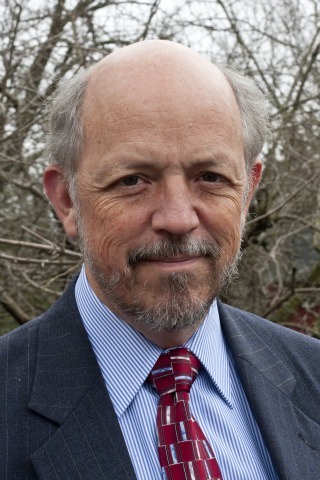
Michael A. King is dean at Eastern Mennonite Seminary, Harrisonburg, Va. This article has roots in presentations and sermons at the Mennonite Church USA Pittsburgh 2011 assembly, at EMS and in Mennonite congregations.


Have a comment on this story? Write to the editors. Include your full name, city and state. Selected comments will be edited for publication in print or online.