


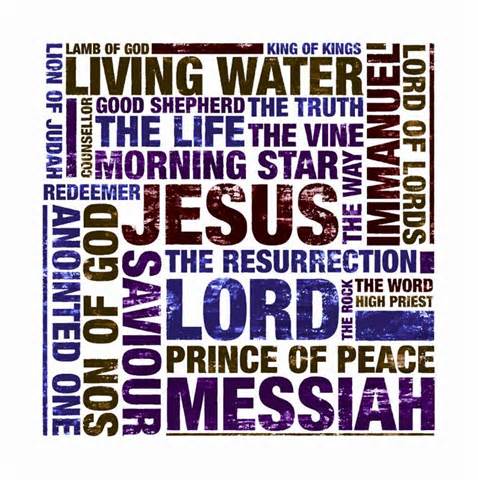
The Confession of Faith in a Mennonite Perspective was developed in 1995, and is the most recent systematic statement of belief for Mennonite Church USA. In its introduction, the writers identify six ways that confessions of faith serve the church, including: providing guidelines for interpretation of Scripture; providing guidance for belief and practice; build a foundation for unity within and among churches; offer outlines for instruction new church members or faith “inquirers”; give an updated interpretation of belief and practice “in the midst of changing times”: and help with discussing Mennonite belief and practice with other Christians or people from other faith traditions.
Over the course of the next several months, we will be releasing “roundtable posts”, featuring three members of Mennonite Church USA congregations reflecting on an article from the Confession of Faith and how it impacts their ministry, congregational life and theology. We’ll move through the articles in numerical order.
Today’s authors are reflecting on Article 2: Jesus Christ. Writers appear in alphabetical order. The views expressed do not necessarily represent the official positions of The Mennonite staff, the board for The Mennonite, Inc., or Mennonite Church USA.
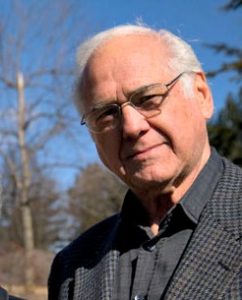 Dr. Myron S. Augsburger is President and Professor emeritus of Eastern Mennonite University in Harrisonburg, Virginia.
Central in our Confession of Faith as Mennonites is the person of Jesus the Christ, the one in whom we meet our Heavenly Father and by whom we are reconciled with the Father.
The opening paragraph of this article introduces an Anabaptist approach of identification with Jesus himself and not a claim of faith in doctrines about Jesus as appeared in the sixteenth century in the churches around them. Anabaptists believed deeply in the meaning of Paul’s words, “If anyone is in Christ that person is a new creation,” born of the Spirit and now a disciple of the living Jesus.
The Confession next refers to Jesus with the Old Testament perspective of prophet/teacher, salvific priest, and ultimate king. Anabaptists accepted the ‘whole’ Jesus, not selecting one or the other of these identities. One can see denominations formed around giving either Prophet, Priest or King the central identifying role for their claim to faith. But for us as Mennonites, we identify with Jesus as our Lord and not simply to a particular function we respect.

The third paragraph speaks of Jesus as the Savior for the world, the one who is creating a new community of faith made up of members who are disciples of Jesus. This discipleship is not a work to gain spiritual grace, but is our identification with the One who, in forgiving love and acceptance, carried the depth of human hostility on the cross. This forgiveness is the prerequisite of peace: reaching out to persons who may be enemies in reconciling grace.
Our emphasis on peace as Mennonites is not something added on to the gospel, but is our understanding of the richness of the gospel.
We share in the worship of Jesus, as the Confession affirms, recognizing him as human and divine. In his humanness he was without sin; one who always did the will of God. As to his divinity Jesus said, “The one who has seen me has seen the Father.” In his humanness, he modeled what it means to do the will of God, making us aware that in contrast we are sinners in need of God’s transforming grace.
We may well see sin as estrangement from which our sins follow, for our first sin is our going away from God and our sins are the selfish things that we then do. It is for us to deal first with our sin, and to be reconciled with God in a faith-response. We can then deal with our sins and live in his freedom as a believer’s privilege. This means that our relation to the Savior is prior to our practice of religious behavior; it is reconciliation that joins us in worship.
In reviewing this article, it brings to the fore the centrality of the Gospel. Being Anabaptist in our perspective, we witness to the reality of being new creatures in Christ and to the privilege of welcoming any and all to share this transforming grace.
 Izaete Nafziger is Pastor of Community Service and Outreach at North Goshen (Indiana) Mennonite Church.
What stands out to you in this article? When I read Article 2, about the Lord Jesus Christ, I thank and celebrate the almighty God that gave us his unique son, Jesus Christ, as the Savior of the world. What stands out to me is the fact that Jesus came into the world to give his life and through him we have eternal life.
How does this article resonate with your understandings and theology? The Messiah, the Promised One, fulfilled God’s plans and redeemed us from our sins. Through his suffering, death, and resurrection, I was invited to be part of God’s Kingdom. I serve and worship a living Lord, the risen Christ who overcame death and gives me hope.
How has this article informed your congregation or ministry? The good news of Jesus is the practical implication for life in the church and in my ministry. The life of Jesus, his death and resurrection, changed my life. I strongly believe that the message of grace, hope, and salvation of the Lord makes a difference in our life. That’s why I embraced God’s call to reach out and to see lives be transformed by Jesus.
Jesus is the reason for my salvation, and it motivates me to serve and worship him with all my heart. My faith is built on Jesus and before him I consecrate my life. God’s word became flesh and dwelled with us. Our risen Savior, Jesus Christ, is the cornerstone that we believe in.
What questions, additions, other thoughts come to mind as you read this? Reflecting Article 2, I think we are losing our faith in Jesus Christ. In fact, I think that we are pretending that we have faith in Christ, but in reality, our faith is in worldly things. Churches are losing their mission to proclaim Jesus’ good news. It seems that our children are growing up without deeply knowing who Jesus is.
Our passion to have Jesus as the center of our lives is dying. The churches have to wake up and teach our children to put their faith in Jesus.
A good example of this is how each summer my local congregation hosts vacation Bible school. Children from our congregation and the local community come to hear and learn more about Jesus. Our hope is that these children grow in their faith and will have Jesus as the cornerstone of their lives.
 Ry O. Siggelkow is Pastor of Proclamation, Witness, and Formation at Faith Mennonite Church in Minneapolis, Minnesota, and teaches theology at the University of St. Thomas in St. Paul, Minnesota. He is a Ph.D. candidate in Theology and Ethics at Princeton (N.J.) Theological Seminary.
Despite how it has sometimes been used, the Confession of Faith is neither a teaching position, nor dogma, nor even a creed. It is intended to provide guidance for belief and practice in Mennonite congregations.[1] When it is used as a tool to regulate belief and practice, the church oversteps the authority and power that belongs to the Word of God alone, who is revealed in Jesus Christ. The second article of the Confession makes this point when it states, “No other foundation can anyone lay than that which is laid, which is Jesus Christ.”
Implied in this article is the bold claim that not every article of faith carries equal weight. Following the earliest Christian confession, “Jesus is Lord,” Article 2 serves as a reminder that the church is permanently called into question by the one living and dynamic Word, Jesus Christ, to whom this article, in fear and trembling, seeks to bear witness.
Reflecting on the significance of this Article for the church today, I am reminded of the Barmen Declaration drafted by the confessing church of Germany in 1934. The Declaration is a statement of prophetic resistance against the co-optation of the church’s witness by other powers, both earthly and churchly. In its confession of the singular lordship of Jesus Christ, the Declaration helps to illuminate the ongoing significance of Article 2 for Mennonite Church USA, for it reminds us that solus christus (Christ alone) remains the center of Christian faith and the polemical hallmark of the Reformation. As Barmen puts it, we reject “the false doctrine that with human arrogance the Church could place the Word and work of the Lord in the service of self-chosen desires, purposes, and plans.”[2] Against all attempts to silence a faithful hearing of the Gospel, we must continue to insist on the evangelical point that Jesus Christ alone, as the singular Word of God, is the sole criterion of Mennonite faith and practice.
This raises the question: “who is Jesus Christ for us today?”[3] The answer to such a question is more complex than merely re-telling the biblical story of Jesus. While Jesus is who he was, he is not enclosed in the distant past. As the Risen One he is living and active to and for us in the present, encountering us in lived social experience as the Crucified One who enters into the human struggle for liberation.
The truth of the Gospel is, as the black theologian James Cone maintains, “the divine happening that invades our contemporary situation, revealing the meaning of the past for the present so that we are made new creatures for the future.”[4] The past, present, and future of Jesus Christ must be held together and must be understood in his encounter as living Lord within the social context of the present. Jesus Christ is who he was and who he will be, the Son and Word of the living God who in his incarnation, crucifixion, and resurrection, identified, identifies, and will identify unreservedly with all those who are excluded, scapegoated, silenced, and damned.[5] The God revealed in Jesus Christ is the God of the oppressed and the God of liberation. For us today, this means that Jesus Christ is not only black, as Cone rightly argues, but queer.[6] Indeed, Jesus Christ is queer because he is black and black because he is queer. That is to say, the blackness of Jesus is inclusive of the queerness of Jesus and the queerness of Jesus is inclusive of his present blackness. To say that Jesus Christ is black and queer is not simply a statement about his skin color or sexuality, but the affirmation that “God has not ever, no not ever, left the oppressed alone in struggle.”[7]
The Barmen Declaration helps to remind us that in our interpretation of Article 2 of the Confession, nothing less than a faithful witness to the Gospel is at stake. Truth and justice must take priority over a false unity predicated on exclusion and oppression. As the womanist theologian M. Shawn Copeland says, “if the risen Christ cannot identify with gay and lesbian people, then the gospel announces no good news and the reign of God presents no real alternative to the ‘reign of sin.’”[8] The recent shootings of Latino LGBTQ people in Orlando and the increased visibility of police shootings of black men, women, and children in our country, expose the failure of any church, including our own, that privileges the maintenance of church unity over the call to live into the truth and justice of the Gospel. The question for us today is this: will we allow the good news of the liberating Gospel of Jesus Christ and the reign of God to take precedence in our communal discernment and in our institutional structures or will we subordinate the Word to the “self-chosen desires, purposes, and plans” of the church?
[1] Confession of Faith in a Mennonite Perspective, 8.
[2] The Barmen Declaration 8.27 (https://www.sacred-texts.com/chr/barmen.htm);
[3] This is the question raised by Dietrich Bonhoeffer in his Letters and Papers from Prison. Bonhoeffer’s response is that Christ is not a possession of the church (or “religion”), but is the present lord of the world in freedom, acting not at the boundaries of embodied human life but at the center. See his letter from April 30, 1944 in Letters and Papers from Prison, Dietrich Bonhoeffer Works, Vol. 8, eds., Christian Gremmels et. al. (Minneapolis: Fortress Press, 2010) 361-367.
[4] See James Cone, “Who is Jesus Christ for Us Today?,” God of the Oppressed (Maryknoll, NY: Orbis Books, 1997) 99.
[5] See James Cone, God of the Oppressed, 99-126.
[6] See Marcella Althaus-Reid, The Queer God (Routledge, 2003).
[7] Cone, God of the Oppressed, 126.
[8] M. Shawn Copeland, Enfleshing Freedom: Body, Race, and Being (Minneapolis, MN: Fortress Press, 2010).


Have a comment on this story? Write to the editors. Include your full name, city and state. Selected comments will be edited for publication in print or online.