


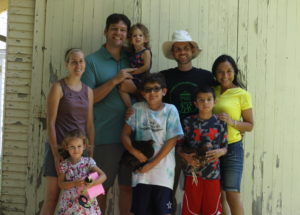
 Brad Roth is pastor of West Zion Mennonite Church, Moundridge, Kansas. He blogs at The Doxology Project.
This article first appeared in the September issue of The Mennonite magazine. For more reflections on food and faith, as well as original recipes, check out the full issue.
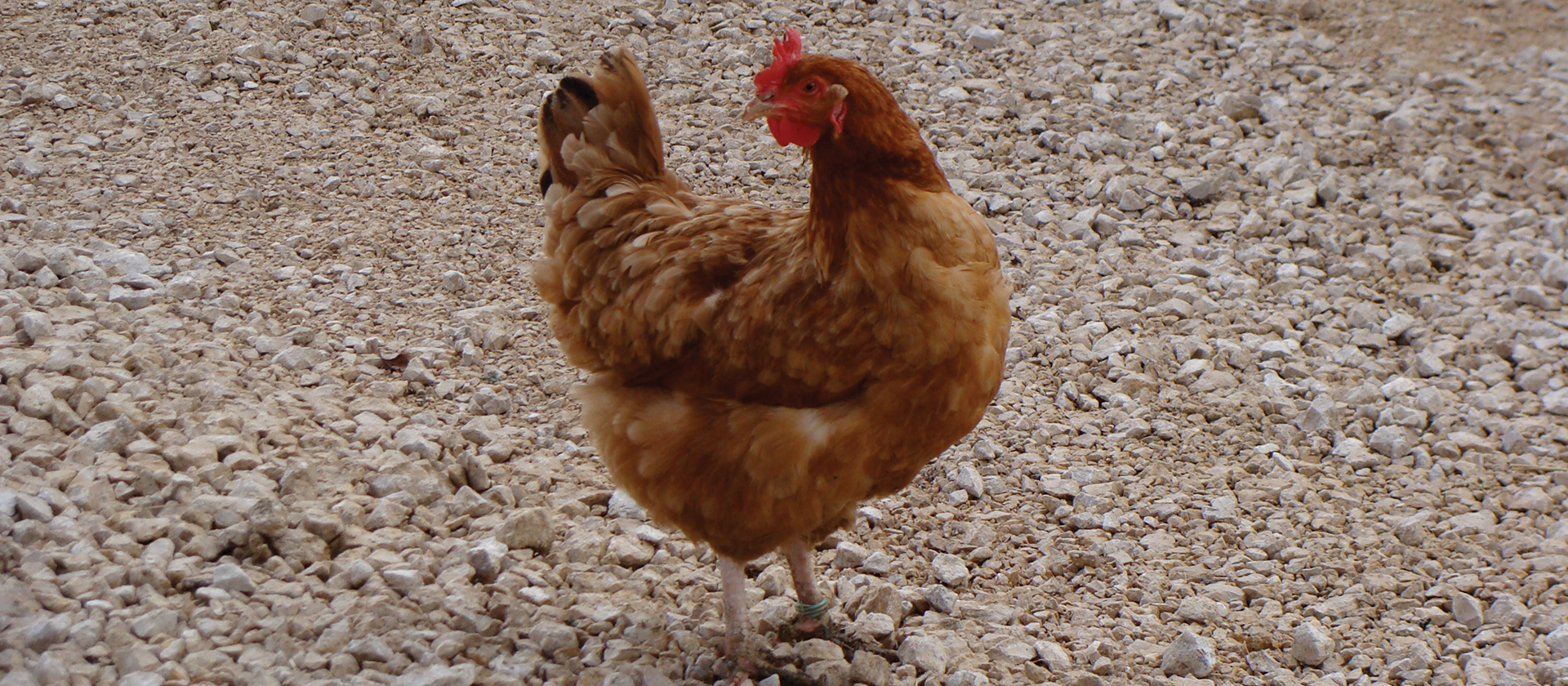
We were a little late into the office due to butchering chickens. We raised 10 meat chickens in our backyard this spring with our friends Derek and Becky King. Our families eat together weekly, and growing together what we eat seemed a natural next step. We fattened the birds on organic feed for some eight weeks. On butchering day, our son Elijah guarded the door of the mobile coop as, one by one, I fished chickens out. We chopped, hung, plucked, gutted and filled our freezer with months’ worth of food.
They were happy chickens. They had the run of the yard, and they took advantage of it. They grazed on the lawn and lolled about in the breeze under the treehouse. When we worked in the garden, our chickens were right beside us, companions raking the earth. We treated those birds right, aspiring to the kind of care that God called Adam to in the Garden (Genesis 3:15)—though we avoided giving them names (2:20). We were conscious that our chickens’ lives would nourish us and give us life.
All too often we aren’t conscious of this reality. I’m struck that as a society we’re frequently disconnected from the death-giving-life that is food. We forget the everyday mystery that something has to die so that we can go on living—even if it’s just a carrot. Chicken is the perfect example of our state of disconnect. It’s become a plastic- wrapped thing, a lumpy fried thing marketed in a little box, a compressed protein thing. In some of these forms, it doesn’t even look like a chicken. We’ve obfuscated its animal origins, using adjectives like “popcorn” or “fries.” You might not know it’s meat at all, that it used to be alive.
But it was alive. It came from an egg. It was fluffy, clumsy and adorable. It ate and breathed and grew. It bled. “Who knows,” writes the teacher in Ecclesiastes (3:21), “whether the human spirit goes upward and the spirit of animals goes downward to the earth?” However we understand this Scripture, at the very least it’s telling us that our human lives are bound to the lives of other creatures.

Up or down, God has spirited us all in some way, human and animal alike. We’re connected.
Perhaps our friends in the rural, developing world live a little nearer to this connection. When we served in the southern Andes of Peru, we shared food with Christian brothers and sisters in rural
congregations. They would bring a cock or a bag of guinea pigs to the church altar as a thank-offering to God. Once, a man brought a sheep, prayed over its head at the door of the church (it refused to go inside), and killed the animal on the spot, its blood soaking the packed earth. The little ram fed the gathered church over two days of worship and teaching. Death begat life, right there. Do you see? It’s a sacred thing, which is why in the Old Testament Law God prescribes proper sacrifice and proper butchering in the same breath (cf. Deuteronomy 12:12ff). The two are connected. Food is a little sacrifice. It’s “sacra-facere”: “made sacred” by offering and blood.
We forget this at our peril. I wonder if our ignorance of the sacrificial nature of food leads us to lose track of the sacrificial nature of life itself. We start to think that life is only growth, merely a chain of lovely consumption. Onward and upward. But real life is sacrificial life, giving ourselves to others and to God in love. This good news can be abused, but I think we lose something vital if we give it up entirely. We bleed for what matters.
Writer Norman Wirzba picks up the theme of sacrifice in his book Food and Faith: A Theology of Eating (Cambridge University Press, 2011). He writes: “Food is a given reality that depends on the sacrifices of others, all grounded in and maintained by the self-offering love of God.”
Our forgetfulness of the sacrificial origin and nature of food is not so much a problem of the food system as a spiritual problem: a disconnect from the self-offering love of God. There are practices that can lead us in a counter direc- tion. Prayer of thanksgiving before meals helps. Breaking bread with Jesus at the Communion table gets us a long way. The simple act of caring for the living things that will nourish us—plants or animals—infuses our food with a sense of preciousness. We don’t all have to butcher our own meat, but raising and butchering chickens is one practice that led our family to more deeply appreciate where our food comes from and what it means.
On butchering day, we paused in the cool of the morning to pray and thank God for those plump chickens that would feed us. We blessed the moment and the place and the birds. It was a butchering beatitude. Then we reached for the chopping block and machete and got to work.
They were very tasty chickens.
Thanks be to God. Amen.
Check out the full issue online to access Lici Roth’s recipe for Peruvian Roast Chicken (Pollo a la brasa).


Have a comment on this story? Write to the editors. Include your full name, city and state. Selected comments will be edited for publication in print or online.