


Opinion: Perspectives from readers
I will build my church, and the gates of Hades will not prevail against it.—Matthew 16:18
 I don’t know about the gates of Hades, but there are forces at work that make it difficult for the church to be the lighthouse God meant it to be when God instituted it.
This is not an easy time to do church. When a national calamity like 9/11 strikes, people flock to church, but when things quiet down, the national tendency is to settle back into our secular routines. Church membership is still fashionable, but commitment is lacking. When something displeases people, they are quick to move to another church or drop out altogether.
Congregational life can be viewed in three broad categories:
Preaching and worship: The preacher is the face of the church, the shepherd of the flock. Good preaching is “rightly dividing the word of truth.” God blesses the ministers who make ministry their life’s calling.
Music: Music is for most an indispensable part of worship. Music nourishes the soul. People have their individual tastes and preferences. They are inclined to be absolute about their music. They like singing off the wall, or they don’t. Many churches now have three hymnals in use and still resort to other sources.
Polity—how the congregation makes decisions. Most congregations spend more time in committee than in prayer. Congregational governance has never been easy, but it is arguably harder now.
In former years, many congregational decisions were delegated to the bishop or some designated leadership group. These served as the shock absorber and reduced the number of controversial issues open for congregational action. Now people want to be involved, and that has its merits. Unfortunately, they find it hard to give the time meaningful involvement requires.
Congregations, even a generation ago, were more homogenous. A congregation made up predominantly of farmers and retired people was more inclined to think along similar lines. Today many congregations consist of a wide variety of professions, each bringing its own culture. I spoke with one pastor who served under four congregational chairs in five years, each with a different culture of leadership.
We appear to be living in a contentious time. What should be constructive collaboration leading to a workable consensus breaks down into quarrels and gridlock, to use the word that characterizes our national government. It is happening at all levels, including the church.
How do churches navigate their way through these choppy waters? I have three suggestions that if not the ultimate solution will at least point us in a good direction.
1. Some need to lighten up and in so doing make room for the Holy Spirit to work in our midst. It is not “my way or the highway.” There are too many issues churches fought and divided over and later came to adopt to be so certain that the positions we now hold are correct and divinely inspired. In far too many situations the church is more reactionary than prophetic. A wise old church leader from an earlier era used to say, “We will need to let that plant get a little bigger before deciding if it is wheat or weeds.”
2. We need to learn how to love and respect people who differ with us. We do not all come to the same conclusions. This was modeled for us by a carload of men on their way to volunteer several days at the new Mennonite Church USA office building. En route they discovered they were on opposite sides of a controversial issue facing their congregation. They did not make a U-turn and go home angry. To the contrary, their relationships were strengthened as they worked together, even though their convictions remained unchanged.
3. Consider thoughtfully who is writing our Mennonite narrative. There is much we can learn from others, and I am not suggesting we return to an isolationist mentality. But I am concerned at how uncritically we drink from other waters. We seem to find validation in inviting big-name speakers, some of whom are talented showmen. We always want to be open to learn from others while also testing the spirits to discern if they are from God. We want to be careful not to neglect or put into second place the unique message God has given us as a Mennonite church.
We do well to keep before us the quote ascribed to Augustine and used extensively by the former General Conference Mennonite Church: “In essentials unity, in nonessentials liberty and in all things charity.”
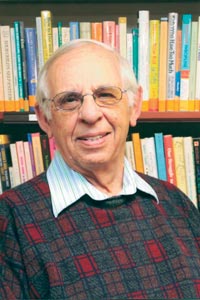
Edgar Stoesz is a member of Akron (Pa.) Mennonite Church.


Have a comment on this story? Write to the editors. Include your full name, city and state. Selected comments will be edited for publication in print or online.