


Opinion: Perspectives from readers
Dozens of miles of hard dirt road, which in dry times billowed clouds of dust but after a rainstorm became vehicle-clutching-mud, isolated me from universal reality. Or so I thought. As the only nonindigenous health-care provider in an indigenous village in the Paraguayan Chaco, I wondered how could I hope to understand or connect with the Enxet. Then I got to know Eulogio, a quiet, unassuming Enxet father.
 Despite all odds, he had survived tubercular meningitis and become a capable laboratory assistant. Because he had completed second grade in a Spanish language school, he was an excellent cultural broker. As I looked for a way to deal redemptively with a young man who consulted for what was most certainly a sexually transmitted disease (STD) but who emphatically denied the possibility, I was lost. How could I convince him that he had a problem? The bridge between our worlds was too long and had too few lights. I asked Eulogio to help me.
Today, many of us find ourselves with an STD that threatens to destroy us and our families. I refer to pornography. A CNN columnist wondered if it is “driving men crazy.” Few of us are willing to recognize the depth of entrapment we experience with this STD. Perhaps Eulogio’s words to me can help us.
“First of all,” he said, “you must leave the clinic; the clinic has ears. Then you must walk along the path with the person you want to help.
(The path is narrow and does not allow people to walk side by side or make eye contact; it provides privacy). As you walk along the path, you will talk about a lot of things, and then in the course of the conversation you might say, ‘You know, when I was younger, this and that happened to me, did anything like that ever happen to you?’ ”
Without a doubt, all of us who have become entrapped by pornography are terrified of being discovered. We don’t want anyone else’s ears or eyes to know what we are experiencing. So we take the necessary precautions to be safe and, more importantly, steadfastly avoid self-disclosure. Even though the path is narrow, and privacy is assured, most of us do not feel safe enough to become involved in a mutual support group like SAA (sex addicts anonymous), or we effectively deny, at least to ourselves, that we have an issue with porn.
What would happen if we, within our faith communities, could provide that safety though groups that function like AA (Alcoholics Anonymous)? What would happen if we could cease to deny that pornography has invaded our lives and is “driving us crazy”? How would we change in other ways? Can we be bold enough to stop waiting for someone to do something and do something ourselves?
I have a dream that as we open the doors to safety and mutual support, we will become more authentically alive. We will grow and value each other even more, rather than less. In my dream, we will cease to be ashamed to say with joy, “I am on day 93, or day 2, or week 35 of abstinence.” Each of us must define what sobriety means. A group could help us define that standard, but we must come to terms with most undertreated and powerful of STDs in our era.
You know, when I was younger, as in last week, this and that happened to me. Has anything like that ever happened to you?
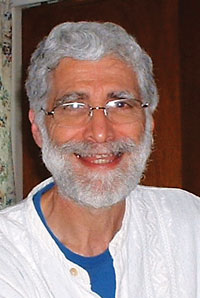
Jonathan Beachy is a member of San Antonio (Texas) Mennonite Church.


Have a comment on this story? Write to the editors. Include your full name, city and state. Selected comments will be edited for publication in print or online.