


Real Families: Meditations on family life
Death makes me angry. Not scared, so much as thoroughly ripped off. The way it cuts down young people in their prime, like Bob Wenger on a cycle, or Matt Garber just after graduation. And Jim Williams and Marj Heinrichs in car wrecks. Chet Wenger with a rare leukemia, and Davor Peterlin with an unsuspected heart attack; 200,000 in the Balkan wars of two decades ago.
 More recently, thousands in the overwhelming Japanese tsunami, and now hundreds in horrific tornadoes. After many disasters and tragedies and scourges and plagues throughout the decades of my brief life, I’m still caught off-guard by how abrupt the ending can be.
Every life is brief; we are all terminal. The little, would-be terror in my daughter’s classroom is right: “We’re all gonna die.” (He’ll be on a talk show some day.) Every life is precious, and every life is fragile. Each could potentially be the next Einstein or Beethoven or Mother Theresa.
What do we do with all this talent, this potential, this capacity for life? Far too much of it is wasted. We squander our time and energies on things that pad our security. We distract ourselves with diversions that are mostly self-centered. We obsess about stuff that keeps us from acknowledging the precariousness of our existence on this tiny planet and the sheer gift it is.
Visiting many congregations these days, I’m struck with how the Baby Boomers are telling stories of dealing with aging parents. That’s the generational story in our churches. Prayer requests, disrupted schedules, need for support and assistance; the bulletin notes document the far-flung dramas of our lives.
Strangely enough, I find more comfort in funerals as time winds on. How to deal with death? Real families keep coming together for the rituals and rites of final passage, the shared comforts of mourning, the fellowship of memories and stories that retrieve the essence of what Grandma was about. And the best stories locate these people, these families in their communities, extending the sense of belonging across the generations.
They show how families survive through the terrors and plagues, the depressions and the failures. The stories cut through the husks and eggshells of our fumbling attempts to create meaning. They get to the heart of what it means to be human—relationships that endure, against the odds.
So it’s my resolve to beat back the dull monotonies of a boring existence. I am drawn to seek out significant life even at the margins of safe and predictable stories. If life is too short anyway, why take so many precautions? Why pad our existence with countless protections? I certainly hope to be prudent where we have to, in ways that sustain the goodness of life. But I don’t intend to hide timidly behind warnings or run quickly for cover. I am energized by taking the risk and drawn toward a life lived boldly.
Life with meaning is not found hiding in a corner, waiting for the world to happen. We don’t deal best with death by building a cult around it. Rather, we turn death into a punctuation mark at the close of a life that made it worthwhile, worthy of our status as creatures who bear the imprint of a Creator with high hopes for us.
I’ve been more angry than scared about death for a long time now. I don’t expect to die gradually. Perhaps I will go out in a flash, protesting against some agony or injustice in the way this weary world is unfolding, probably raging against the violations of God’s intentions for our well-being. I once thought I was coming close, during a peace-seeking mission in the Balkans. On a tiny country road in Hungary, up a hill and trying to pass a slow truck in a compact rental car, with another huge truck barreling straight toward me, I had visions of the end that did not require much imagination at all. With centimeters to spare, I shook so badly I had to stop in the next small town.
We are all in the process of being delivered from death into life, from lonely isolation into the community of God’s coming kingdom. Our family stories are the prelude to the wedding feast that inaugurates the reign of the Lamb of God. The death we are trained to fear is little more than a marker for the transition that releases us into what the Bible and the old hymns call glory. It is a commentary on our lives that we spend so much time in paths small and sordid that we have little or no comprehension left to wrap around the concept of glory. But glory is a life well lived now, and glory is forever.
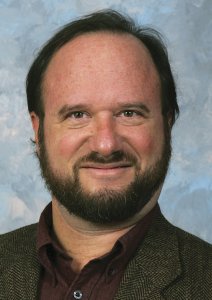
Gerald Shenk recently resumed bicycling in the wide open spaces of Indiana.


Have a comment on this story? Write to the editors. Include your full name, city and state. Selected comments will be edited for publication in print or online.