


Opinions: Perspectives from readers
Debra Sapp-Yarwood (“Thoughts on Abortion,” June 2, 2009) wants us to be “uncomfortable” with the question of abortion, wherever one might stand on the issue. Her arguments do leave me uncomfortable, for several reasons.
F irst, Sapp-Yarwood shifts the terms of the debate from “pro-life” vs. “pro-choice” to “conceptionist” vs. “nonconceptionist.” She is surely correct to say that the language of “pro-life” and “pro-choice” fails to represent fairly and fully the real debate. Nonetheless, this change of terms not only obscures the core issue but also draws an irrelevant distinction. Reframing the issue in this way distracts from the key question—whether an abortion, whatever the circumstance of conception or whatever the stage of pregnancy or whatever the condition of the fetus, is the killing of a human life or not.
Taking the “nonconceptionist” position, she makes the following claim: “For me, early abortions are not deaths.” No? That could be true only if, prior to an abortion, there were no life in the womb. In fact, however, there cannot have been an abortion unless there had been life in the womb: no life, no abortion. Personal belief about when life begins, whether at conception or at some later time, is irrelevant. Whenever an abortion is performed, what is aborted is a human life according to biological criteria—a living organism that is genetically human, the same as both its parents. Every “successful” abortion ends a human life. To claim that “early abortions are not deaths” is to deny the objective facts of biological science.
Second, when comparing beginning-of-life issues with end-of-life issues, Sapp-Yarwood slides over the distinction between taking life and letting die. An abortion is the intentional destruction of a human life; it is, properly speaking, a killing: One deliberately and directly causes death. To remove a terminally ill person from a life-support system, with the result that nature takes its course and death ensues, is not killing: death is caused by the illness, as it would have been had the life-support system not been used in the first place, without any intention or action to cause death. This distinction makes a moral difference: Taking life is always forbidden; letting die is sometimes permissible.
Moreover, she employs a weak analogy when describing abortion as “the option to withdraw life support before birth.” Abortion is thus compared to the removal of a mechanical life-support system. This analogy not only ignores the fact that a “successful” abortive procedure does not simply remove the fetus from the womb but actively kills it, it also compares a pregnant woman to a life-support machine. When I consider my wife, pregnant with our first child, the relationship between mother and child is not like that between machine and patient. A pregnant woman does not mechanically “support” a “patient” by means of an umbilical cord but nurtures and protects, cares for and hopes for the life in her womb. An abortion severs a vital, intimate, interhuman relationship.
Third, Sapp-Yarwood considers the “hard cases”—a woman whose child is at risk of being born with serious disabilities, a woman who has been raped or a woman in “socially complex circumstances.” In the first case, the child “would by necessity be classified as ‘special needs’ in the adoption pool.” In the second, it would be “ungodly cruel to impose mandatory pregnancy on a woman who has already endured a man raping her.” In the third, abortion is “justifiable.” In such cases, she is “untroubled” by abortion.
While she refers frequently to the politics and law of abortion, the church is absent from her consideration of options. Can a faith community not embrace and adopt a “special needs” child as one of its own? Has the faith community nothing better to offer a victim of violence than further violence to release her from the burden imposed upon her? Is the faith community not capable of providing the compassionate help in difficult circumstances that politics and law cannot offer?
Sapp-Yarwood appropriately reminds us that real life presents complex situations having uncertain outcomes. Complexity and uncertainty, however, need not force a choice between clarity and consistency in our convictions and compassion in our actions. Within the faith community, guided and sustained by the Holy Spirit, we may choose compassion in a way that is logically clear and ethically consistent.
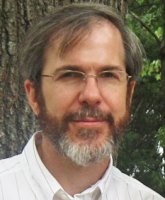
Darrin W. Snyder Belousek serves with Mennonite Mission Network as co-leader (with Paula, his wife) of the Service Adventure unit in Raleigh, N.C.


Have a comment on this story? Write to the editors. Include your full name, city and state. Selected comments will be edited for publication in print or online.