


Real Families: Meditations on family life
We have just been through a festive time of year, with all manner of family get-togethers. Reunions that used to involve lots of rambunctious children are aging. The original parents, now grandparents or great-grandparents, continue to hold the family lore, retelling beloved stories, reciting nostalgic poems and recounting the accomplishments of their scattered family, while young adults and new parents establish their own freshly minted holiday traditions and more intimate gatherings.
The subtext of the extended family reunions is the tension between the shared history that holds us together and our now disparate lives that stretch us apart. From rural beginnings on a farm to life in big cities and far countries, the stretching threatens to tear the fabric itself.
Around the edges of the reunion, one hears snatches of stories about how a cousin who’s divorced and now remarried is birthing a second family on another continent, how a brother-in-law of a sister succumbed to depression and promiscuity, how a mother returned from service on another continent crushed in spirit, how a grandmother who still wears a covering embraced her unchurched daughter-in-law, how a grandson is living with his girlfriend and how another grandson has become incredibly rich and famous. There are many secrets and much that is left unsaid.
What astounds me most, however, is what holds us together. True, there are the memories of the way we were, and those are powerful. But even more powerful is the humble grace of the aging ones—the elders, whether single or married, who model sturdy love and faithfulness no matter what. Those of us who tend to wander into distant lands are drawn home again and again by the gravitational pull of their love.
In this new year, Gerald and I will celebrate our 35th anniversary. In years to come, despite all our fumbles and foibles, I hope our love and faithfulness no matter what will be the center of gravity that draws our scattered family home.
I well remember that early in our relationship I had misgivings about the work, time and commitment necessary to nurture a long-term relationship. I wrote in my journal, “My independence is precious to me. This becomes more and more obvious when I sense that it may be decreasing or that it may be taken away from me. The prospects [of marriage] are exciting, but I don’t want it to make me more incapable of managing alone.”
In large measure, it was Gerald’s fair play that eased my fears. An excerpt from one of his voluminous letters during a semester I spent in Europe: “Sara, when I try to understand my feelings about you, I realize I feel fiercely gentle; lovingly protective yet wanting to see you struggle for yourself; wanting you to be loyal and committed to me yet wanting you to be strong and independent; wanting you to be able to be submissive yet wanting you to be free, a whole person in your own right; wishing so much to be with you yet wanting to be able to stand apart.”
On another occasion he pictured our partnership within an orchestra: “In some of the orchestra’s themes we will only have bit parts, in others we may have duets; eventually you will have an important solo in a major work and I will be right there to support and uphold. In another I may have a solo, and yet I will know you are with me. We can make music!”
On a beautiful sunlit morning in early July we sealed our marriage covenant before friends and families gathered under a huge elm in my parent’s backyard. I told Gerald: “When this all began between us I wasn’t very hopeful. With singlemindedness I was preparing to go it alone. Your warmth and willingness to give of yourself melted my tower of resistance.”
Someone described it this way: What is more foolish or profound than marriage? Two people promise to share life together—physical, economic and spiritual. And that promise is made in the face of certain change, upheaval and death. It isn’t surprising that so many of us buckle under the strain.
Mark Twain observed that no couple could begin to know the bliss of being married short of 25 years together. I think he was right. Bliss comes of much shared joy along with weathering storms, disappointments and deaths—while learning to make music with more and more complex harmonies. And when marriages fail, some of us become even more attuned musicians. It is the music of sturdy love and faithfulness no matter what that is the center of attraction in reunions that makes us glad to stay connected—reunions where coming home is a celebration of God’s good gift of family.
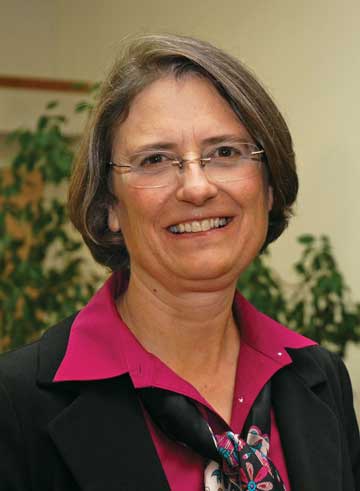
Sara Wenger Shenk is an author and serves as associate dean and associate professor of Christian practices at Eastern Mennonite Seminary, Harrisonburg, Va.


Have a comment on this story? Write to the editors. Include your full name, city and state. Selected comments will be edited for publication in print or online.