


Ron Adams (November 2014) tells us that “staying together will require a lot of accommodation and compromise.”
However, it seems the only ones being asked to compromise are conservatives, as progressive congregations and conferences forge ahead “welcoming” and “affirming” and even licensing for pastoral ministry gay and lesbian individuals in covenanted relationships.
Would not a more balanced compromise be welcoming and loving every sinner, no matter how great or small the sin, as did Christ with the woman caught in adultery, but then challenging them, as Christ did, to “go and sin no more”?
Rather than arguing that welcoming requires affirming behavior that is at odds with both Old and New Testament teaching, we should emulate the response of the early church to active members of the military, welcoming and discipling them but disallowing them from membership and leadership positions until their lives came into conformity with Scriptural teaching.
Rather than succumbing to the exegetical and theological gymnastics required to “prove” that the Scriptures support a practice that is consistently condemned in both the Old and New Testaments, we should follow the example of the Berean Church in Acts 17. It listened respectfully to the Apostle Paul but then searched the Scriptures to determine whether Paul’s message was consistent with its teaching.
Anabaptists Conrad Grebel, Felix Manz and George Blaurock challenged Ulrich Zwingli in Zurich when his teaching and actions fell short of the first-century church and scriptural standards.
Today, should we not similarly challenge pastors, conference leaders, seminary professors and college administrators who support practices that deviate from both denominational and Scriptural teaching?
We are inclined to seek out voices that tell us what we want to hear rather than those that speak what the Lord wants us to hear.
John 1 tells us that Jesus “came from the Father, full of grace and truth.”
To extend “grace” without “truth” is to offer a false gospel. To extend “grace” out of a sense of powerlessness or to simply accept the status quo without acknowledging the power of the Spirit to assist us in dealing with our own “thorns in the flesh” is to shortchange the Spirit.
For those who argue that science necessitates a change in the church’s approach to this issue, a thorough review of the literature reveals at most a partial genetic contribution to homosexual orientation.
Would we similarly use the science that supports a biological basis for alcoholism to argue in favor of “affirming” alcoholics?
Science is simply not equipped to determine issues of morality.
Furthermore, my experiences in academic medicine and the molecular biology lab have taught me that science is a wonderful and useful tool but also human and fallible. The dogma taught to me 35 years ago in medical school has in some cases turned 180 degrees. Practices once considered wrong are now the standard, and vice versa.
As the church struggles with the issue of same-sex relationships, Mennonite Church USA would do well to avoid the hubris that leads us to believe our generation is wiser than 3,500 years of scriptural witness and Judeo-Christian practice.
Paul’s counsel in Romans 12, “Do not conform any longer to the pattern of this world but be transformed by the renewing of your mind” (NIV), is needed as much by the church today as it was nearly 2,000 years ago. We also need to listen more consistently to our brothers and sisters in the two-thirds world.
Progressives applaud these brothers and sisters when they condemn our North American materialism but turn a deaf ear when they speak to issues of sexual morality.
Furthermore, we should also listen to those such as Wesley Hill, a celibate gay man who is assistant professor of New Testament at Trinity School for Ministry (Christianity Today, September 2014), and who has struggled with his own sexual orientation yet seeks to live his life in a way that remains true to scriptural teaching.
In Acts 5, Gamaliel counseled the Sanhedrin to give the new Christian sect time.
If it was of God, it would flourish and they would not be able to stop it.
If it was not of God, it would die out.
He could give the same counsel to Mennonite Church USA members today who seek compromise over clear scriptural teaching.
Mennonite Church USA may gain a few new members by choosing a more politically correct approach to non-celibate homosexuals but is already losing far more members and congregations—and possibly conferences—due to this compromise between cultural and scriptural standards.
At the same time, more conservative Anabaptist groups in North America and the two-thirds world are growing.
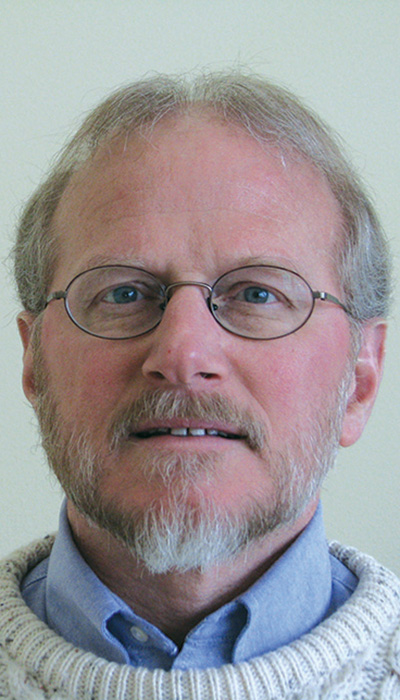
Don R. Martin is a member of Weavers Mennonite Church in Harrisonburg, Va. This originally ran as an Opinion column in the May issue.


Have a comment on this story? Write to the editors. Include your full name, city and state. Selected comments will be edited for publication in print or online.