


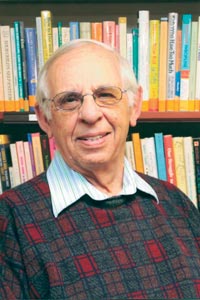
Edgar Stoesz is a member of Akron (Pa.) Mennonite Church. H e is now retired after a career with Mennonite Central Committee and Habitat for Humanity and the author of the book, Doing Good Better: How to be an effective board member of a nonprofit organization.
What would we do without committees? Many congregations spend more time in committee than in prayer!
Most churches have a Congregational Council, a Trustee Committee, a Gift Discernment Committee, a Hospitality Committee, a Library Committee, a Sunday School Committee, a Missions Committee and the list goes on and on. The church of which I am a member has 20 standing committees.
Not only are committees an important part of doing congregational work, through committees the functions of the congregation are distributed across the membership and that contributes to congregational health and vitality.
And yet, for all the good they do, it must be admitted that committee work often leaves much to be desired. Stated bluntly, meeting time can be a waste of time, or worse. Paul writes to the Corinthians, “…for your meetings do more harm than good.” (Look it up – I Cor 11:17)
This article is a modest attempt to look at how committees, and consequently how congregations, could be more effective.
Committees, particularly standing committees, get into bad habits. Meetings take place in an informal, relaxed atmosphere. Some of what is said borders on socialization. Members say what comes to their mind whether it is on topic or not. Or they may just repeat what has already been said. The chair person should take the lead in keeping the meeting focused, but members too must learn how to practice good meeting discipline.
This is not to suggest that we impose strict parliamentary procedures. In a congregational setting the familiar Roberts Rules of Order make me feel like David facing Goliath with borrowed armor. But order there must be, and it is the responsibility of the chairperson and each participant.
There are times when it is best to table an issue and allow some time for Spirit-led reflection.
A second limitation is placing issues on the agenda prematurely. Few committees are capable of walking a raw issue to a wise conclusion within the space of one sitting. It is not enough to describe something that needs action and conclude by asking, “What should we do?” Complex issues need to be pre-cooked. The issue under discussion should be carefully analyzed by the person bringing it, concluding with a recommendation, or at least suggested options or next steps. This procedure shortens meetings and results in better decisions.
A third common congregational meeting limitation is the reluctance to disagree with each other in love. The result is that our meetings often operate on a superficial level. Fearing bad feelings, we acquiesce and then talk later.
Good decisions don’t drop from heaven neatly typed. They are possible only when committees are willing to forego the easy compromise and risk disagreement. The committee table is the anvil on which wise decisions are hammered out. Peace-loving Mennonites must learn better how to disagree without being disagreeable. An independent minded person seeking for a better way should not be dismissed as a “troublemaker!” Instead let’s call it vigorous collaborative discernment in a Christian spirit.
As you continue to use committees to process God’s work, bear in mind that how well the congregation functions is in direct proportion to how effectively it’s committees function.
This “Opinions” section of our website provides a forum for the voices within Mennonite Church USA and related Anabaptist-Mennonite voices. The views expressed do not necessarily represent the official positions of The Mennonite, the board for The Mennonite, Inc., or Mennonite Church USA.


Have a comment on this story? Write to the editors. Include your full name, city and state. Selected comments will be edited for publication in print or online.