


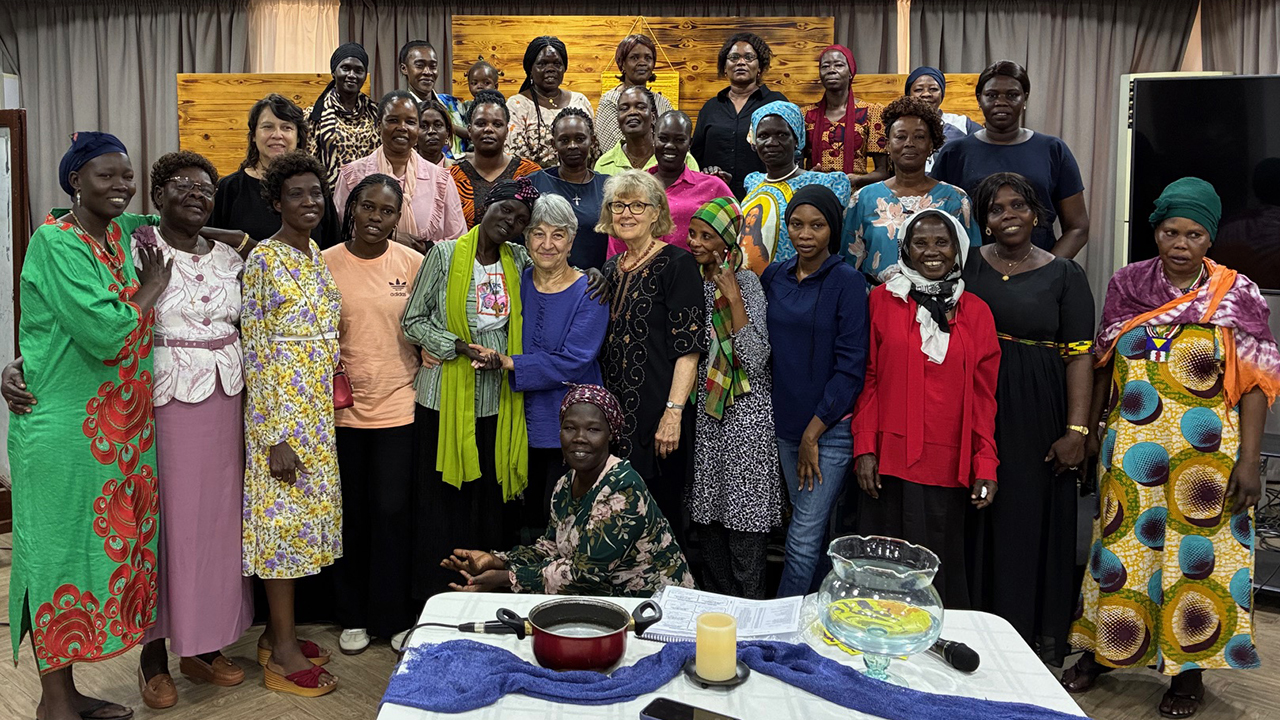
After teaching Sister Care seminars in Cairo, Egypt, in September, we — Carolyn Heggen and Rhoda Keener — concluded a 15-year partnership of sharing Sister Care 81 times in 23 countries.
The seminars in Egypt were the first for Sister Care in that country. Mennonite Central Committee representatives John Lapp and Sandra Shenk Lapp coordinated one, followed by another for refugee women and one for male pastors of refugee churches hosted by Lori Lawson, president of Petrescue Bible Institute, which provides biblical training and language skills for refugees.
When the Egyptian Christian women in the first seminar described problems of women in their churches and communities, they highlighted how shame has been reinforced through Muslim cultural practices and Christian teachings.
Women’s morality is judged by how they are dressed. If she is a victim of domestic violence, she is blamed. If the children misbehave, it is her fault. If a man is unfaithful, the wife is responsible.
As pastors’ wives and women helping with ministry in the church, the participants expressed appreciation for the Sister Care workshop and the new tools they have now for their ministry in their churches and communities
Egypt, a country of 108 million people, has a population of approximately 1 million UNHCR-registered refugees and possibly as many as 8 million unregistered people. These include refugees from Sudan, South Sudan, other African countries and Syria. Most of the refugees live in Cairo, a city of 22.6 million.

While Egypt has a relatively open border, there is no path to citizenship for refugees, only minimal medical services and limited public education for refugee children. Egyptian churches provide significant support for refugees; several MCC projects in Egypt are partnerships with church organizations serving refugee needs.
We were touched by the depth of fear and challenges faced by the refugees we taught. They described the difficulty of coming to a new country with a new language, locating a place to live and finding a source of income. Women are particularly vulnerable to landlord rent abuse, verbal insults and assault on the streets.
Other fears we often heard were that children would be kidnapped while their mothers are working. They fear their children will be sexually abused or trafficked and their organs removed and used for medical transplants for wealthy recipients. For the same reason, women avoid going to the hospital for necessary operations.
Workshop participants shared many painful stories. (Names of women in this article are withheld because they are refugees.)
A woman from South Sudan shared the trauma of relocation. She had a position in a government office when intertribal war broke out in 2013. After fleeing to a UN camp, she was able to sell her belongings and buy a plane ticket to Cairo for herself and her children. During this time of displacement, she learned that her husband had a second wife and family. He did not accompany her to Cairo. She is trilingual and able to earn a small income teaching refugee children.
She said: “I miss my land, my dignity, my honor. Sister Care woke me up and showed me a new way of sharing Jesus in practical ways.” Hearing her poignant story helped us understand how difficult it is to live as a single, displaced woman.
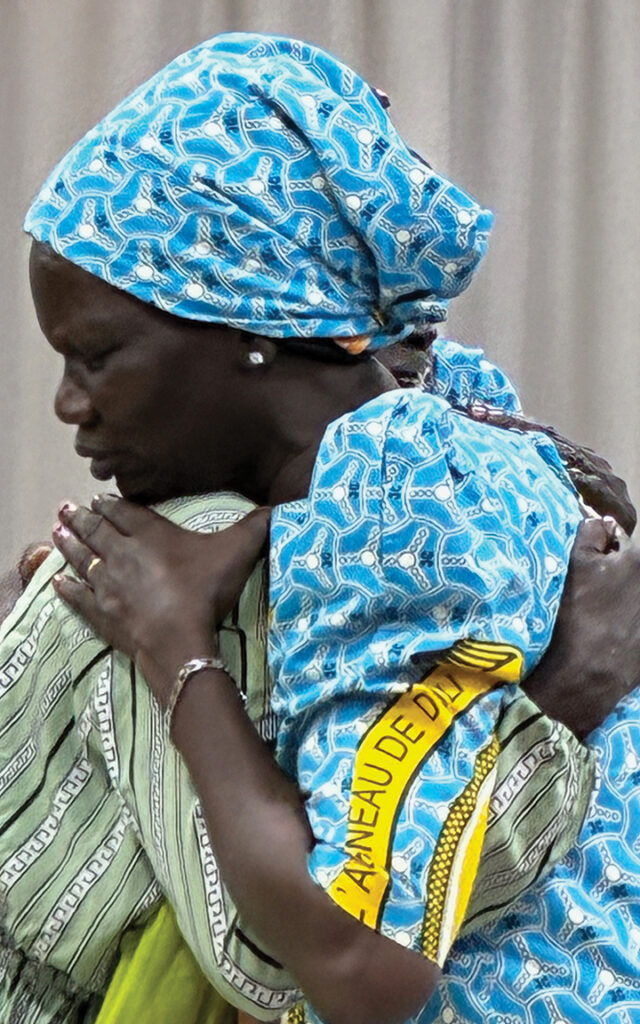
Another participant left South Sudan following the total destruction of her city, Malakal, in 2012. She described the horrors of the invasion by another tribe.
“Everything in my village was destroyed,” she said. “They burned our homes and took the land. They killed people and left the bodies on the street. My two brothers were killed. I was shot in the side, but it did not kill me. The hand of God was on me. Now, I am a pastor’s wife at a Cairo church for refugees. God gave me a ministry for women. Many are suffering so much they want to kill themselves. I learned in Sister Care how to be ‘God with skin’ for them.”
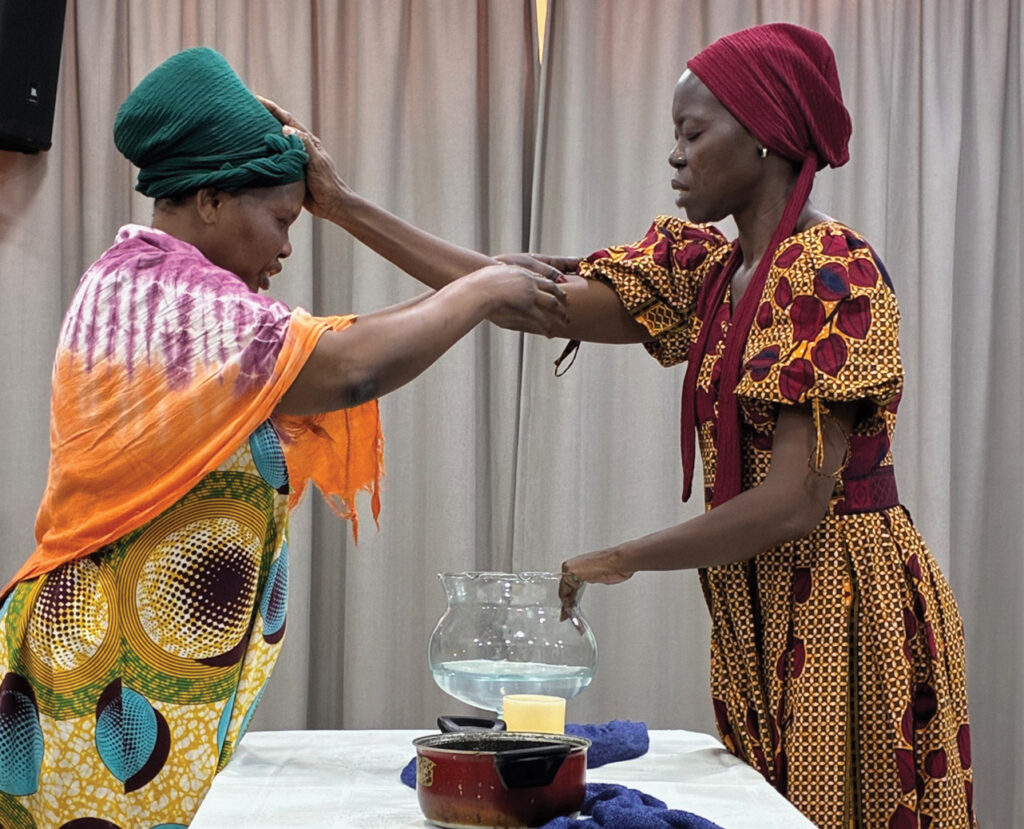
Each Sister Care ends with a ritual that gives women permission to remember and feel their loss and grief in a safe place. Women first anoint themselves with water representing their tears and the tears of those they love. Then they anoint another participant with water representing Jesus’ healing living water.
As the refugee women acknowledged the pain of their lives, we saw an outpouring of grief and tears greater than any we had witnessed before in our Sister Care ministry. Having heard their stories and the stories of many other memorable women during this 15-year journey, our lives will never be the same.
Many people ask us who will continue the Sister Care teaching now that we are retiring. We answer: “The women leaders we’ve taught around the world! Many have already done so.” As we taught the seminars in Egypt, we heard their enthusiastic commitment to share this healing ministry with others.
To read the ongoing story of Sister Care International, contact Mennonite Mission Network and request the upcoming Missio Dei booklet about this ministry: mennonitemission.net/resources/publications/missio-dei. The Egyptian seminars were funded by United Service Foundation and individual donors.
Rhoda Keener retired in early October after 25 years with Mennonite Women USA, first as executive director, then co-director and, for the past 12 years, as Sister Care director. Carolyn Heggen is a psychotherapist specializing in trauma healing.


Have a comment on this story? Write to the editors. Include your full name, city and state. Selected comments will be edited for publication in print or online.