


Opinion: Perspectives from readers
Fifty years ago, my youngest brother, David, was born with Down syndrome. That was in the late 1950s, a time when there was not a lot of knowledge and understanding about disabilities in the schools, the church or in society at large.
 When it was time for child dedication, my mother was told that David could not be dedicated because the Scriptures say we should not bring a blemished lamb to the altar.
Dedication Sunday came, and all the other children went to the front of the church with their parents. As Mother sat in the back row, holding David and watching this service, tears from her eyes fell on David’s face. At that moment he looked up at his mother and gave her a great big smile.
His smile was like a message from God: ‘It’s OK. I welcome David to the altar of my heart, just as you welcome him in your heart. Though others, sometimes even the church, do not understand my unconditional love, your mother’s heart does.”
Mom relived and shared about that day at intervals in her life—and even nearly 50 years later, every time she told this story, she wept.
Pastor John Murray, as he spoke to our family at Mother’s funeral, gave us a gift. He shared a new way of thinking about that event as he said: “I suppose there are many stories that could be told in relation to this point. But the one I share has touched me deeply. Clara dedicated her youngest child to the Lord in the most profound way that any mother can dedicate her child. She dedicated her child with her own tears. She could see the meaning and purpose of the special gift of David’s life, even though there were others that were blind to that reality.”
That day we experienced through the words John spoke and how he spoke them the church as a place of healing and reconciliation. We felt what the church is meant to portray—God’s unconditional love, hospitality and grace.
When my sister, Bonnie Sowers, and I shared this story at the homecoming-dedication service of Hesston (Kan.) Mennonite Church, one could hear a gasp go through the audience.
We responded: “As we look back at the David incident we may experience some shame and think, How could the church, the school and the culture of that day allow such a thing to happen? The fact that we wonder is a sign of progress. God continues to work in us, using our mistakes and imperfections to help us and our institutions practice a love that has more ‘knowledge and depth of insight’ (Philippians 1:9).”
Today I wonder how many other parents are sitting in their church pews with tears in their eyes and hearts because their children are not allowed full participation in the church. I wonder how many people have been scarred and hurt because we have not taken time to really listen to their stories and understand how God is working in their lives. Fifty years from now I wonder what our children and grandchildren will gasp about and say, “How could they do such a thing?”
The older I get, the more aware I become of my own blemishes, both the things we name as sins and those we don’t—such as keeping quiet when I sense in my heart that people are being treated unjustly. I ask for forgiveness and am thankful that my God welcomes me to the altar with all my blemishes
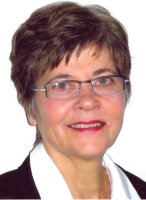
Marilyn Miller is a member of Boulder (Colo.) Mennonite Church.


Have a comment on this story? Write to the editors. Include your full name, city and state. Selected comments will be edited for publication in print or online.