


We were moving to smaller quarters in Hillsboro, Kan., and needed to downsize, including downsizing our library.
Books collected over years that documented my intellectual and spiritual pilgrimage and their authors who were my friends and mentors and in some cases my tormentors needed to go. Lovingly I held each book and tried to remember its impact on my life and why I kept it before it was sent to a second hand bookstore or library or the trash.
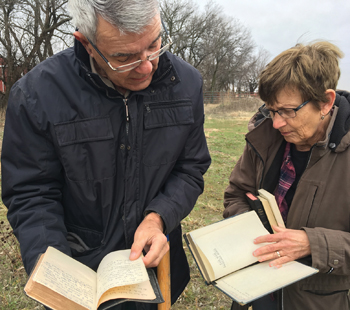
And then there were the Bibles that filled one whole shelf that were outdated or literally falling apart.
There were Bibles that we inherited from our parents and Bibles that we had received as children. There were Bibles that we read to our children and Bibles that we used in college and seminary. Bibles that had inspired us, challenged us, disturbed us and bemused us. Bibles that inspired sermons and Bibles that had been marked up but also neglected and ignored.
What should we do with these Bibles?
Online resources said they should be burned or buried. Making a big enough fire to burn multiple thick books was impractical. So we opted to bury them.

On a cold day in November we dug a hole in the corral and deposited the Bibles with gratitude and some remorse and some anticipation for when we will join them. From dust to dust and ashes to ashes.
More about this tradition of burning or burying sacred literature is at collegevilleinstitute.org/bearings/blessed-and-burned.
Keith Harder is a retired pastor and denominational minister with Mennonite Church USA and the General Conference Mennonite Church. His wife Judy Harder is a retired professor at Tabor College. This post originally appeared on overandaroundtherainbow.com, the blog of their daughter, Ruth Harder, pastor of Rainbow Mennonite Church in Kansas City, Kan.


Have a comment on this story? Write to the editors. Include your full name, city and state. Selected comments will be edited for publication in print or online.