


When my church replaced its dated, green upholstered pews with chairs, the congregation threw an uproar. “Do you know how expensive new chairs are?” my mom asked.
The controversy soon blew over.
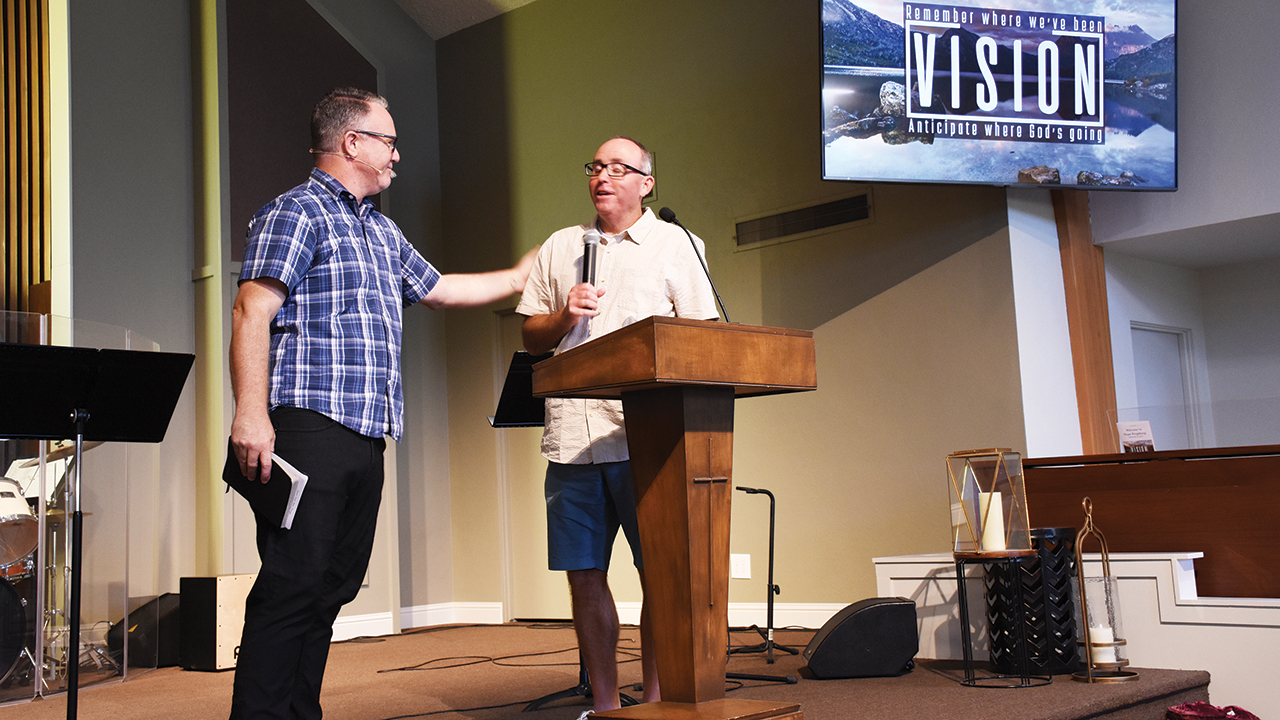
But then our pastor began rearranging the chairs: first a semicircle, then in rows. There were disagreements about how many rows there should be.
Those squabbles seem petty now. Our sanctuary is being redone, the windows plastered over, the organ given away, even some of our brand-new built-in cabinets trashed to make room for a revamped church.
My mom told me all this on the phone as I sat at my dorm room desk.
“Wait,” I said. “They’re taking out the windows?”

“They hate natural light, apparently,” she said. “It probably makes it hard to light the stage the way they want to.”
A few days later, she texted me asking if I’d ever want the stained-glass windows my great-grandma designed.
My congregation is going through big changes. It’s not a new story; a lot of churches have.
But when it’s your church, the process is heavy and wounding.
What’s happened has sparked sadness and anger, but also excitement and hope. We’re learning to accept change, fear it less and even rejoice within our grief, because change is necessary to bring new life to Christ’s body.
In a few words, the story is this: After 60-odd years of being a church, Hope Kingsburg Mennonite Brethren Church in Kingsburg, Calif., is becoming a campus of Neighborhood Church in Visalia, Calif., about 30 miles away.
Neighborhood is Mennonite Brethren, just like us, but it looks very different. The congregation is large enough to fill three services. They run a coffee shop and counseling ministries, and they’re building a community center to fight poverty.
Conversely, Hope’s attendance had dropped to about 50. Looking around my last Sunday before returning to college, I saw mostly gray heads. I was related to half the kids: The high school group consisted of my brother and the pastor’s daughter.
Neighborhood’s Sunday services look very different from what my church is used to. We love the old hymns, but as for Neighborhood, a lot of my congregation thinks light shows have become their liturgy.
Neighborhood is now remodeling our church building. I want to be happy about the aspects of my church that are being revived, but right now all I can see are the vestiges of what made us alive being stamped out and covered up.
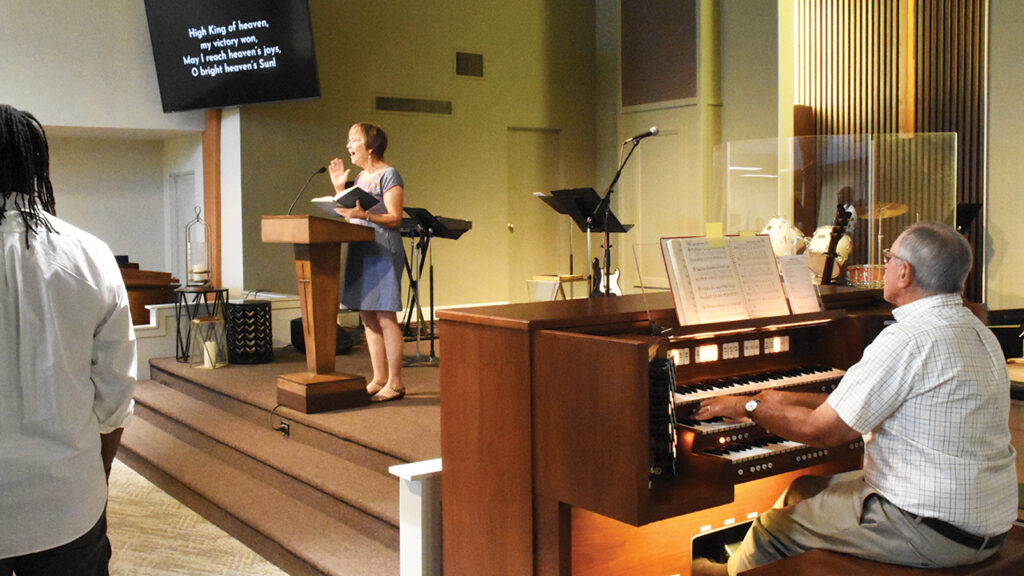
Yet I can see many parts of our church that need to be brought back to life. One area where this is evident is our worship. We haven’t had a full-time worship leader for years, and the congregation has been at odds for decades over how to balance traditional and contemporary worship.
Neighborhood’s worship is contemporary, loud and lit up, while we’ve always done our best with the people we have. Some Sundays, the worship band was my immediate family and a guest worship leader — and my dad doesn’t have a lick of musical knowledge.
Our worship now will be completely contemporary, and many of us are angry that we’re moving away from traditional hymns to open our gathering. My grandpa has played the organ for 50 years, and not having organ music in our service seems like an impossible sacrifice.
Personally, I love hearing the congregation’s voice joined together in a hymn. Contemporary worship music has never touched my soul quite the same way as the music sung by generations of believers before me, and I mourn its loss. I’m struggling with a lot of my church to welcome the change, but it’s something that must be reckoned with.
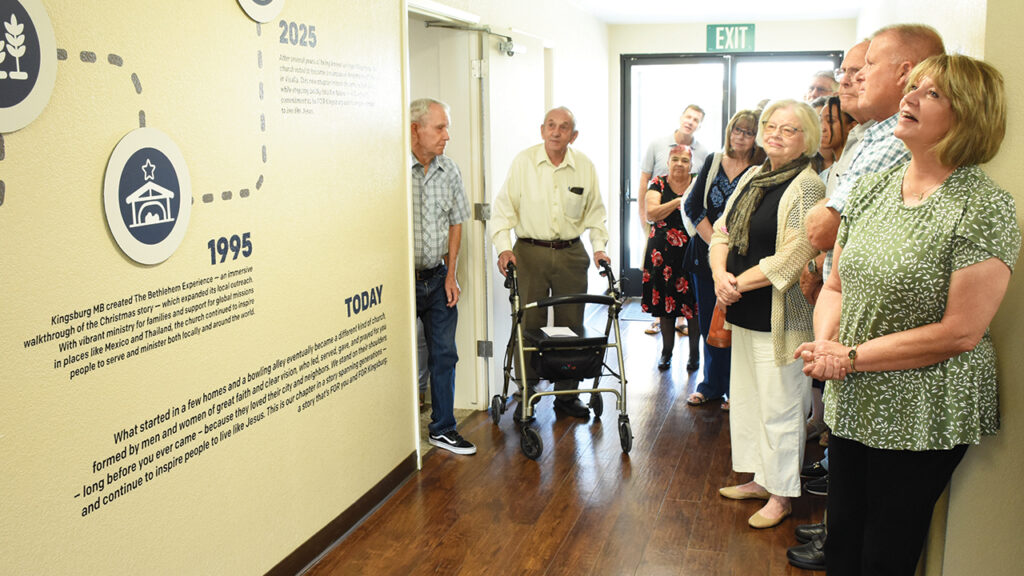
Beneath our love of traditions, there has always been a fear of relinquishing control. My church family fears we’ll lose our collective sense of self when we lose our independence. We’ll have no say in how our church is run. We’ve surrendered all our administrative power, from the elder board to the decorating committee.
Our church doesn’t belong to us anymore, and that’s hard to swallow. Despite our grief, we are presented with an opportunity to cast off the burden of our own will and take on the light, easy burden of God’s will. We can loosen our grip on traditions joyfully, knowing we’re in good and loving hands.
My hope for the future of my church is that we can look back on this transitional period and, instead of being bitter about what’s gone, praise God for how much more clearly we can see him and draw closer to him as the root of our identity.
I pray the same prayer for myself and my church that Paul prayed for the Ephesians: “that you, being rooted and grounded in love, may have the strength to comprehend with all the saints what is the breadth and length and height and depth, and to know the love of Christ that surpasses knowledge — that you may be filled with all the fullness of God” (3:17b-19, ESV).
My prayer for my church — and every other pocket of the family of God — is that we let go of our need for control and accept that God is leading our church in love. The love that we are called to live in is the same love that led Jesus to joyfully give up his very being for us. It is a love that surpasses knowledge, that welcomes strangers and changes and a new way of worshiping.
As I write this, I both anticipate and dread the opening of Neighborhood Church: Kingsburg Campus on Dec. 7. I won’t be there: I’m in the middle of my semester. As a young person, I feel separated from the people I used to see every Sunday. I feel out of the loop and rather homeless. I’m in between at the same time my church is.
Around my feelings of loss, I’m looking forward to my church being revived. I believe that my church is going to be a home in a way it hasn’t been in a long time, both for me and the community.
This is what young people need in a church, today and in the future: a steady and welcoming presence. We need a place grounded solidly in truth amid the upheaval of our changing lives.
My church family has always loved me well. I pray that our tightly bonded love will carry into our future, extending in a way that it hasn’t in a long time and becoming a beacon of Christ’s love to our community.
Aliya Ayers is a 19-year-old English student at Biola University. She attends Neighborhood Church: Kingsburg Campus, formerly Hope Kingsburg Mennonite Brethren Church in Kingsburg, Calif.

Have a comment on this story? Write to the editors. Include your full name, city and state. Selected comments will be edited for publication in print or online.