


In post-Christendom we will need to learn to live distinctively.
In their article “Post Christendom or Neo-Christendom?” (February), Ron Adams and Isaac Villegas take issue with the way we use “post-Christendom” in The Naked Anabaptist and other writings.
 We think “post-Christendom” is a useful clarifying lens that enables us to see Christianity’s loss of cohesion and control in multifaith, secular and materialistic American and European societies in which committed Christians are increasingly marginal. They disagree, pointing to Christendom’s resilient capacity to change and to Christianity’s continuing dominance in the politics and culture of western societies. They call this “neo-Christendom.” Does this matter, or are we simply quibbling about terminology?
We agree with Adams and Villegas that terms matter. We agree that neo-Christendom helpfully reminds us that “Christendom” has assumed different forms throughout history and in diverse cultural contexts and that Christendom is not dead.
 In fact, we could argue that the United States throughout its history has been an example of neo-Christendom. Unlike many European countries in old Christendom, America has not had a state church. The first amendment of the U.S. Constitution prevents that. But Christendom assumptions, values, priorities and expectations have permeated this society. For centuries most Americans have assumed that
- their country is Christian,
- most Americans are Christians,
- America’s political leaders are Christian,
- mission is not necessary in America,
- careful baptismal preparation is not necessary,
- the upside-down way of Jesus doesn’t apply to their country’s life.
These Christendom assumptions are old hat. It is not a sign of a novel neo-Christendom when we discover people who make vigorous Christian noises in the United States, even in Britain and other western societies.
What is our situation today? Adams and Villegas claim that we live in “confusing times” that require of us discernment and careful theological reflection, and we agree. Interpreting the present and pondering even the near future is not easy in a time of cultural turbulence and competing analyses.

So we welcome Adams’ and Villegas’ challenge to the way we understand our context and the proposals we make for missional responses to it. Like them, we take seriously the rhetoric of American presidents and British prime ministers. We, too, are interested in Christianity’s long half-life in American and European societies. But do these things place us in neo-Christendom?
We think post-Christendom is more helpful in equipping us to face reality. We in America as well as Europe are entering a new world that we and others call post-Christendom. It’s not that the Christendom era has suddenly ended or that a fully formed new culture is present or imminent. On the contrary, in our writings we have emphasized that Christendom’s vestiges continue. For some years members of the Anabaptist Network in Britain have carefully traced the ongoing influences of Christendom in the United Kingdom. They have found these widespread but retreating.
So when Stuart circulated Adams and Villegas’ article to network members, they were fascinated and bemused. Of course, they said, the legacy of Christendom remains, but it’s a shell.
Adams and Villegas quote Britain’s prime minister saying, “We are a Christian society, and we should not be afraid to say so.” The UK Anabaptists view this as defensive bluster. The UK they live in varies from place to place, but overall it is a secularized, multicultural, materialist society. A tiny fraction of its people go to church and would view with horror a Christendom-style attempt to coerce uniformity of religion or impose conservative Christian values on society.
In the United States, these issues are more contested than they are in the UK. Some Americans continue to try to impose Christianity on others, while others vigorously oppose these attempts. But they have less energy than they did a decade ago. Studies indicate that in the 2012 presidential election, to which Adams and Villegas refer, candidates Romney and Obama were far less willing to “boldly speak of their faith on the campaign trail” than the candidates were in 2008. Not only nationally but locally in many parts of the United States as well, post-Christendom reflects realities already present and becoming increasingly prevalent. (For an examination of this, see Appendix I of Alan and Eleanor Kreider’s Worship and Mission After Christendom [2011], “Are Americans in Christendom?”)
Post-Christendom describes a transitional period in western culture, a twilight zone between the slow dying of the Christendom era and the emergence of whatever will replace this. The “confusing times” we live in are at least partly due to this overlap between Christendom and post-Christendom realities. It’s not at all surprising that vestiges of Christendom, such as those Adams and Villegas mention, can easily be identified. These will surely continue to litter the post-Christendom landscape for many years. A culture that has flourished for 1,500 years does not suddenly disappear without trace. But we are convinced that Christendom and neo-Christendom are fading and that if Christianity is to have a future in America, we must grapple with the realities of post-Christendom.
What are these realities? What challenges and opportunities do they offer us in our daily experience, on the ground? Perhaps different contexts are responsible for our different perceptions. But in view of what we know of Adams’ and Villegas’ contexts, we are surprised by their comments.
The vestiges of Christendom they point to are national in scale and political in nature. What about the scenes locally in Madison, Wis., or Chapel Hill, N.C.? Certainly there are large, vigorous churches there. But if these cities fit with national trends, there are vastly fewer people who attend worship services today than there were 50 years ago, and the trajectory of Christian practice is downward.
Does church attendance matter? Unlike Adams and Villegas, we think it does. Church attendance is a serious indicator of Christian faith and commitment. Experience in Europe demonstrates that when people stop going to church, they lose track of the Christian story and find it difficult to pass Christian faith and virtues to their children.
So in Madison and Chapel Hill, as elsewhere in the United States and in Europe, “Christianity” becomes a general cultural term, bandied about by presidents as it loses the loyalty of the people. Its advocates, struggling to enforce a denatured faith upon an unwilling populace, resort to bluster before retreating. And the secularization of America continues, shown especially in its public universities, the increasing number of Americans without religious conviction (the “nones”), the proliferation of a wide variety of faith communities and the great passions of Americans that are evident not in worship and religiously inspired action but in consumerism, technology and sports.
Both of us have traveled widely in western societies and recognize that some parts of the United States have a greater residue of Christendom than others. There are even some communities that could fit the category of “Mennonitedom.” But overwhelmingly, western nations—even the United States—are now in pluralist post-Christendom. Even Topeka, Ind. In this quaint, Amish-influenced, industrializing town where Alan takes his car for servicing, there are two Muslim communities, one of which has a mosque in a strip mall; women in burkhas mingle in the grocery with women in cape dresses; Japanese Buddhists work in a local factory, and a Campus Life group brings Christian witness to unchurched Anglos who live in the trailer court.
This is an interesting, bracing world to live in. We are grateful for some of the contributions of Christendom—in the arts, spirituality and theology. But we do not bewail its passing. Christendom was a brilliant and brutal civilization that made life tough for minorities and misfits, including Jews and Anabaptists. But post-Christendom makes Christians more marginal than they were in the Christendom centuries. Is marginalization necessarily a bad thing? The two of us tend to talk calmly about marginalization, but Adams and Villegas are concerned that this “misleads us into thinking that Christians are now marginalized victims.” We disagree. We insist that marginalization does not entail victimization and that the two can be and must be decoupled.
Christians today cannot count on the Christendom Sunday, a day of worship on which the restaurants are closed, the stores shuttered and there are no sports and musical activities for the children. Christians in the UK in the 1990s campaigned vigorously to “keep Sunday special,” and they lost. Further, Christians cannot assume that in their towns pastors have prestige and influence on par with other professionals. This is fine.
In this post-Christendom world, nonconformist Christians who follow Jesus radically and make upside-down decisions about lifestyle will feel at home.
So we don’t see marginalization as problematic. Neither do we think marginalization needs to produce a victim mentality. In post-Christendom societies there is little evidence of systemic religious persecution or victimization. In fact, marginality may be a gift to the Christian community. It frees us from the pretensions of imperial Christianity and gives us space to rediscover faithful discipleship and creative witness.
The Scriptures reveal a God who frequently does new things on the margins. So we can accept marginality as a gift that enables us to be attuned to what the Spirit is saying and doing in our time.
We close with a final point of agreement with Adams and Villegas: We should encourage and nurture friendship with members of non-Christian religious communities. This may mean sharing facilities, as they suggest, or developing partnerships around social initiatives or standing with them when they face discrimination. But in many parts of America we will do this as marginalized religious minorities in societies that are experiencing increasing secularization. As these relationships grow, we will need to address the oppressive realities of the Christendom era, but it is the emerging reality of post-Christendom that provides the context in which we speak.
In post-Christendom we will need to learn to live distinctively; baptismal preparation will become increasingly important, training us for the upside-down way of Jesus.
Further, we will need to speak about our Christian faith in a way we never did when “everybody was Christian”; God’s mission of reconciling all things in Christ will be an ordinary concern of post-Christendom churches. We can do these things only if our faith is embedded in our hearts, expressed in worship and Christian practices, and embodied in our lives. When that is true, we will find that post-Christendom can be a bracing time to be Anabaptist Christians. We and Christians in other traditions will also find resources in the marginalized Anabaptist tradition to help us face the challenges of following Jesus on the margins in post-Christendom.
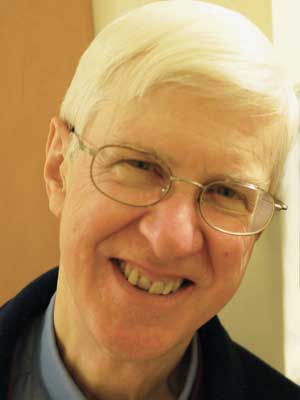
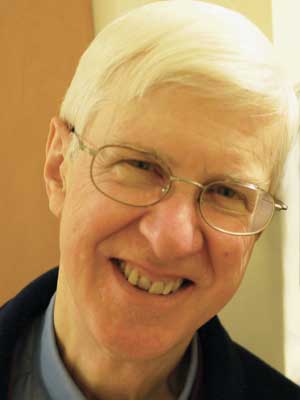
Alan Kreider is retired professor of church history and mission at Anabaptist Mennonite Biblical Seminary, Elkhart, Ind. Stuart Murray is author of The Naked Anabaptist (Herald Press, 2010).


Have a comment on this story? Write to the editors. Include your full name, city and state. Selected comments will be edited for publication in print or online.