


A biblical view
On the Sunday related to July 4, we can rethink what it means to be a Christian patriot. We can give thanks for the privileges we have. We can see what characterizes a
Christian patriot. And we can ask, What guidance does the early church give us?
 First, Christian patriots are clear about ultimate allegiance. In Acts 2:36, Peter states, ‘Therefore let all the house of Israel know with certainty that God has made him both Lord and Christ, this Jesus whom you crucified.” When the early Christian believers said, Jesus is Lord, this meant Caesar is not Lord. For this, many paid with their lives. Today in Colombia, Christians are dying for their confession that Jesus is Lord who brings peace.
Second, Christian patriots are to be submissive to their government, though their pledge of allegiance is always secondary to allegiance to Christ. In Romans 12:14 to 13:10, Paul is dealing with a problem regarding the relation of the believers in Rome to the Roman government.
In Romans 12:14-21, Paul writes in effect that we are to live compassionately with everyone; be at peace with all as far as it depends on you. We are not to repay anyone evil for evil but to overcome evil with good. Feed your enemy, give him something to drink. We are never to avenge ourselves; God will repay.
In Romans 13:1-7, Paul writes that everyone is to be subject to the governing authorities, for all authorities have been instituted by God. Therefore, whoever resists authorities resists what God has appointed as God’s servant for your good: to punish the bad and to reward those who do good. There are two motivations for being subject to government: One is to avoid punishment, and the second is to be subject for conscience sake to God-initiated authority.
In Romans 13:8-10, Paul writes that we are to owe no one anything except to love one another, for the one who loves another has fulfilled the law.

When the government asks a duty that one cannot do, then what? After World War II, the Allies prosecuted the Nazi leaders for war crimes in the Nuremberg War Trials. The Nazi leaders pled, “We obeyed orders.” They were good Lutherans in this regard. Luther had taught that we are citizens of two spheres, the state and the church. We do what each asks of us, and they are separate. So they obeyed orders. The Allied prosecutors said, ‘No, you should have obeyed your conscience, and you did not, so you will be convicted.”
The other side of this approach is what happened to some Air Force pilots in the Vietnam War. Their consciences told them they could no longer fight in a war that they considered wrong. They made their case on the basis of the Nuremberg trials; their consciences would not allow them to fight. They were told, “No, you have been given orders; you obey them.” Our government wanted it both ways.
For 300 years the early church was pacifist. The Church Fathers (leaders) spoke out against military service and killing, even though not all followed their teaching. When Maximilianus in North Africa decided to become a Christian in 299, he told his officer he wanted to resign from the army. He was given the choice of recanting his faith or death. The officer asked his father, who was a recruiter for the army, to change his son’s mind. The father refused. His father, mother and sister encouraged him to stand firm, and he was killed. In the Catholic Church, his relics (bones) are under the altar in the basilica on the Notre Dame University campus.
For Christian patriots the pledge of allegiance has some limitations. The first amendment in the Bill of Rights gives us our freedom to worship as we choose as we confess our allegiance to God as the Highest One. Allegiance to the government is second. Also, the separation of church and state allows for freedom of conscience.
Those who by reason of conscience object to military service are recognized by the Supreme Court and Congress with provisions for positive service for the welfare of the country.
So we are to give respect to those to whom respect is due and honor to whom honor is due. We can pledge allegiance to our government, subject to the government’s limitations, which make it second to our allegiance to Christ.
Third, whatever duties Christian patriots accept from the government, these duties must fit in with the command to “love your neighbor as yourself.” Jesus called this the second greatest commandment. To go to another country and call your neighbor your enemy does not make it right to kill him or her or civilians.
Some soldiers grew up with a conscience taught to love the neighbor and to do them no harm. Now they have an inner struggle: “I am killing people, and it is so wrong, regardless of the war hoopla.” For some the struggle becomes so intense they commit suicide. Some soldiers can repress their experiences but never want to talk about them.
Some returning soldiers, who have used violence to deal with whatever gets in their way, now begin using violence against their spouse. When they realize what they are doing to a loved one, this produces more conflict within them. Some commit suicide.
As a country, what have we placed upon our soldiers? It looks like much of the posttraumatic stress disorder is of our making. May God have mercy upon us and them.
Fourth, Christian patriots are to pray for those in authority. In 1 Timothy 2:1-10, Paul writes that we are to pray for everyone, those who are considered the lowest, such as the homeless, as well as for all in our society, including the police and the soldiers. We are to pray for kings (mayors, governors, presidents, legislators) and all in high places. The purpose is that there may be peace and that the message of the good news will get out to everyone.
The burdened soldiers need the good news that there is one mediator between God and people, the man Christ Jesus. First, they need someone to listen to their pain and walk with them in it until they know you know their pain. Then we can say what we have found in the forgiveness and healing of Jesus. Then believe the Spirit will heal, however long it may take, and walk with them.
I wonder, without removing one ounce of personal responsibility from the people involved, whether the onslaught of sexual unfaithfulness among governmental leaders is partly due to Christians not praying for them and building walls of protection around them. We pray, “Lead us not into temptation but deliver us from the evil one.” Have we become more secular with our uncertainty whether there is a Satan and whether he battles Christians to do dishonor to the name of Christ. The battle is real, and it will take praying churches to win. We need to pray for protection for all, women and men, for sexual affairs seem so enticing, until afterward, when the costs roll in.
Fifth, it is the quality of life that sets Christian patriots apart. 1 Peter 2:11-12 calls its readers, who are named aliens and exiles, to abstain from their selfish desires that war against the soul. They are to conduct themselves honorably so that though they get maligned as evildoers, their honorable deeds will be seen so their accusers will glorify God when he comes to judge.
This calls to mind Proverbs 14:34: “Righteousness exalts a nation, but sin is a reproach to any people.” Any community of faith will have a few people who give a bad witness, but the issue is whether the community of faith as a whole are people of integrity, honesty and freely give service and compassion to the neighbor.
In summary, Christian patriots are clear that their highest allegiance is to God, not government, however Christian that government may appear. Christian patriots are to pledge allegiance to their government within the limitations provided by the government so that their pledge to it is second to their allegiance to God. Whether Christian patriots pledge allegiance or not, they are to submit to government according to their conscience, accepting whatever punishment when they disobey.
Christian patriots accept duties from their government that are helpful to their neighbor and do them no harm. Christian patriots give thanks for and pray for all of those in authority, including police and soldiers.
Christian patriots live out their faith in God through the quality of their lives with integrity, honesty, compassion. They freely give constructive service to their neighbors and their country and needy people in other countries. Their presence raises questions so they can share what they have found in their life in Jesus Christ in God’s kingdom, which includes all Christian patriots in all nations with many forms of government.
According to Peter, Christians are aliens and exiles in this world, with a different worldview, and are citizens of a new nation with Christians of all nations of the world. It is this nation, the kingdom of God, that receives the highest allegiance.
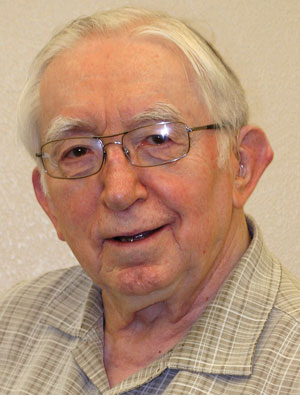
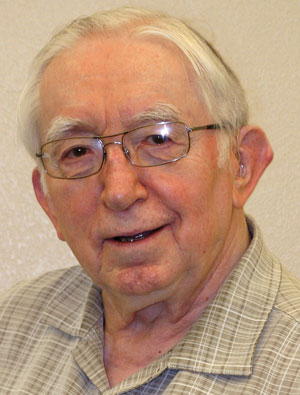
Harold E. Bauman formerly taught at Associated Mennonite Biblical Seminary, Elkhart, Ind. This article is adapted from a sermon he preached at First United Church of Christ in Goshen, Ind.


Have a comment on this story? Write to the editors. Include your full name, city and state. Selected comments will be edited for publication in print or online.