


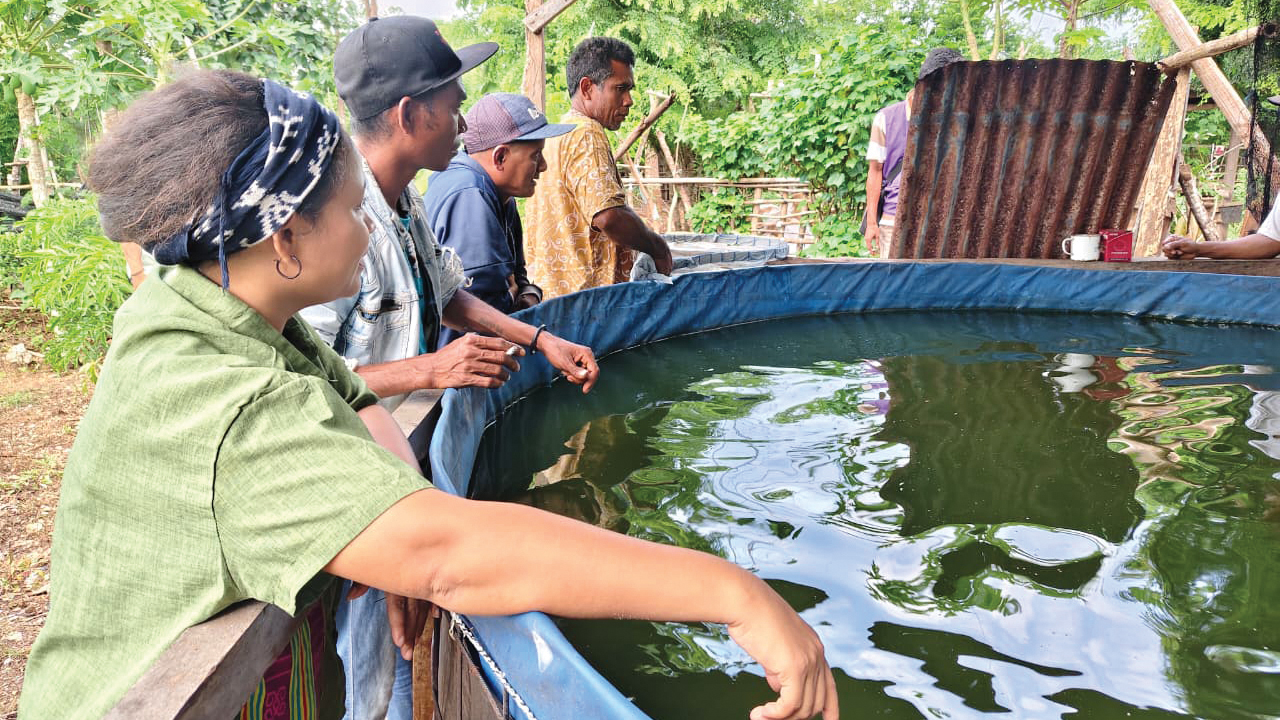
Muka Hamba Kodi, a community health worker on the island of Sumba, Indonesia, has long been concerned about the health and nutrition of children living in Napu Village, where stunting affects about one-quarter of children under 5 years old.
That’s why he is excited by a new above-ground fishpond in Napu that supplies free catfish to families with children who are stunted or at risk of malnutrition. Adding fish to their diet boosts nutrition, a primary treatment for children who are not growing according to their ages.
Although Sumba is surrounded by the Indian Ocean and Savo Sea, access to fresh fish is not necessarily an option.
“Sometimes the fish that arrives in the village is no longer fresh, and we cannot always buy it because it is expensive,” Kodi said. “This is one of the reasons many children lack nutritious food.”
Mennonite Central Committee’s partner Solidaritas Perempuan dan Anak Sumba (SOPAN; Sumba Women and Children’s Solidarity) built the fishpond at the house of the village leader for security. Together with other community health workers, Kodi takes turns monitoring the pond, feeding the fish and replacing the water.
“I know many factors contribute to reducing stunting,” said Kodi, “but I am happy that the catfish pond is helping improve the health of children in our village.”

SOPAN’s three-year project also encourages families to establish vegetable gardens to increase the amount and variety of vegetables in cooking.
The more difficult issues to address in Napu and Kuta Village are lack of knowledge about stunting, poverty, social roles and cultural taboos. Community health workers address issues as they talk with groups of parents.
Febriani Bangu Kahi, a mother of two children, including a 3-year-old girl whose growth had been stunted but is now in the normal range, used to withhold fruit from her children because she believed it was not good for their stomachs.
She now offers bananas and papayas, since she learned fruit is good for their health. Kahi also started a garden where she grows leafy green vegetables, onions, chili peppers and tomatoes.
Traditional food taboos for pregnant women can affect unborn children’s health too. Sweet potatoes, jackfruit, goat meat and eggplant are among nutritious foods believed to have a negative impact on the mother and baby’s health.
Community health workers address these beliefs sensitively. They teach mothers how to increase nutrients by cooking differently and by adding diversity to their diets. For example, instead of always cooking rice, mothers are encouraged to make cassava or corn sometimes as alternatives.


Have a comment on this story? Write to the editors. Include your full name, city and state. Selected comments will be edited for publication in print or online.