


Funding war has always been part of how systems of government work. Well before billions of dollars a day were being spent in munition overseas, the Roman empire taxed its people to be able to have a standing army such as the one that was in place during Jesus’ time. Yet, unlike war, its counterpart peace has traditionally been grossly underfunded.
I have been training with Community Peacemaker Teams (CPT) for the past half a year. The training staff and trainees were looking forward to having the in-person portion of the training this spring in Iraqi-Kurdistan, where one of the teams is located. Earlier this year, however, it was decided that the location was too high of a risk to bring 25 foreigners into the area given the rising tensions with Iran.
Therefore, Jordan was chosen as a new location. Jordan is a United States ally and is a relatively stable location in the Middle East. This also makes it a higher-cost destination compared to its neighbors. So, the change came at a significant cost — pun intended.
We all know what happened then: Tensions turned into full-blown war, regardless of what the United States administration wishes to call it. Seven U.S. service members have died and 140 have been injured since the war with Iran began. Also, and not less importantly, 168 people were killed at a school in Iran, most of them children. As of the writing of this article, there are reports of more than 10,000 civilian sites bombed by the U.S. in Iran and around 1,300 civilians killed. It would be a misnomer and a complete denial of reality to call what is happening in the Middle East right now anything but war.
Yet, many “Christians” in the U.S. and around the world continue to support the current administration, even if not directly intending to. U.S. tax dollars are contributing to the decimation of people abroad while people “at home” lack access to healthcare and reliable subsistance. How does that reflect Christian values that are derived from Jesus’ life example and teachings? This may seem like an oxymoronic question; nevertheless it is one that also needs to be asked, given today’s politicized religious convictions.
Be that as it may, Mennonite Church USA withdrew its official support for CPT in February of 2022. The main reason stated was “the move away from a Christ-centered organization” due to the name change from Christian Peacemaker Teams to Community Peacemaker Teams.

CPT’s move towards inclusivity and collaboration in the peace effort was reciprocated with a move to disconnect because of language that has become politicized, despite clarifying: “We are not leaving our Christian identity behind. In our journey of undoing oppression, we are expanding our identity to acknowledge other spiritual and faith-based peacemaking and acknowledging the harm that Christianity has done in many of our CPT contexts.” At the same time, CPT has remained consistent in its mission since its creation: building partnerships to transform violence and oppression.
By now it might be obvious and perhaps overdue to state that I am a CPT apologist. I have wanted to train/work with CPT for a while. Still, I was also not completely sold on the name change. I wanted the world to know that there are “good Christians” doing the work of peace out there. I wanted CPT to represent the minority of those (self-righteous as we might be) that want to show a good image of what being Christian can look like. For all that, how can we take credit for something that we alone are not doing? If CPT is made up of a diverse group and not just Christians working for peace, why would we get to take all the credit? Doesn’t the new name make more sense now?
Speaking as a Mennonite minister, I wish the Mennonite Church USA leadership would go back on their decision and keep supporting the work of CPT. We need to invest in the work of peace, particularly at a time such as this, if we want our witness to be named (even though this is not what Jesus taught in Matthew 6:3!), then we need to make significant and sizable contributions to the things that make for peace (despite it looking like we “Christians” really have no idea how to recognize it). With that being said, I invite you to consider donating to the work of CPT, either to their training or teams, of which there are currently five doing work on the ground.
1. Iraqi Kurdistan
CPT partners with “farming and pastoralist communities that peacefully resist displacement and destruction caused by cross-border military operations,” accompanies “human rights defenders and civil initiatives standing against oppression” and documents “impacts of violence on civilians and advocating locally and internationally for change.” Currently, the team and trainees in this area are in their homes taking refuge from attacks, and it is unsafe to meet or go out.
2. Aegean Migrant Solidarity
CPT partners with “local and international organizations committed to solidarity with refugees who are nonviolently defending their human rights.”
3. Palestine
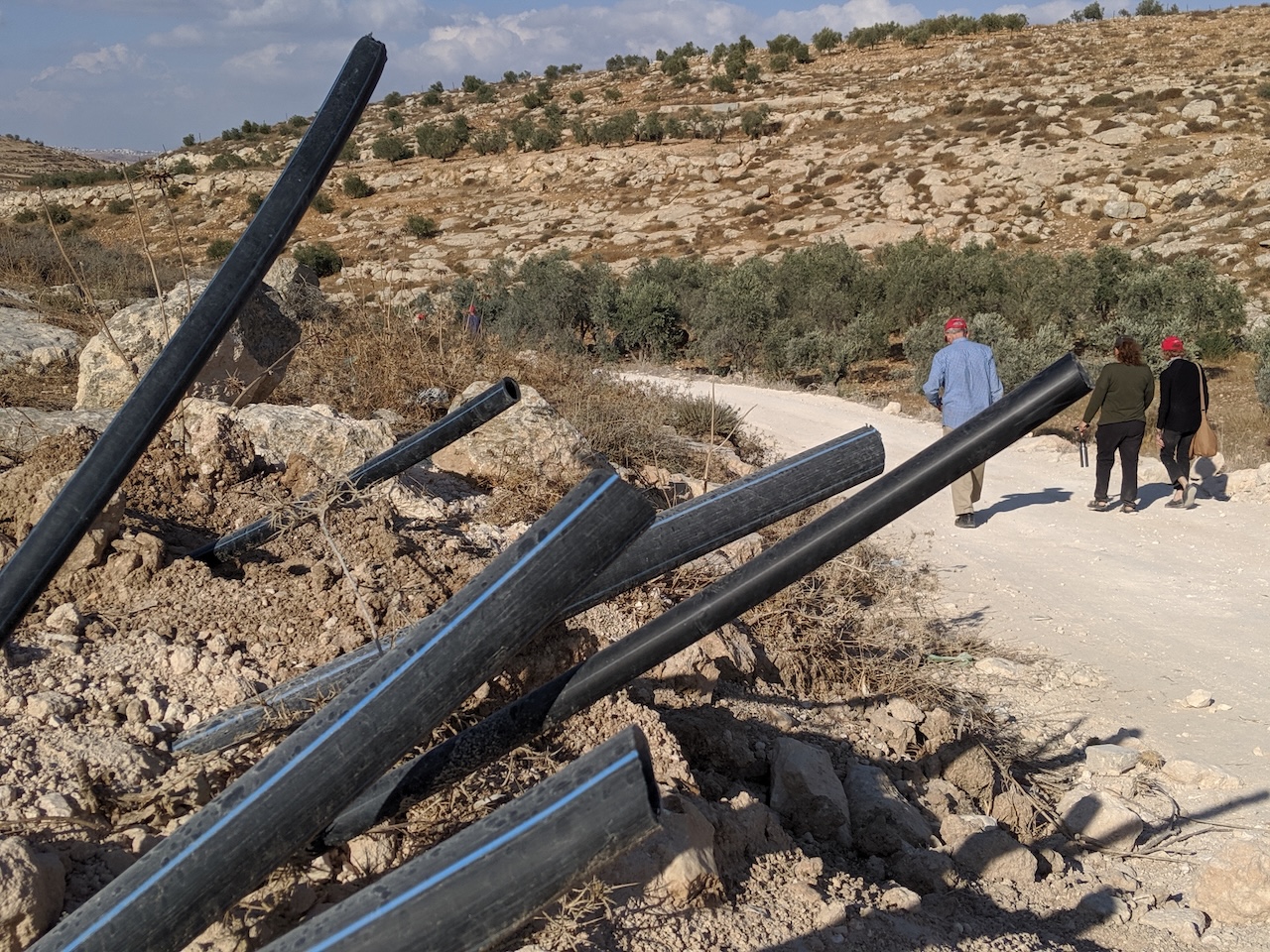
CPT-Palestine builds “partnerships to transform violence and oppression.” It supports “Palestinian-led, nonviolent, grassroots resistance against the Israeli Occupation, through solidarity and advocacy with Palestinians living in the H2 area of Al-Khalil/Hebron city, and south Hebron Hills.” Currently, the team is taking shelter as strikes and debris from intercepted missiles are an ongoing concern. So are everyday threats from Israeli attacks and ongoing occupation.
4. Colombia
CPT in Colombia “accompan[ies] small farming and mining communities caught in the crossfire of decades of war and, more recently, hyper-development.” It partners “with local human rights organizations” and highlights “the effects of a conflict that has permeated urban social structures through organized crime, trafficking, and displacement from rural areas.”
5. Turtle Island Security Network
Turtle Island Security Network “is a network of CPT reservists engaged in Indigenous solidarity and decolonization. By working together across Turtle Island [North America], we strive to erase the colonial border between Canada and the US.” The work of TISN focuses primarily on relationships with Indigenous people, but CPT still runs delegations to the U.S.-Mexico borderlands.



Have a comment on this story? Write to the editors. Include your full name, city and state. Selected comments will be edited for publication in print or online.