


Leadership: A word from Mennonite Church USA leaders
I often describe myself as a “product of Mennonite education” because I am an alumna of Bethany Christian Schools in Goshen, Ind., Goshen College and Anabaptist Mennonite Biblical Seminary in Elkhart, Ind.
 While my educational pedigree translates into power and privilege, as a woman of color, I believe strongly in using my power and privilege for everyone’s good, not just my own.
What does this mean in the context of my work with Mennonite Education Agency (MEA)? I have a responsibility to reflect on my educational experiences and take the foundational principles of Anabaptist-Mennonite pedagogy and make them available to everyone, everywhere. This may sound idealistic, and you may call me a fool for Mennonite education. So be it.
Here are three big ideas I am advocating for in my leadership of the MEA board of directors.
1. There is still a place for a denominationally connected school system, but not for the reasons many schools were first opened. Whether we like it or not, those of us who are part of families that have been Mennonite and faithfully attended Mennonite schools for generations have to admit that our alma maters were often established to preserve our communities’ ethnic identity and heritage. That itself is not a bad thing, but when preservation, however subtle, becomes an end in itself, we have ignored the call to invite others to join our communities and share our interpretation of the Christian faith.
At the same time, simply putting aside a tradition of preserving a way of life, faith and education because of the excesses of ethnocentrism is not the answer.
We have invested ourselves in becoming missional, but we have some work to do to articulate how our Mennonite school system is also part of Mennonite Church USA’s missional identity. The more we make the education-mission connection, the less ethnocentric and more creative we will become as we focus on why and how we teach Jesus’ way of peace as central to the gospel’s meaning.
2. When we think about education as part of our denomination’s mission, then we can see that the work of Mennonite education is not limited to a specific set of teachers and faculty on elementary, secondary, college, university or seminary campuses because it takes place wherever a member of Mennonite Church USA is building a learning community. In other words, if the only ones who count as “Mennonite educators” are those who teach (other Mennonites) on Mennonite campuses, then we neglect the resource Mennonite education has in our body’s members who bring a commitment to Christian community and nonviolence to the campuses where they fulfill their vocation. I hope that along with our Youth Census, MEA will be able to initiate an Educators Census to identify and connect with all the teachers in Mennonite Church USA because they are also part of our school system.
3. Building learning communities can be an exercise in nonconformity, which in turn contributes to the renewal of our denomination and even the Christian church as a whole. This last big idea comes from the well-known cultural critic Bell Hooks’
writings about “engaged pedagogy.” This is a way of teaching that holds the practice of freedom at the center of the learning and teaching processes. Hooks’ view of freedom is not based on a concern for individualism but community.
She writes: “In the last 20 years I have encountered many folks who say they are committed to freedom and justice for all, even though the way they live, the values and habits of being they institutionalize daily, in public and private rituals, help maintain the culture of domination, help create an unfree world,” adding, “we live in chaos, uncertain about the possibility of building and sustaining real community.”
Expanding on Paul’s letter to the Romans, Hooks calls on all of us—professional educators and others—”to renew our minds” so we can participate in the transformation of schools, faith communities and broader society “so that the way we live, teach and work can reflect our joy in cultural diversity, our passion for justice and our love of freedom.”
This is the freedom of Jesus the Christ. We find this freedom through our engagement with his gospel, which grounds our theological and ethical understandings of peace, nonviolence and social justice. This faith heritage puts us at odds with some parts of our society, making us nonconformists, historically speaking.
I hope my foolishness will lead us to new sources of wisdom. I hope the wisdom we seek at MEA will be a source of renewal for the church and the communities where we live, teach and learn.
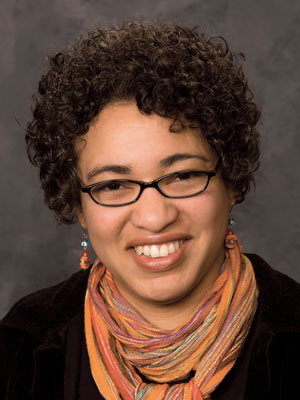
Malinda Elizabeth Berry teaches theology at Bethany Theological Seminary in Richmond, Ind., and is the newly appointed chair of the Mennonite Education Agency Board.


Have a comment on this story? Write to the editors. Include your full name, city and state. Selected comments will be edited for publication in print or online.