


Leadership: A word from Mennonite Church USA leaders
 What faces come to mind when you hear the word “immigrant”? I think of several different faces:
- most of my predecessors in the archives and historical library where I work, the people who built these collections to help people answer questions about the Mennonite past: Cornelius H. Wedel (first president of Bethel College), H.R. Voth, Abraham Warkentin, Cornelius Krahn;
- many of the people who created the documents in the archives: Of the first 50 collections of personal papers in the archives, two-thirds were created by immigrants, and almost all the other third was created by second-generation immigrants (children of foreign-born parents);
- my mother, grandparents and most of my relatives in their generations.
In 2010, a museum exhibit designer contacted me at the archives, looking for material to represent Mennonites as one of many known immigrant groups in Kansas. This was part of an exhibit she was preparing for the U.S. District Court of the state of Kansas as part of the court’s 150th anniversary commemoration. (The federal district court in Kansas City, Kan., oversees citizenship and naturalization matters in Kansas).
She wanted something that would make a coherent package—naturalization papers, photos, basic narratives of the people. We have a good number of such documents in the archives at Bethel, but what seemed easiest to put together into a complete package was from my own family. I was able to represent the major Mennonite immigration from Russia and Eastern Europe of the 1870s as well as immigrants of the 1920s.
As I’ve reflected on my childhood years in the mid-1960s, I’ve come to recognize that I had certain experiences that differed dramatically from those of the majority of my schoolmates and acquaintances at that time. Neither of my parents spoke English until they started school.
In family settings, I frequently heard people speaking non-English languages and people who spoke English with a noticeable accent. I traveled outside the United States at age 2, which was especially unusual for a blue collar/pink collar family like mine.
My parents went out of their way to make connections with a good number of immigrants and international visitors in the Newton area, not all of them Mennonites.
We regularly received mail from Germany, Sweden, Paraguay and Colombia. A couple of times a year, my grandmother received letters with a little red hammer and sickle stamp from her childhood friend and cousin in the Soviet Union. This was during the Cold War; it must have been incredibly rare for Newton, Kan.
On average, individual U.S. Mennonites probably have more of an international network than a typical American, considering Mennonites’ involvement in missions and relief/development work. However, I seem to see a difference in immigrant consciousness between two different white ethnic Mennonite groups.
For the Swiss-German Mennonites, who are predominant especially in the eastern half of the country, immigration is usually something in the distant past. For the Dutch-Russian Mennonites, who are predominant in the Plains states (and Canada), immigration is still in many cases a “living memory.”
The younger immigrants of the 1870s lived into the 1930s and ’40s, which means that many older people alive today are the grandchildren of the immigrant generation. In my own family, this living memory of immigration could last almost to the 22nd century, as those who are now teenagers remember their immigrant grandparents.
Being situated in this dense network of family and community ties to immigrants, I find the current anti-immigrant bigotry deeply unsettling. Even within the church, it’s discouraging that one too often finds indifference or even hostility toward immigrants and their concerns.
An implicit message of the federal court’s exhibit seems to be a pushback against the contemporary popular bigotry against immigrants. Immigrants are not strange insidious threats, the exhibit says; they are potential Americans, they are us. They are intimately familiar faces. What does an immigrant look like? A lot like me.
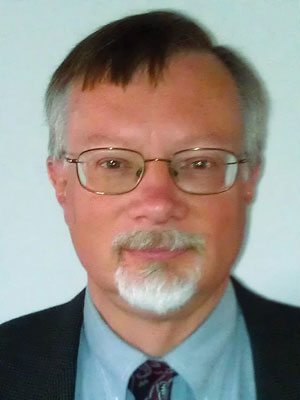
John D. Thiesen is an archivist for the Mennonite Church USA Archives in North Newton, Kan., and co-director of libraries at Bethel College. He is a member of Shalom Mennonite Church in Newton, Kan.


Have a comment on this story? Write to the editors. Include your full name, city and state. Selected comments will be edited for publication in print or online.