


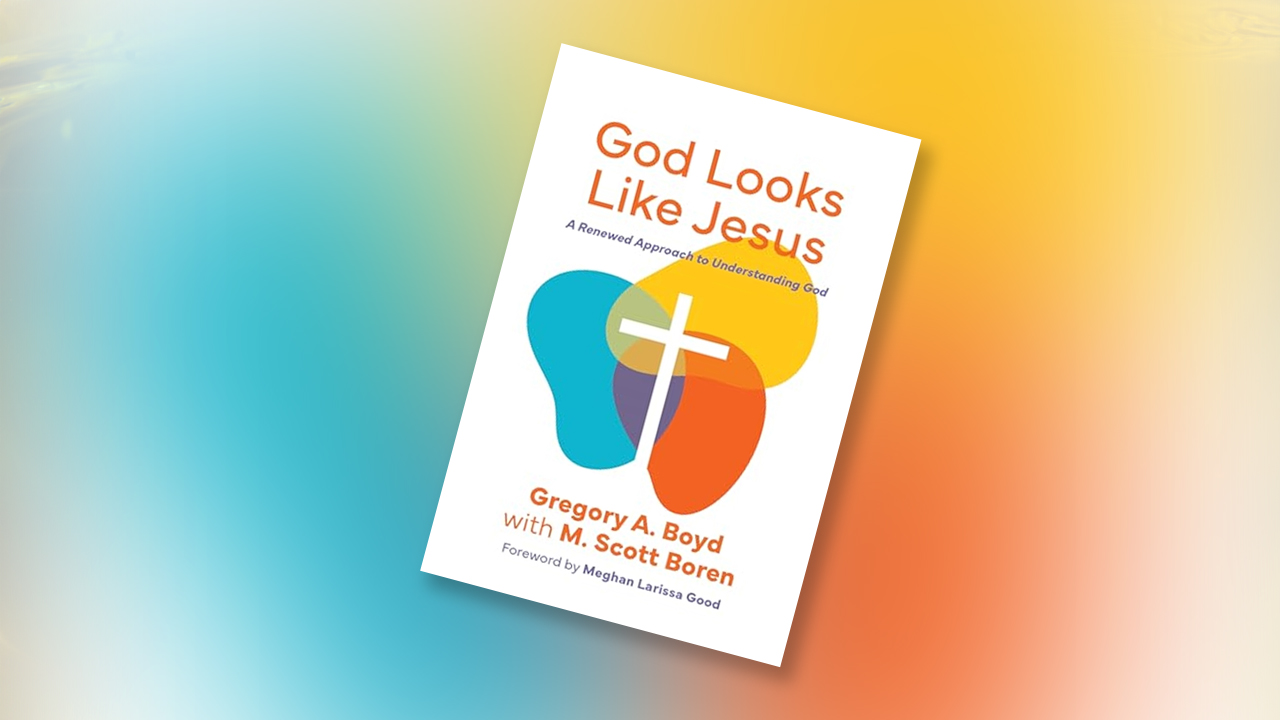
The disclaimer for all theology is that God is ineffable — cannot be fully explained. In God Looks Like Jesus, Gregory A. Boyd acknowledges that “God transcends everything our finite minds can think or imagine.”
At the same time, he says, “the way we envision God is the single most important thing in our life.” While God cannot be fully imagined, we each carry mental images of God, which Boyd defines as “everything that a person experiences in their mind when they contemplate God.” A distorted image of God can “stifle our love for God and hinder our spiritual transformation.”
Boyd, a popular neo-Anabaptist preacher, teacher, apologist and author, wants readers to have an image of God that “looks like Jesus.” Which prompts the question: What does Jesus look like?
First, Jesus is divine. He says, “Anyone who has seen me has seen the Father” (John 14:9). And because Jesus reveals the truth about God’s character, Boyd writes, “all other depictions of God in Scripture — and all the ways we imagine God in our minds — must be assessed by this singular revelation.”
Jesus’ crucifixion, his willingness to die for our salvation, is a key element to his (and God’s) character. Boyd writes: “The cross culminates, expresses and weaves together what Jesus was about — namely, revealing the true, enemy-embracing, nonviolent, self-sacrificial, loving character of his Father.”
Boyd explores the centrality of the cross in the Gospels, the letters of Paul and even in Revelation, with its portrayal of the slain Lamb. While others often see the battle depicted there as ghastly, Boyd says it turns out to be “a magnificent symbol of the liberating power of the cross.”

If Jesus shows God to be self-sacrificing and loving, what about the stories in the Old Testament of God destroying people? Boyd refuses to dismiss these, especially since Jesus endorsed the Old Testament as divinely inspired. But it was inspired to bear witness to Jesus. He argues that we should read scripture with “cross-tinted glasses” and see that God does not coerce people. He writes that if God “were to coerce us into believing only in true things and engaging only in godly behavior, our godly behavior would not be authentically ours, and there would be no possibility of us entering an authentic loving relationship with God.”
In arguing for God’s not being coercive, Boyd quotes from Exodus 23:28, where God says, “I will send the hornet ahead of you to drive the Hivites, Canaanites and Hittites out of your way.” Sounds like coercion to me.
In his chapter “Rethinking God,” Boyd critiques the classical view of God, which he says “rests on several key metaphysical assumptions that originate in ancient Greek philosophy.” Instead, he argues that we must begin with Jesus Christ, “trusting that nothing about God contradicts what Jesus reveals.”
In rethinking god’s transcendence, Boyd posits that “God’s ‘wholly other’ essential being is most fully revealed on the cross.” This leads him to make the point that the cross transforms how we understand the problem of evil. God took the risk of creating free agents who may choose paths contrary to God’s will.
But the crucifixion shows that God makes evil his own problem: “The God who reveals himself in Jesus does not stand aloof from the pain of the world; instead, he enters into the depths of our collective hell to liberate creation from it.” Thus God is present with us in our pain, which is comforting, even if it doesn’t take away the pain.
Like a good preacher, Boyd closes the book with a call for readers to adopt a “kingdom response.” This involves four things: 1) holding fast to the blessed hope of Christ’s return; 2) opting out of “the perpetual growth economy, as much as possible, for this is the main driver of the polycrisis we are facing”; 3) loving others the way God has loved us; and 4) serving as landlords of God’s incredible Earth.
This short book leaves questions: Which Jesus does God look like? What about the one who told followers to cut off their hands or called the Gentile woman a dog or consigned certain leaders to hell? Is a canonical approach to scripture the best one? Which canon, Protestant or Catholic?
To be fair, this is a short book, and Boyd has written more extensively on these topics in other works. But this is a good introduction to a Christocentric theology and can stimulate discussion.


Have a comment on this story? Write to the editors. Include your full name, city and state. Selected comments will be edited for publication in print or online.