


I began collecting international creches over 40 years ago. First was a Joseph, Mary and the babe in Navajo garb created by a Southwest ceramics artist, Jack Black. Then I found a Ten Thousand Villages store with creches from several countries.
The search was on.
Each Christmas I pondered: What about the set from Peru whose characters have such tortured facial expressions? Or maybe the Kenya set with the stunning acacia trees?
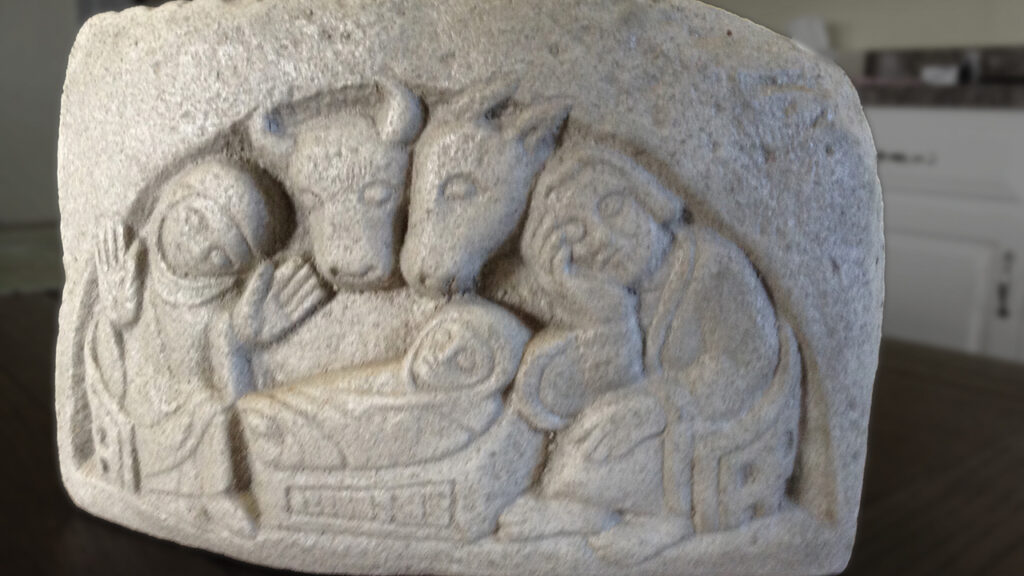
With joy, I added something new each year. A nested-doll nativity from Russia. A Polish creche from an antique store. A block of stone into which an artist had carved the familiar nativity scene. A creche from Denmark whose Magi had bobble-heads that didn’t bobble. A set from Bangladesh my mother found when volunteering at her Mennonite Central Committee thrift store (she kept adding fantastical beasts to it). A Haitian nativity, cut out of a steel drum, that filled two side-by-side windowsills.
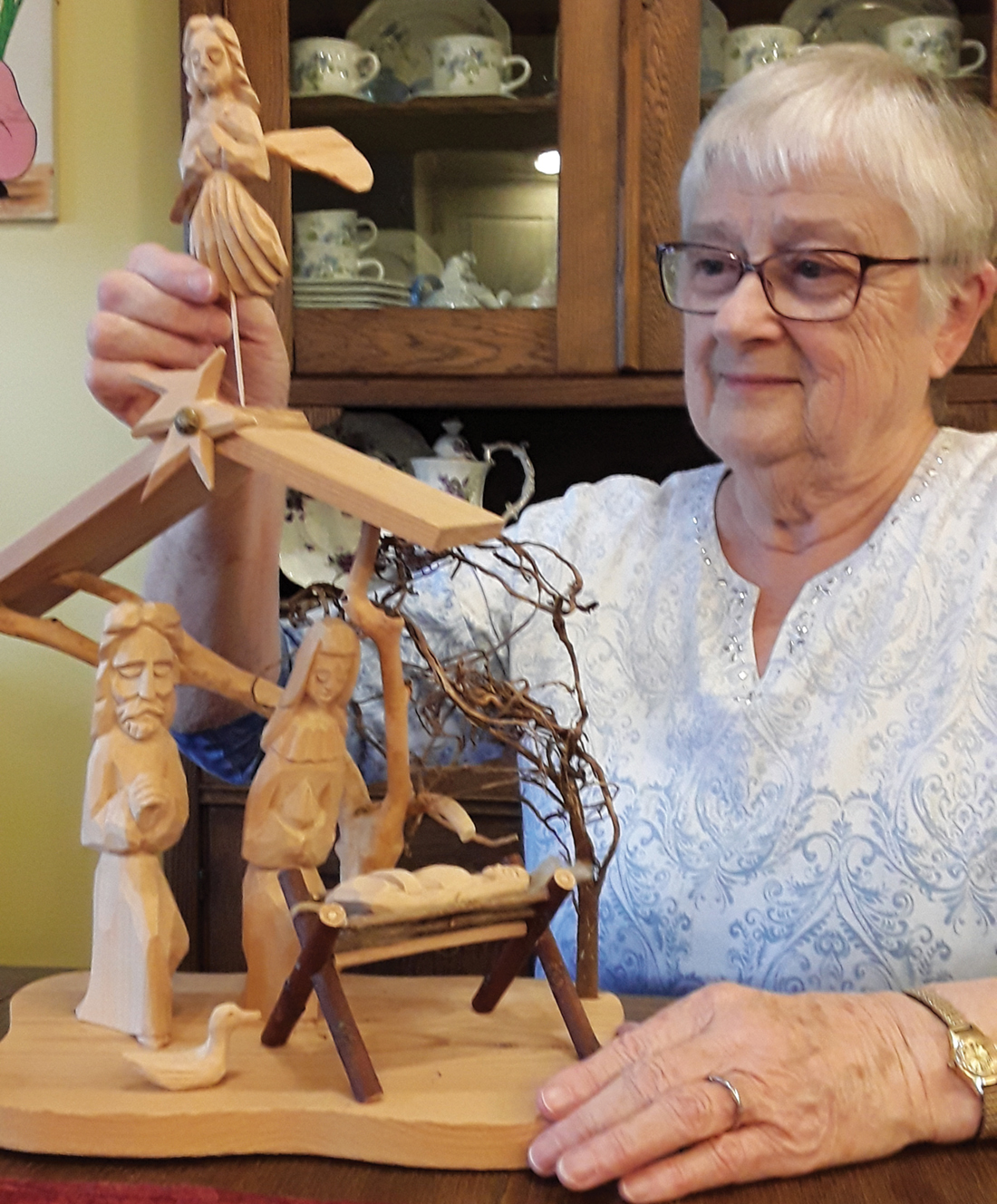
When teaching at Lithuania Christian College for a semester, I read of a folk artist, Jonas Bugailiskis, who created creches. On a snowy December weekend in Vilnius, my husband and I located his studio. He only had one creche on the shelf — and, I must admit, it seemed too crude to me. While I hesitated, he added a sweet little hand-carved duck to the nativity scene, and I relented.
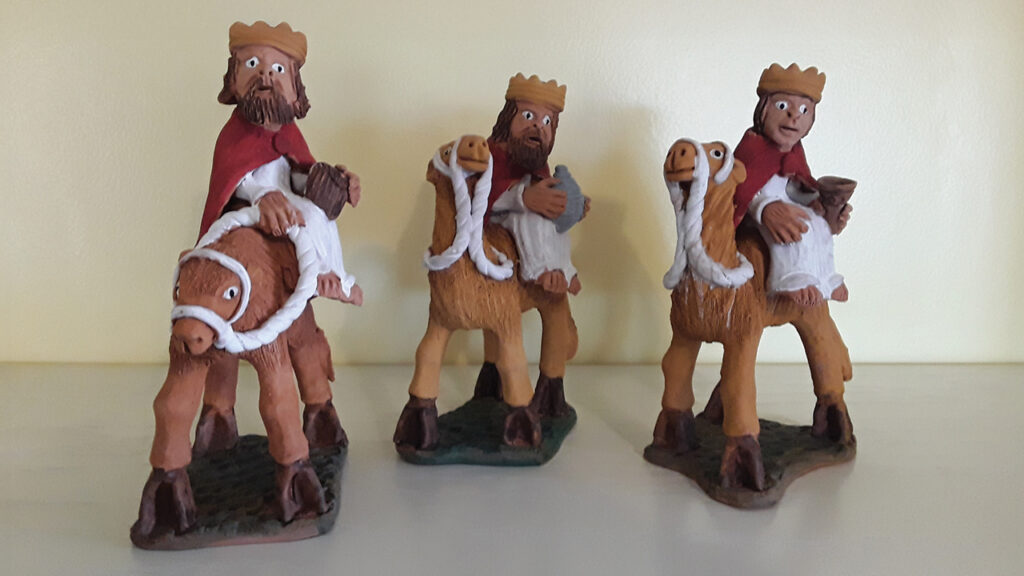
“Only one from a country,” I had always told myself. But before we left Lithuania, I had another to schlep home: an astonishing creche made of straw by blind artists at a workshop for people with disabilities. Each king wore a tiny, intricately woven crown. How did the blind accomplish that?

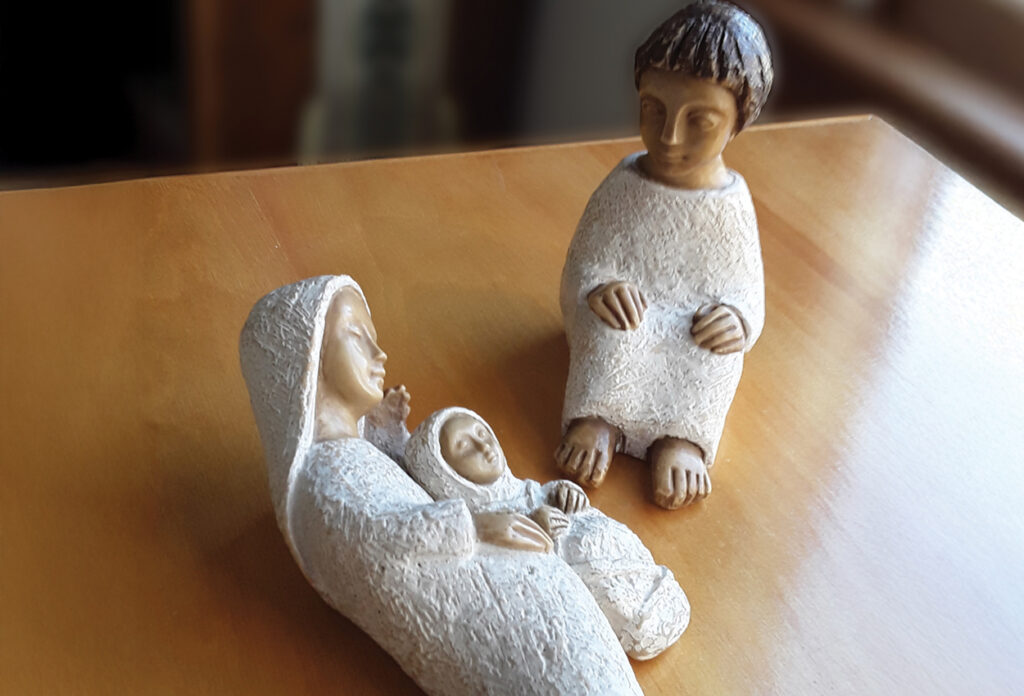
My pastoral sabbatical took us to Israel for a summer course at Tantur Ecumenical Institute. In Jerusalem, I found a creche that became a favorite. Mary reclines on the ground with the baby tucked into her arm. Joseph sits on his haunches nearby, intently staring at the newborn. Such tenderness, though made of hard resin.
On an interim pastoral assignment in Meridian, Miss., we found a folk-art straw nativity. It wasn’t international, barely intercultural, but it begged to become part of my collection. Another folk-art set came from Texas, brightly painted with the colors that so often illuminate Hispanic art.
Our son’s family from Kansas arrived every other Christmas for a week with us. The youngest granddaughter always disappeared shortly after arrival, and when she came up from the basement would announce, “I found 28.” Creches, that is. I would ask, “Did you look in our bathroom?” And so she added one more.
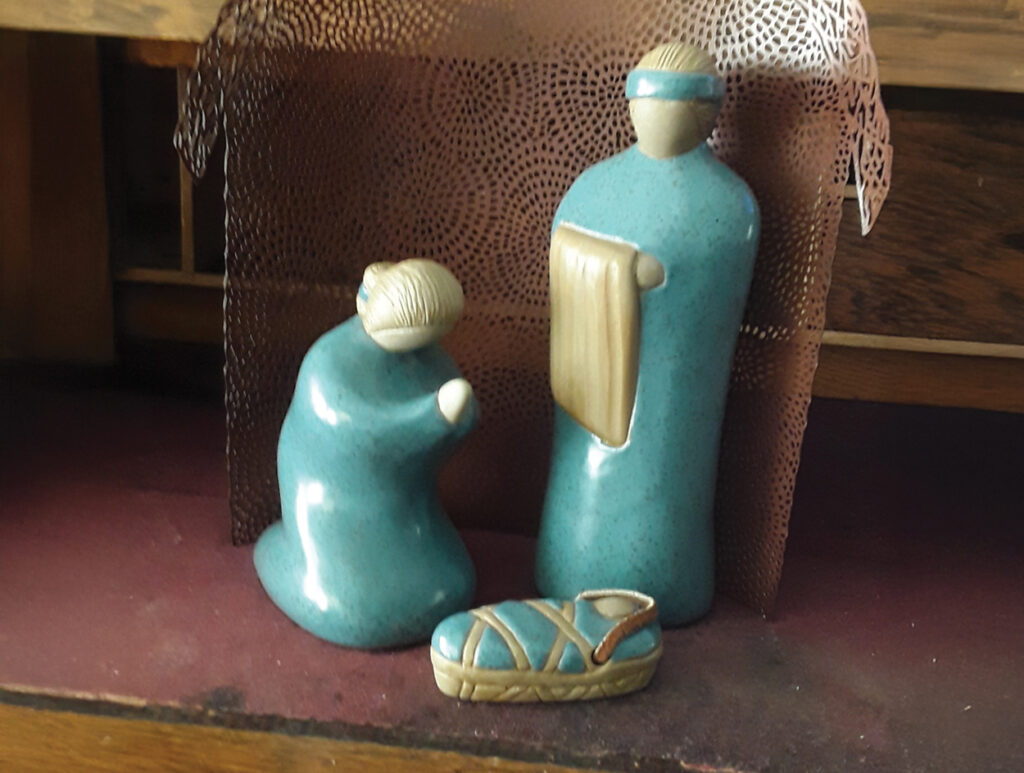
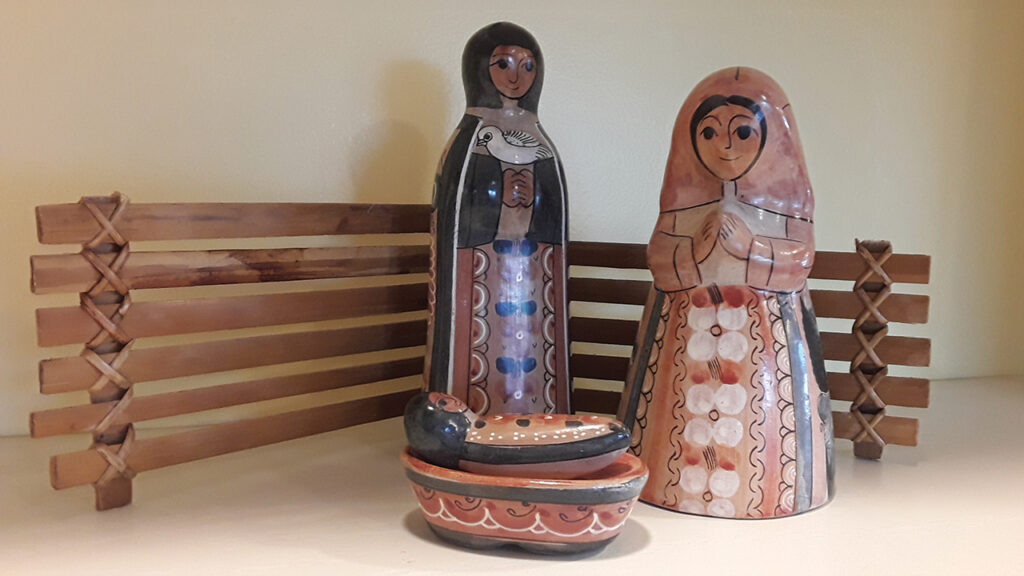
Along the way, I added accoutrements. The resemblance of a hogan for the Navajo set. An open-air shelter for the Bangladesh nativity. An iron window frame for Lladro’s (a Spanish porcelain company) artistic portrayal of Mary, Joseph and the babe. My husband hammered together a rustic stable for the Italian creche. I found a wooden fence for the Mexican creche.
Creches do not always depict the truth of the nativity story. Too many added characters. A sanitized stable. Magi and shepherds together. Sometimes I was troubled by my attraction to these popular depictions of Jesus’ birth. But they appeal to sentiment, not biblical truth. Most Christmas decorative rituals are like that.
Then we moved into our retirement cottage. No longer did we have room to display the nativities. Only the ones I liked best were unwrapped.
Now it is time to say goodbye to the creches. We approached the grandchildren first.
One granddaughter asked for the first in my collection — the Navajo creche. She has spent part of her adult life in the Southwest. A grandson has asked for the Peru creche because Peru is where he did his Goshen College Study Service Term.
The creche from Mexico can go to the grandson who has lived in Mexico. Another granddaughter will get back the African creche she bought for me while in Tanzania on a service project while pursuing her nurse practitioner degree. And she can choose another if she wishes.
The other grandchildren will soon make their choices known. Then I will need to find more recipients.
Christmas joy with the creches has doubled for me: first, discovering and displaying them, and now, unexpected joy in giving them away. I hope the recipients will repeat that cycle of Christmas joy.
Shirley Yoder Brubaker is a retired pastor. She and her husband, Kenton, live in Harrisonburg Va., and attend Park View Mennonite Church.


Have a comment on this story? Write to the editors. Include your full name, city and state. Selected comments will be edited for publication in print or online.