


“Some people just don’t want help.” When I talk about the organizing I do with poor and unhoused people, this is a frequent response. It usually comes from some experience the person had: They saw someone “in need,” offered “help” and were refused.
The person who said it has a hard time understanding why anyone would turn down the “help” on offer. Why would someone choose to sleep outside rather than in a shelter or turn down an offer of a sandwich if they asked for money?
I rarely hear this phrase from others who work with and are in ongoing relationships with people in poverty.
It doesn’t take much investigation to understand why someone might turn down the “help” on offer. People make decisions based on multiple factors, many of which a passerby could not possibly know.
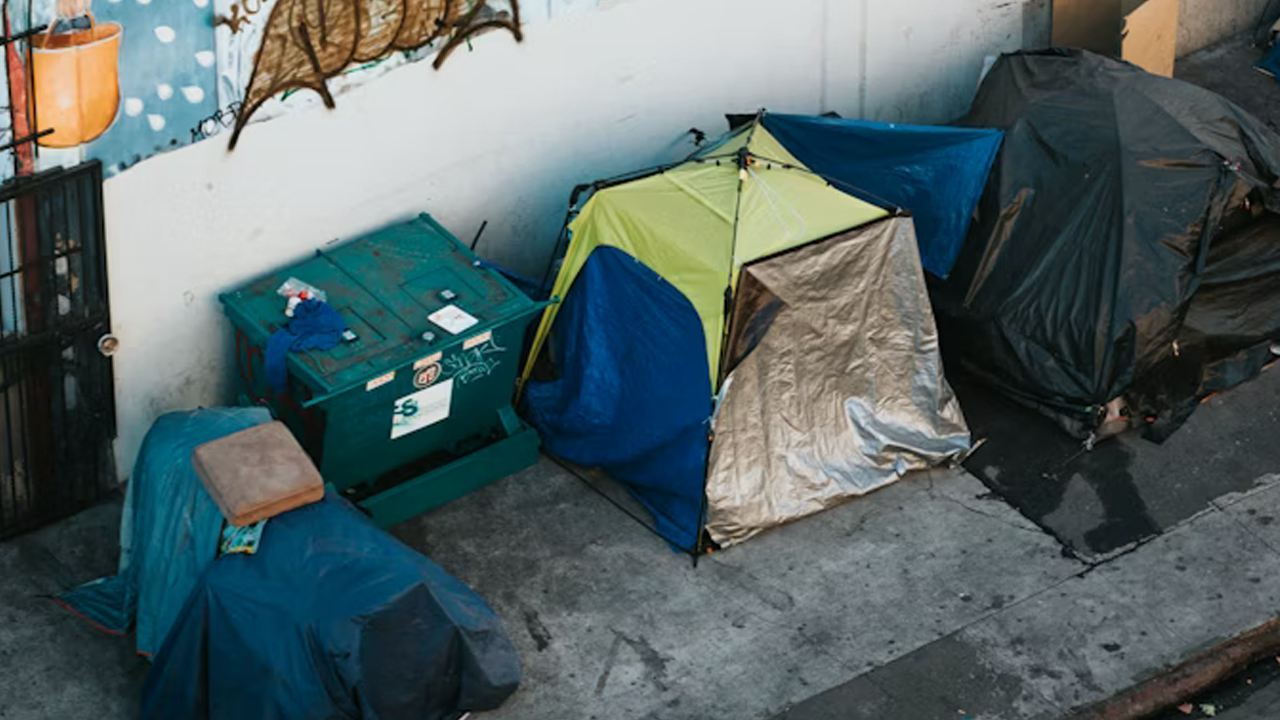
I know many unhoused people who refuse to stay at some shelters in our city because they are dangerous, overcrowded or have demeaning and impossible rules. One friend was told that if she wanted to stay at the emergency shelter, she could only bring one bag with her. She had two pieces of luggage. She was forced into an impossible choice: throw away her possessions, many of which had enabled her to survive thus far, in order to have an inadequate chair or mat on the floor for one night, or continue taking her chances on the street.
Since she decided to keep her belongings, our system would label her as “refusing services.”

In our system, often the “help” on offer is dehumanizing, insulting and inadequate. My friends on the street make impossible decisions every day in their struggles to survive, and it is easy to stand at a distance and cast judgment if they make a different decision than you think you would have made.
On multiple occasions I have been with people when they had a medical emergency. “Please don’t call the ambulance,” they say. “I can’t afford it.” It would be absurd to suggest that they simply “don’t want help.” Rather, a system that denies our basic human rights will offer “help” only if you are able to pay. That isn’t help at all.
The truth is, the “help” our people need is not actually available. Shelters, street medicine or free clinics and emergency food providers are both an essential lifeline and barely scratch the surface of what is necessary. The bureaucracy that often accompanies these services is demoralizing.
Part of my pastoral role is to insist that people maintain hope and not give up attempting to access services even though all of their experiences have shown them it isn’t worth it to try.
Toward the end of his life, Martin Luther King Jr. described a different kind of help. He said, “There are millions of poor people in this country who have very little, or even nothing, to lose. If they can be helped to take action together, they will do so with a freedom and a power that will be a new and unsettling force in our complacent national life.”
When King talked about help, he was not talking about charity or a social safety net. He was talking about the organization and collective action of the poor, united across lines of division. This organized “new and unsettling force” is not about finding temporary solutions to hardship. It is about transforming the political and economic relations of power and control that produce poverty in the first place.
King envisioned a united force of the poor that would upend a social order that keeps people oppressed. He said elsewhere: “Power for poor people will really mean having the ability, the togetherness, the assertiveness and the aggressiveness to make the power structure of this nation say yes when they may be desirous to say no.”
In this, King followed what Jesus models in the Gospels. Certainly, Jesus met people’s immediate needs of food and health care. Far more important, his love and compassion transcended lines of division — race, ethnicity, gender, religious traditions — and demonstrated the potential power of the unified poor.
That power to unsettle an oppressive society threatened the ruling order. This is why the Roman Empire — like every ruling class that has come after it — went to such great lengths to blunt the power of the gospel.
King paid dearly for his understanding of this as he sought to build the Poor People’s Campaign.
Let us do away with inadequate and dehumanizing ideas of “help.” Instead, let us follow Jesus and King in uniting the poor across every division and building the “new and unsettling force.”


Have a comment on this story? Write to the editors. Include your full name, city and state. Selected comments will be edited for publication in print or online.