


“Why do you look for the living among the dead? He is not here but has risen. Remember how he told you, while he was still in Galilee, that the Son of Man must be handed over to the hands of sinners and be crucified and on the third day rise again.” Then they remembered his words, and returning from the tomb they told all this to the eleven and to all the rest. (Luke 24:5b-9)
Does the groundhog see a shadow? Does spring equinox come on March 19, 20 or 21? Will there be another hard frost? Are the daffodils in bloom? Have you switched to daylight saving time? The way you know it’s springtime depends on your region, your lifestyle, your worldview.
Spring can be defined astronomically, meteorologically, agriculturally, liturgically, practically . . . and it doesn’t happen just once. It also doesn’t happen all at once. And there will be a day in the next few weeks when I’m smiling in the sunshine, enjoying warm breeze and smelling the flowers, and I’ll know that spring has fully arrived.
Resurrection is like this. It doesn’t happen just once. It doesn’t happen all at once. Resurrection is happening all the time: under the earth, deep within someone’s soul, for a community. Resurrection is biological, spiritual, personal, communal, theological, abstract, concrete.
Those three days of Jesus’ process of dying and resurrecting: does that seem quick? Slow? What do you imagine took place in his cells? In his mind? In his spirit?
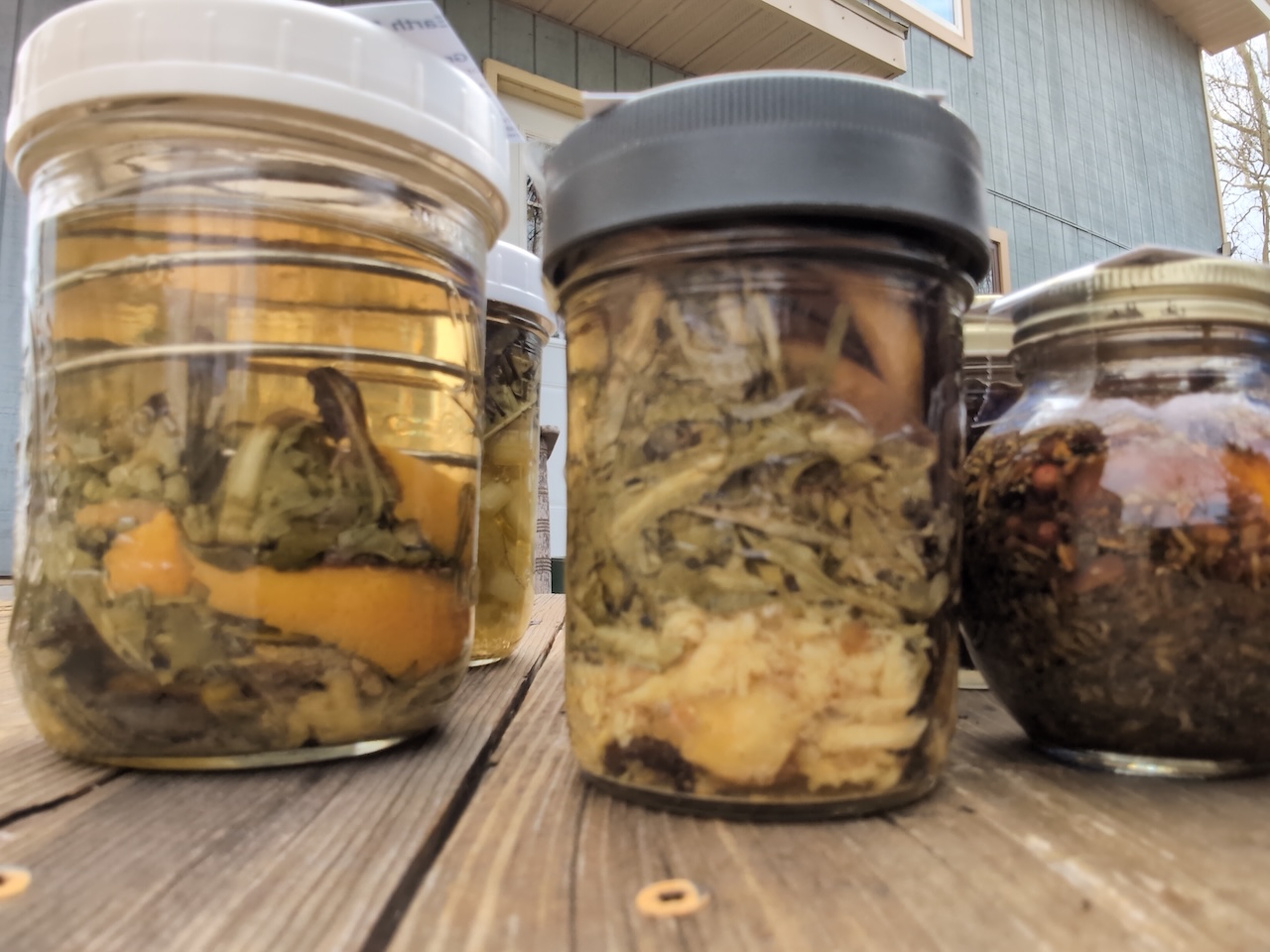
The mysterious power of resurrection is whispered in culinary transformations, like ferments or tinctures. I am celebrating the coming, unfolding, emerging spring with bitters full of dandelion greens and roots.

For most of human history we ate a lot of bitter food. The modern Western diet is full of salty and sweet. Processing strips away bitterness. You may enjoy the flavor result, but your body misses the bitter. Bitter taste wakes up our body’s digestive systems, giving the signal “you’ll have something to process soon.”
Bitters are recommended for everyone, but particularly for people who have had gall bladder problems, live with digestive turmoil, have a lot of cravings or feel overfull after eating.
While you may avoid drinking alcohol as a beverage, bitters are often taken as a tincture and use alcohol to extract and preserve properties of plants for medicinal purposes. Bitters are taken by droplet, so the dose is tiny.
You can use all sorts of plants and spices to make bitters. Here are two recipes I’m trying, and I encourage you to experiment.
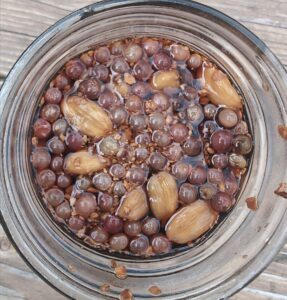
Recipe: Bitters
Ingredients
- 1 cup rinsed dandelion greens
- 1 tablespoon cardamom pods
- 1 teaspoon pink peppercorn
- grapefruit peel — ideally organic and also scrubbed well
- bourbon to immerse all ingredients (at least 1 cup)
Instructions
- You can repurpose a jam or salsa or other glass jar about 1 cup in size. Clean well and rinse thoroughly so no soap residue remains.
- Add dandelion greens, cardamom and peppercorn to the glass jar.
- Pack the ingredients by using the grapefruit peel to push down until everything is tight.
- Add bourbon to immerse all ingredients.
- Store out of the light but not somewhere you’ll forget about it. Shake the jar every couple days. Check to see that the ingredients are still under the bourbon. You may need to push the ingredients back down and/or add more bourbon. You can also use a fermenting coil or weights to keep the ingredients in the liquid. Buy online or in person at stores like Ace Hardware. Shop locally, if you can.
- After two weeks (or you can wait even longer), strain the solids out with a cheesecloth or the finest mesh strainer you have. Bottle the bitters in amber or blue dropper glass if you can find them. The color helps to protect the bitters from sunlight.
- You can use bitters by the drop, so a dropper bottle is convenient. Put about 3 drops right on your tongue, Or take 1 teaspoon of bitters in a glass of water.
- Take bitters about 15 minutes before a meal for optimal effect. But if you forget, or if you notice that you’re feeling overfull after eating, taking bitters during or after a meal is good, too.
- Bitters are delicious in cocktails and mocktails.
You can also try alternate ingredients:
- At least 1 cup chopped celery (ideally organic)
- At least 1 cup dandelion greens, rinsed
- Peel from ½ lemon
- Vodka to cover
See here for more information on making bitters. You can also read about other recipes for making bitters.



Have a comment on this story? Write to the editors. Include your full name, city and state. Selected comments will be edited for publication in print or online.