


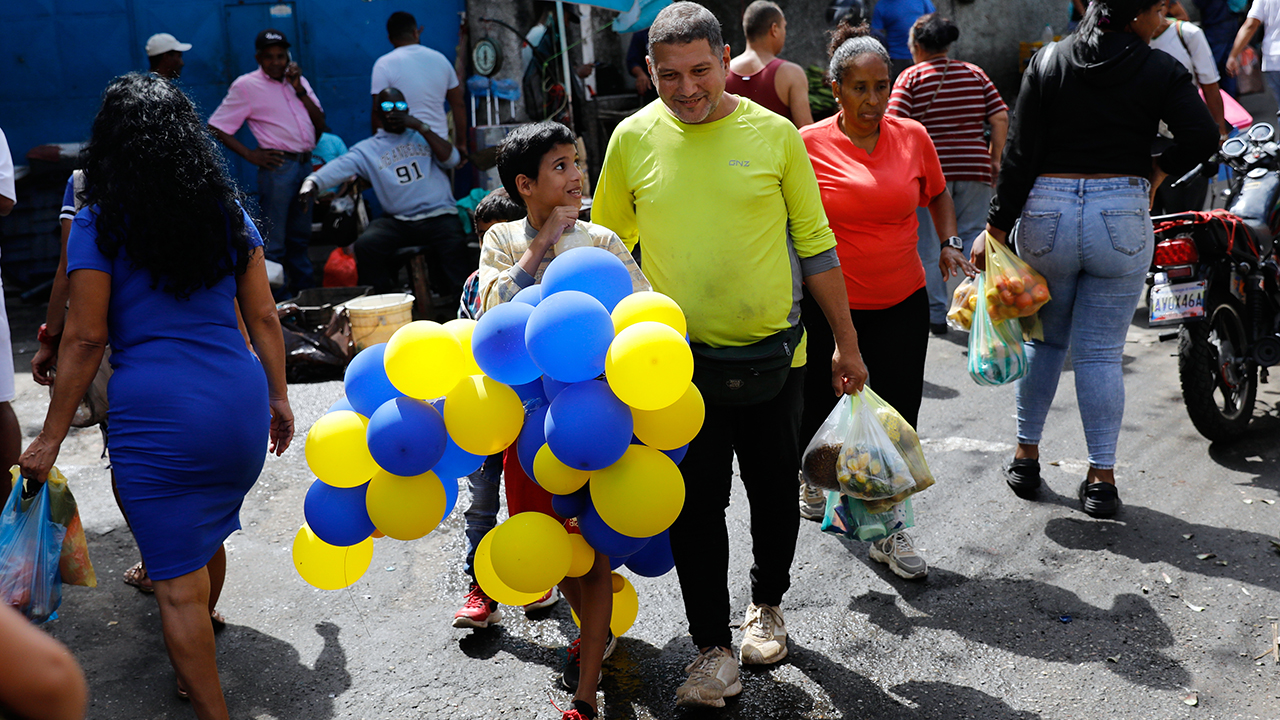
Anabaptists in Venezuela and neighboring countries are on edge amid uncertainty and instability following the arrest of Venezuelan President Nicolás Maduro by the U.S. military.
Maduro, his wife Cilia Flores, their son and other government officials were arrested Jan. 3 in Caracas on charges of importing thousands of tons of drugs into the U.S.
The surprise military incursion came less than a month after President Donald Trump pardoned former Honduran President Juan Orlando Hernandez for his U.S. conviction of helping smuggle more than 400 tons of cocaine into the U.S. The action also went against Trump’s campaign promises of decreasing American military intervention overseas. In a news conference just after Maduro’s arrest, Trump stressed American companies would be taking over Venezuelan oil production.
Millions of Venezuelans emigrated out of the country in the last decade as inflation, instability and corruption have led to food insecurity and limited social services while Maduro held on to power in elections widely viewed as fraudulent.
Speaking from Isla Margarita shortly after the events of Jan. 3, Marimar Sabariego, one of the leaders of the Iglesia Menonita Comunidad Cristiana de Camino (Christian Community of the Way Mennonite Church), told Mennonite Mission Network leaders many things seemed to return to normal.
“However, the security forces are deployed in the streets and hospitals have evacuated their inpatient wards. On the island there is a silence that is deafening,” Sabariego said. “For the glory of God, the people of Comunidad de Camino are well. … We will resume next Sunday, God willing. Let us trust in God and ask that He send His peace to our countries.”

Sabariego requested worldwide prayers on Jan. 16 for the peace of Venezuela, “understanding that many Venezuelan men and women do want to leave the political system in which we live, but in a peaceful and legal way.”
Iglesia de los Hermanos Venezuela (Church of the Brethren in Venezuela) urged every family, congregation and citizen on Jan. 3 “to remain calm, protecting their lives and the lives of their loved ones, trusting in divine protection.”
“In these difficult times that our beloved Venezuelan nation is experiencing, we issue a firm and hopeful call for calm, prudence and peace in our conversations and interactions on social media and in social groups,” stated the presidency of the conference, which counts about 2,100 members in 21 congregations. “… Let us lift up our prayers for the peace of Venezuela, for the strength of our communities and for the protection of every home. May God protect our nation.”
A majority of Venezuelan refugees have settled in neighboring Colombia, where churches such as IMCOL (Mennonite Christian Church of Colombia) have developed ministries to assist them.
IMCOL’s national committee issued a statement Jan. 3 calling for prayer for brothers and sisters in Venezuela and rejecting the U.S. military intervention. The statement reported IMCOL’s sister church in Venezuela reported great uncertainty in the streets as many people anxiously stocked up on supplies in markets and pharmacies.
“Brothers and sisters from the churches in Caracas are safe and sheltered in their homes,” IMCOL reported. “They ask for prayer for a negotiated solution instead of a possible second attack, that violence between pro-government groups and the opposition does not deepen [and] that Venezuela’s situation be resolved from within Venezuela and not through international intervention.”
IMCOL added its own prayers “for what this interventionist policy by the United States means for democracies around the world” and “that we may stand alongside the Venezuelan people in this moment of uncertainty, crying out to God for true peace and for justice that dignifies the lives of its people.”
Venezuelan Mennonite Pastor Euclides Bauza responded with thanks for IMCOL’s support during a time of anguish and uncertainty.
“We’re staying in touch,” he said. “From here, I’m communicating with those farther away and visiting those nearby. God bless you all. Thank you so much.”
Mennonite World Conference called on all its members to pray for their brothers and sisters in Venezuela in a Jan. 7 pastoral letter. MWC shared that Anabaptists in Venezuela were safe in the homes but there is a general feeling of uncertainty, fear of shortages of food, medicine and fuel, and some danger of violence in the streets. They requested prayers for stability, including respect for citizens’ rights and Christian spiritual resilience.
“We lament the USA’s decision to use its military might to seemingly fulfill its own agenda in another country,” wrote MWC President Henk Stenvers and MWC Peace Commission secretary Andrew Suderman. “Jesus calls us to love our enemies and not become what we hate. Concerns about one form of rule does not justify the military attack and intervention from another.”



Have a comment on this story? Write to the editors. Include your full name, city and state. Selected comments will be edited for publication in print or online.