


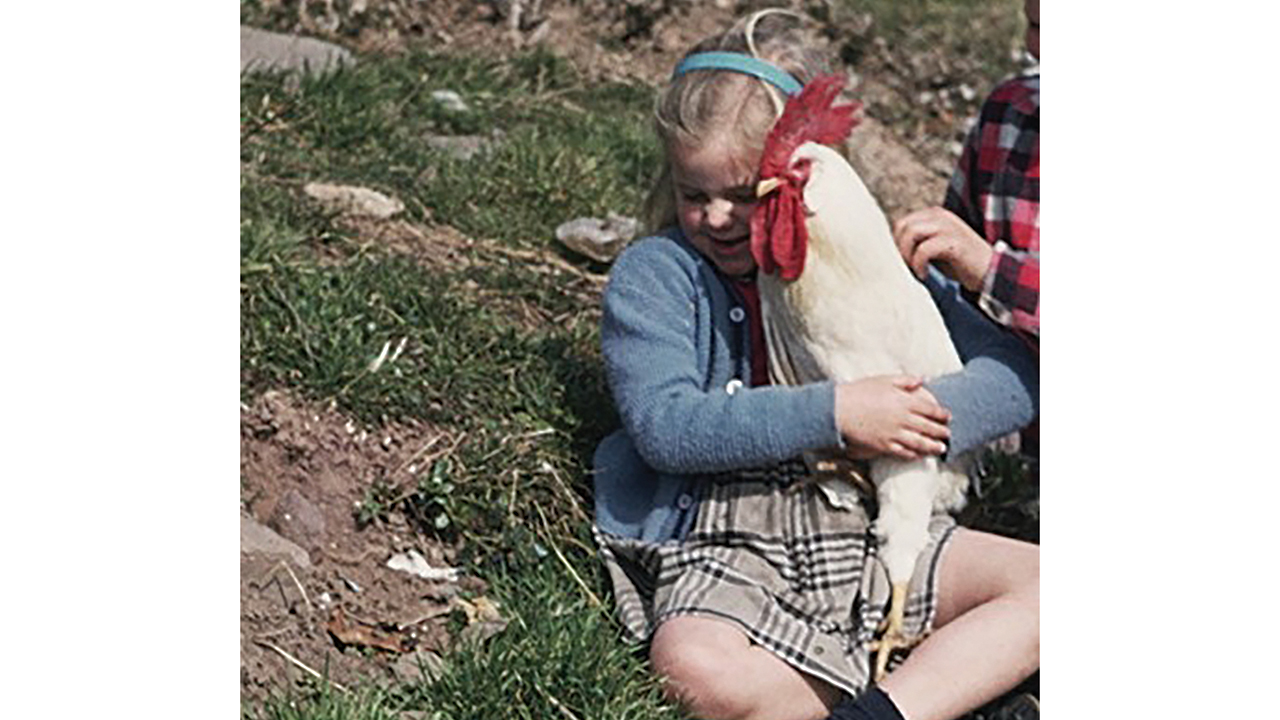
I grew up on a small farm surrounded by the natural world and its creatures. From the cats I cozied up to at night, to my pet rooster who would crow on my shoulder, to the birds we rescued and nursed back to health, I was connected to other-than-human beings for as long as I can remember. They were part of my community, and I was part of theirs.
The Mennonite world I grew up in taught me that humans had dominion over the natural world. We should be good stewards, of course, but the natural world was there for our use, to serve us.
Words mixed into this theology include hierarchy, patriarchy, extraction, scarcity, compartmentalization, objectification, disconnection.
In recent years I have been paying careful attention to where I encounter God. I’m asking, “Where is the Spirit beckoning me?”
I have encountered God in the natural world and its other-than-human beings. I believe we can experience kinship and communication with God’s creatures. The Spirit beckons me through them, both in the woods and in the city where I now live.
Words I have found helpful in describing this journey include embodied knowing, emergent growth, feminist, mysterious, internal, contemplative.

I used to say I grew up loving nature. Now I would say I grew up with a spirituality that was wild. I just didn’t have words for it.
I think our dominant worldview doesn’t serve us well and never did. Believing that we have dominion over other creatures — and that we can dominate other people — has led to extraction, violence and exploitation. Our Earth is suffering because of this.
Being good stewards is important, but we need to take it further. It is time to open new possibilities of relationship and belonging, where all creatures, including all humans, are important, are kin and have a voice.
In a time of unprecedented ecological, political and cultural collapse, the natural world and the other-than- human beings who live in it offer us care and wisdom, if we will only listen.
These sacred beings God created offer support — maybe even life support — if we listen with our hearts, open ourselves to this mystery and become curious about what is emerging.
A recent experience reminded me of what I am able to hear when I listen in this way.
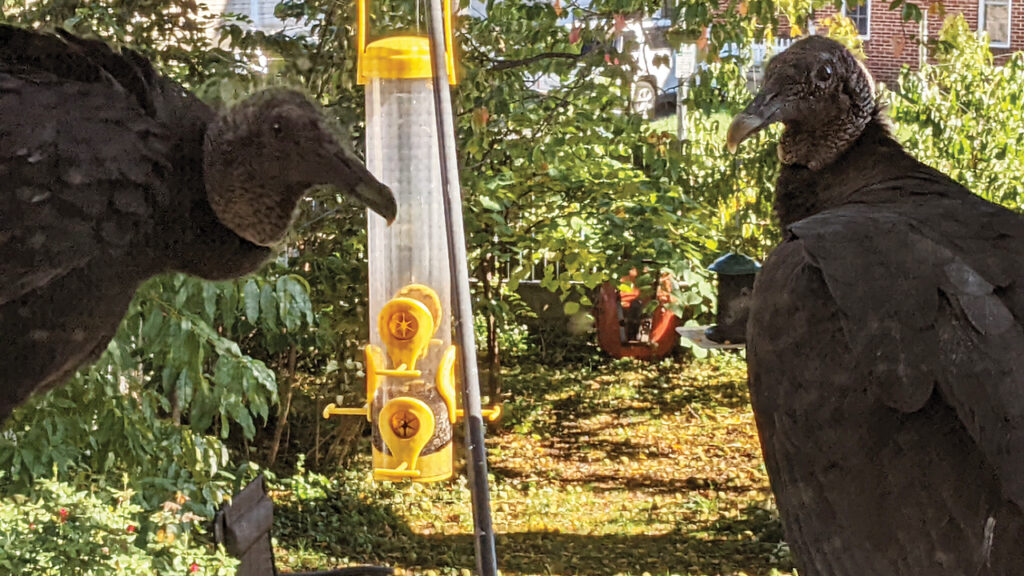
Three black vultures hung out in our yard for months, in the middle of Philadelphia, as we prepared to leave our home of 30 years. At first, I shooed them away. Who wants vultures in their yard?
But then I truly looked at them — glistening black feathers, a 6-foot wingspan, a height of 2-and-a-half feet. They sat on my back deck railing and looked at me through the screen door. They tilted their heads and made eye contact with me.
Before long I was greeting them every morning. They seemed to be reminding me that it was time for “out with the old to make space for the new.”
Vultures remove from the environment things we don’t need any more. Gentle and intelligent, they remove things that would poison us. I learned to welcome them in our back yard. Now I see them everywhere, high in the sky, gliding on warm air currents, barely flapping their wings.
They are just who they are, doing what they can do, not trying to clean up the whole world, just what is in front of them.
They seem, as Jared Anderson says in his book Something in The Woods Loves You, “to stand in the threshold. Shadows in the doorway, transitional creatures.”
So why wouldn’t they stand with me as I did the hard task of letting go of a place and of objects that were hard to let go of? Did they appear because I needed them? Did they come to share wisdom with me? To accompany me?
Maybe, at this moment in history, we are hearing the invitation to rewild our spirituality. To listen to the voices our dominant culture has overlooked. Voices of Indigenous people, women, communities of color, the queer community. Voices from the trees, the storms, the cicadas, the rivers and vultures. Voices bringing wisdom from our natural world.
Rewilding our spirituality moves us beyond dominion, beyond creation care. It moves us from stewardship to relationship. Not fully knowing or understanding, but open to surprises, living with questions, embracing serenity and hope.
Let’s live in the mystery of the web of relationship with all beings. Let’s be open to new possibilities of belonging and meaning, where all are important and all have a voice.
God continues to speak. The sacred Earth and its other-than-human beings can help us listen.
Carol Martin Johnson is an art therapist and licensed professional counselor. She lives in West Philadelphia where she is a leader of West Philly Wild Church and attends West Philadelphia Mennonite Fellowship.

Have a comment on this story? Write to the editors. Include your full name, city and state. Selected comments will be edited for publication in print or online.