


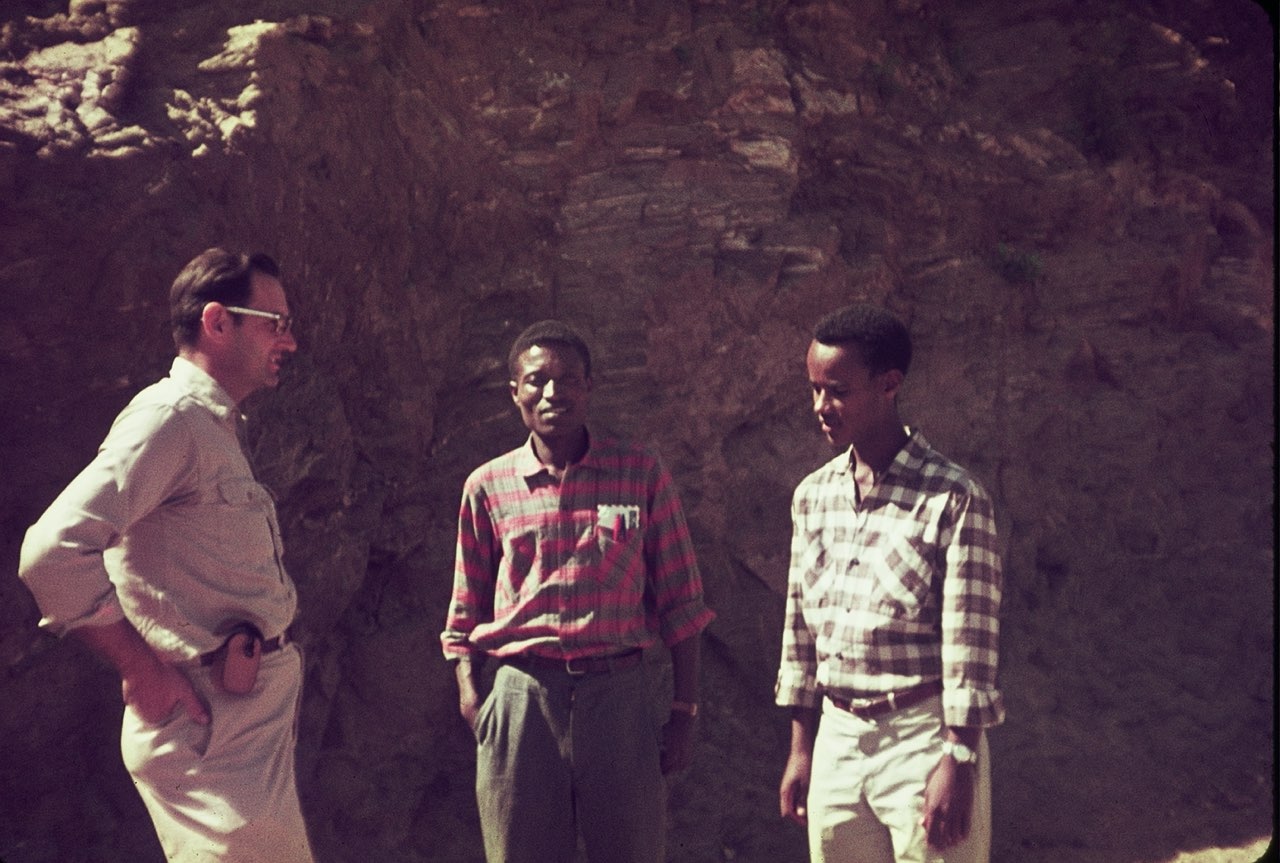
In my context, people often say a house’s quality and durability depend on the strength of its foundation. Though unseen, the foundation supports the entire structure. A weak foundation causes cracks and collapse, shortening its lifespan. Similarly, the core principles of a church determine its sustainability and the quality of its services.
Last week, I spoke with members of the Meserete Kristos Church who served with early Mennonite missionaries in Adama (formerly Nazareth), Ethiopia, to document the local church’s history. The MKC has evolved over seven decades, shaped by both internal and external factors. In this article, I share five key principles — foundational issues for a church that chooses to follow Anabaptism, instilled by the early Mennonite missionaries in the 1950s — that continue to guide the MKC today.
1. Opening the Holy Book
Ethiopia, with Christianity dating back to the fourth century, traditionally saw limited engagement with the Bible despite its presence in many homes. Mennonite missionaries, recognizing this, prioritized encouraging nationals to read and live by Scripture. They valued the Bible highly, teaching it in classrooms to students of all backgrounds and preaching in chapels and rural areas. Today, MKC is recognized in Ethiopia as a teaching church. The Holy Bible remains at the core of its beliefs, identity and message. MKC actively encourages its members to open the Scriptures, read and understand them, live by their principles and share the Word with others. It is this deep commitment to God’s Word that I believe has made MKC relevant, vibrant, and impactful in the lives of people across different regions of the country.
2. Witness in words and deeds
People noticed the Mennonite missionaries not for their skin color but for their respectful, compassionate actions. Working in hospitals and clinics, they showed genuine care and peaceful, loving behavior that reflected their Christian faith. Though not famous preachers, their lives spoke loudly, teaching believers the value of witnessing through actions, not just words. Members of the church learned from these missionaries the importance of witnessing through their daily lives, not just through words. MKC has much work to do in helping its members live in a way that aligns their actions with the words they preach, truly reflecting the life of Christ’s followers within their communities.

3. Focus on children
In the early days, children were not highly valued or given much attention within the community, as people believed their growth was determined solely by fate and the will of the Creator. The early Mennonite missionaries focused primarily on leading adults to Christ and conducting services to nurture their faith and encourage their service to God. At the same time, they began to offer services specifically for children. They organized engaging Sunday school programs that attracted children of Christian parents as well as other children from the community. These children grew up hearing God’s Word and eventually became followers of Christ.
The MKC learned from the example set by these early missionaries and continued to maintain Sunday school services for children. This ministry persisted even during the persecution under the communist regime. Today, regardless of various challenges, Sunday school remains available in every local MKC church. One significant source of MKC’s growth has been biological, with children growing through the church community by learning basic Christian doctrines and then choosing to be baptized after confessing their faith in Christ.
4. Holistic approach to mission
The early Mennonite missionaries preached the gospel while actively addressing the urgent needs of the communities where the Holy Spirit led them to serve. They established schools, hospitals, clinics, and other social services to educate children, provide medical care for the sick, and empower communities to engage in productive agricultural and income-generating activities. Through meeting these essential needs, they demonstrated the love of Christ practically and tangibly.
MKC continues this holistic approach to this day. Various children and youth programs, food security initiatives, climate change projects, and peacebuilding efforts are carried out to address the physical and social needs of the people, all while sharing the good news of Jesus Christ. This integrated strategy has enabled the church’s impact to extend far beyond its immediate circle, fostering meaningful transformation throughout the broader community.
5. Balanced relationship with the state
The early Mennonite missionaries engaged with the state carefully, initially offering humanitarian aid in Ethiopia before requesting missionary status. Granted limited access to “open areas,” they respected boundaries but also preached in “closed” regions like Adama, leading to warnings. They then sought ways to serve without breaking rules. Over time, positive relations grew as the government valued their medical and educational work. MKC adopted an approach of working with the government as long as the partnership does not compromise the teachings of the Word of God. The church maintained its boundaries in its relationship with the state.
During the communist regime, when the government attempted to use the church to promote its agenda, MKC refused to comply and consequently faced persecution, including being banned as an illegal institution. To this day, MKC strives to balance cooperation with the state in ways that benefit society, while ensuring its actions align with scripture and preserve the church’s principles.



Have a comment on this story? Write to the editors. Include your full name, city and state. Selected comments will be edited for publication in print or online.