


These are turbulent times, marked by division, conflict, and uncertainty. Worship, if it is to remain authentic, must speak clearly and honestly to our lived experience. We take our cue from the Bible hymnbook, the Psalms, when we honestly wrestle with the realities of conflict, violence and suffering — and still courageously affirm hope. It was in searching for such honest and hopeful worship that I turned again to songs that had deeply shaped me decades earlier.
In the spring of 1969, a Mennonite student choir I directed sang William L. Dawson’s a cappella arrangement of Soon-ah Will Be Done (with the Troubles of This World). We called ourselves the Rosedale Chorale. All of us were white, barely out of our teens, and just beginning to grasp the troubles and suffering endured by our 16th-century Anabaptist ancestors.
At the same time, we found ourselves singing — during a season of war, protest, racial injustice, and national disillusionment — the spiritual music of African Americans who had been enslaved by white Christians claiming “liberty and justice for all.” The experience was complicated, challenging, and profoundly formative.
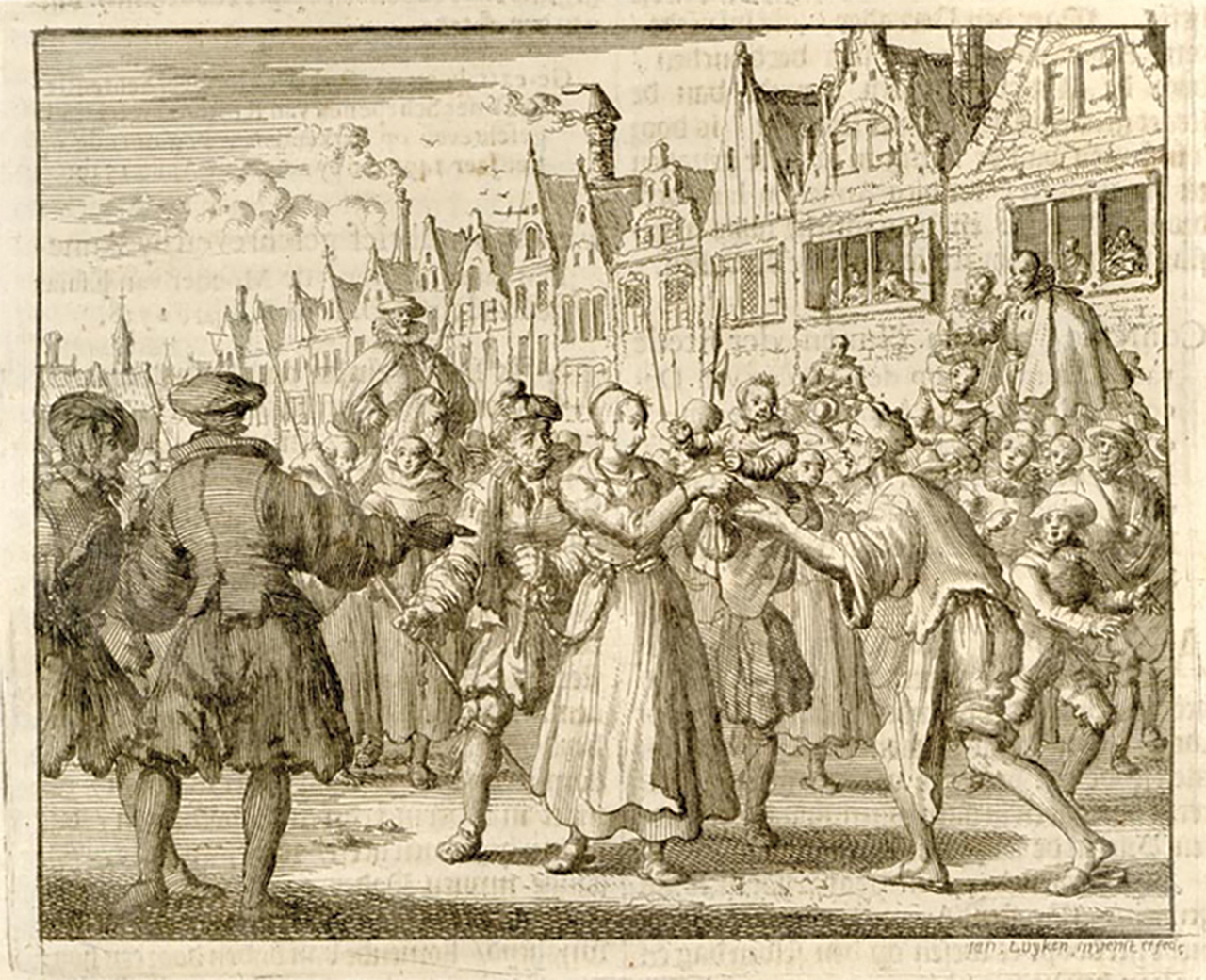
Growing up, my family remembered Anabaptist martyrs from centuries past. When I was too big for a highchair but too short for the dining table, my booster seat was the Martyrs Mirror, an enormous book published in English in colonial America (Ephrata, Pennsylvania, 1748). It depicted vividly the painful deaths of early Christians tortured by Roman authorities and Anabaptists persecuted by fellow Christians during the Protestant Reformation. Our ancestors had resisted nonviolently the demands of governments equating baptism with citizenship. These Anabaptists (rebaptizers) were considered traitors to a unified church-state order.
Over time I’ve grappled with the ironies of martyr narratives. As a teenager singing Faith of Our Fathers, with its stirring imagery of faithful endurance, I assumed it referenced Anabaptist suffering. Later I discovered it actually commemorated English Catholics persecuted under Protestant rule. And Foxe’s Book of Martyrs chronicles Protestant suffering under Catholic rule but largely omits Protestant persecution of others. These realizations deepened my awareness of the complexities and contradictions within Christian martyr traditions.
In 1969, amid the upheaval of the Vietnam War era, I was searching for a deeper truth — a voice that resonated with my Anabaptist heritage while honestly addressing contemporary injustice and suffering. We were not alone. That same year, spirituals and protest songs echoed across campuses, sanctuaries, and streets. Simultaneously, I sang classical repertoire and spirituals with the Ohio State University Symphonic Choir, directed by Maurice Casey. Even within classical formality, I heard the same yearning expressed in spirituals: a profound longing for peace and justice, for a world made whole.

Recently, while reading Anabaptist texts from the 16th century with William Higgins of LMC, I revisited these spirituals alongside hymns from our Anabaptist tradition. The Ausbund, a 16th-century hymnbook written by imprisoned Swiss Brethren, and Martyrs Mirror contain songs of endurance, nonviolence, and unwavering hope.
One hymn begins: “Ich hab mein Sach Gott heimgestellt,” or “I have committed my cause to God.” Another hymn, attributed to Dirk Willems — an Anabaptist martyr who famously saved his pursuer from drowning only to be executed by fire — expresses heavenly hope even in the shadow of death.
These were songs not of triumph, but of trust.
Surprisingly, the pairing of spirituals and martyr hymns felt not just natural, but necessary. Both song traditions emerged from deeply suffering communities who refused to relinquish their faith or humanity. Both bear witness through music to a God who hears the cries of the oppressed — and who transforms lament into praise.
I have compiled these pairings into Songs of Fire: A Guide for Worship and Reflection, which aligns six African American spirituals with six Anabaptist martyr hymns. Each pairing includes Scripture, theological reflections, and worship suggestions. Here are the six pairings featured in the guide:
Theme: Joy amid Sorrow
Anabaptist: I Have Committed My Cause to God
Spiritual: Sit Down Servant
Theme: Deliverance and Exodus Hope
Anabaptist: O God, Father, We Praise You
Spiritual: Go Down Moses
Theme: Nonviolence and Forgiveness
Anabaptist: Lord, I Wait for Your Compassion
Spiritual: Ain’t Gonna Let Nobody Turn Me Around
Theme: Witness unto Death
Anabaptist: Oh God, How Many Heartaches
Spiritual: Were You There When They Crucified My Lord?
Theme: Hope for Deliverance
Anabaptist: I Have Committed My Cause to God (reprise)
Spiritual: Soon-ah Will Be Done (with the Troubles of This World)
Theme: Heavenly Hope and Reunion
Anabaptist: A Beautiful Song of Faith (Dirk Willems)
Spiritual: Swing Low, Sweet Chariot
This resource is not an academic curiosity or liturgical novelty. It is an offering rooted in existential urgency. Our world is again in pain. Our churches are divided. Worship, if it is to be faithful, must be honest about suffering and yet bold in hope. The spirituals teach us that music born in bondage can set hearts free. The martyr hymns remind us that peace is not passivity, but perseverance in love.
I do not pretend that our choir in 1969-70 fully understood the spirituals we sang. But we knew enough to sing them with reverence, and to allow our spirits to be shaped by these songs. Today I offer these songs in the same spirit — as a bridge, a testimony, and a call to worship honestly and hopefully, even in a broken world and a fractured church.
An online version of Songs in Fire: A Guide for Worship and Reflection is available for readers who wish to reflect on these pairings or incorporate elements into personal or public worship. I invite readers and congregations to explore these songs with open hearts — and to let them shape our shared worship in this generation. And of course, you may wish to add your own pairings to these suggested ones. This is an expandable resource, offered in the spirit of shared song and shared hope.


Have a comment on this story? Write to the editors. Include your full name, city and state. Selected comments will be edited for publication in print or online.