


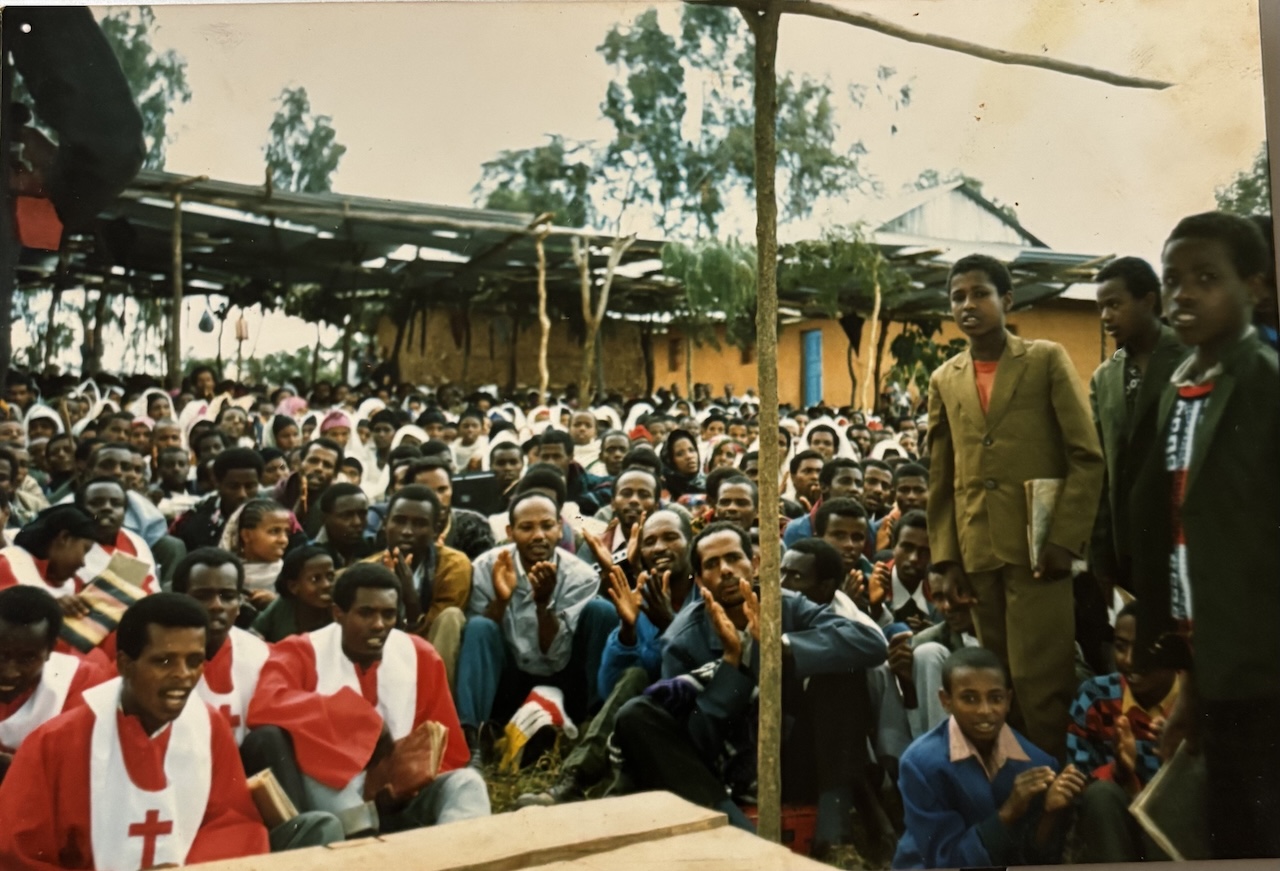
Throughout the centuries, the church of Jesus Christ has faced numerous challenges in a world often opposed to the Christian faith. In Ethiopia, the Meserete Kristos Church (MKC) endured a decade of persecution under a socialist regime in the 1980s. However, there are “good” challenges that MKC currently faces due to its remarkable growth, and are rooted in the healthy expansion of the church. Here, I will discuss five significant challenges arising from this growth, drawing from MKC’s experiences in Ethiopia.
1. Challenge of making disciples
A core element of the Great Commission is to make disciples of believers (Matthew 28:19). Since the fall of the socialist regime in 1991 that resulted in religious freedom, MKC has experienced steady growth. The church thrived as part of an underground movement during socialism, relying on a small network to facilitate discipleship among new believers. However, with the influx of many new people after the regime change, local churches have struggled to implement effective discipleship programs. The surge in attendees far exceeded the number of church members equipped for discipleship, making it increasingly difficult for leaders to spend quality time helping individuals apply God’s word and grow in faith. Too often, churches shifted their focus to counting numbers, losing sight of the personal connections that nurture true discipleship.
2. Challenge of building meaningful relationships
In MKC local churches, new faces often fill familiar seats weekly. Cultivating an open and welcoming spirit for newcomers is essential, but the rapid influx of new attendees poses challenges for those who prefer familiar company. The lack of time for meaningful interactions has resulted in shallow connections, hindering believers from experiencing the intimacy of truly knowing one another. Genuine community requires effort to build relationships that go beyond surface interactions.
3. Challenge of developing mature leaders
MKC has established a leadership training program, but it struggles to effectively train and equip leaders amid rapid church growth. The pace of leadership development has not kept up with the expansion, leading to a decline in the quality of discipleship programs and the emergence of capable leaders. In smaller congregations, MKC could select and train leaders thoroughly in doctrines and church policies. However, as churches have grown, some leaders have been assigned without a comprehensive understanding of MKC’s identity and values, resulting in a lack of uniformity in worship styles and practices across local churches.
4. Challenge of managing diversity
MKC’s transformation from local churches along the Ethio-Djibouti railroads into a vibrant nationwide community has enriched it with diverse ethnicities, languages, traditions and lifestyles. This growth is a blessing, but it also presents significant challenges in maintaining unity among members with differing backgrounds. MKC has yet to develop a diversity management policy that fosters cohesion among believers by recognizing and valuing their unique differences. Embracing a vision of God’s Kingdom that appreciates individuality while promoting unity is essential for preserving MKC’s identity across various cultures.
5. Challenge of gathering places
When MKC emerged from the underground movement, it lacked dedicated church buildings for worship. Past structures were seized by the socialist regime and not returned. As a result, local congregations began meeting in rented halls, temporary shelters or outdoors. The increasing number of attendees has made it difficult to accommodate everyone, leading congregations to divide into smaller groups, each setting up temporary worship spaces. Many churches prioritize evangelism and soul-winning over establishing proper gathering places. Many congregations are forced to meet in makeshift locations, spending large amounts on rent for basic facilities. Most cannot afford to purchase property, as individual contributions are limited.
In conclusion, the MKC in Ethiopia stands at a pivotal moment of growth that brings both opportunities and challenges. The five key challenges discussed highlight the complexity of navigating a rapidly expanding community. As MKC moves forward, it is vital to balance numerical growth with spiritual depth. True discipleship must be prioritized, ensuring that individuals not only come to faith but also grow in their understanding and practice of that faith.
By addressing these challenges directly, MKC can harness its remarkable growth to build a church that expands in numbers while maturing in faith, unity, and purpose. Ultimately, as MKC navigates this season of growth, it must remain steadfast in its mission to glorify God and make disciples, reflecting the essence of the Kingdom of God in every aspect of its life and ministry.



Have a comment on this story? Write to the editors. Include your full name, city and state. Selected comments will be edited for publication in print or online.