


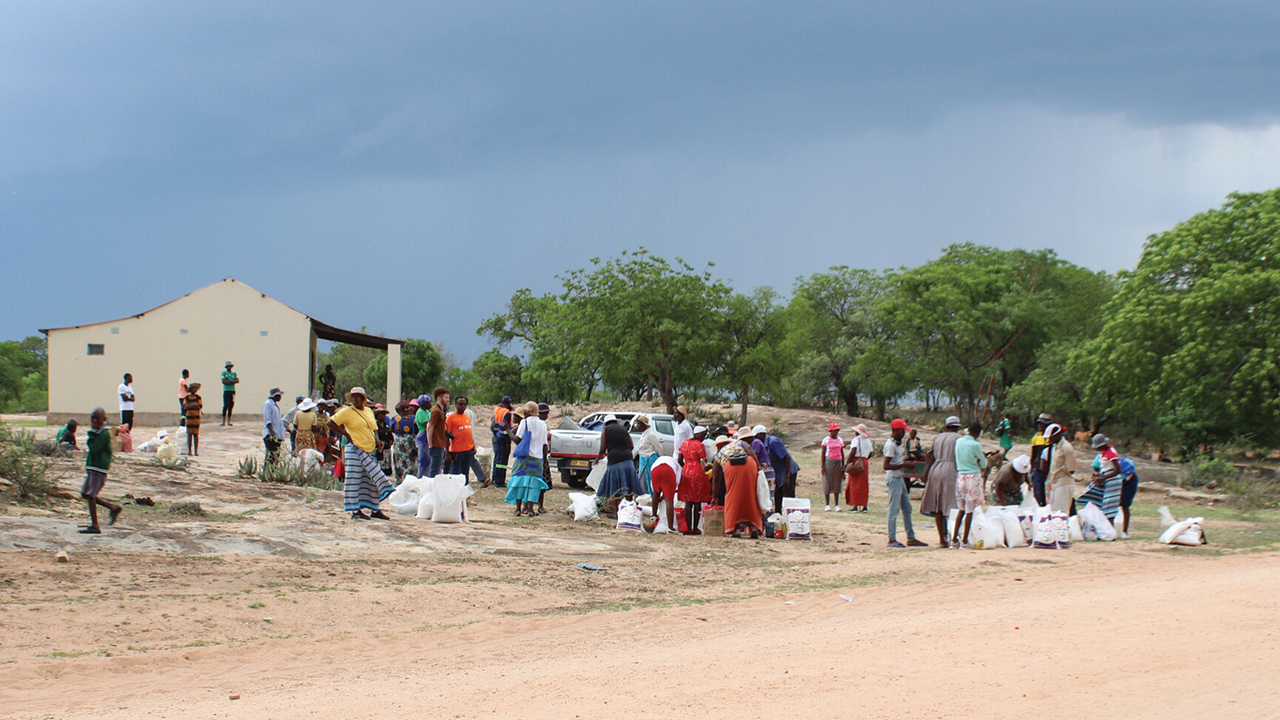
As a yearlong drought dried up crops across southern Africa, Mennonite Central Committee partners distributed food to more than 3,500 families in Zimbabwe and Zambia in 2024 and 2025.
“For the past couple of years, there’s been a decline in terms of production and farming yields due to climate change,” said Gugulethu Nyathi, a Zimbabwe Brethren in Christ Compassionate and Development Services project officer in Zimbabwe.
Families had to reduce the number of meals each day, water down their mealie meal (a coarsely ground flour made from dried corn kernels) and enlist their children in earning money for food.
At a distribution site in Zimbabwe last November, families received 110-lb. bags of mealie meal, 20-lb. bags of dry beans and 12 cups of cooking oil. For the next month, families would have secure food.
The mood was jubilant, said Julia Weaver, a participant in MCC’s two-year Seed program for young adults.
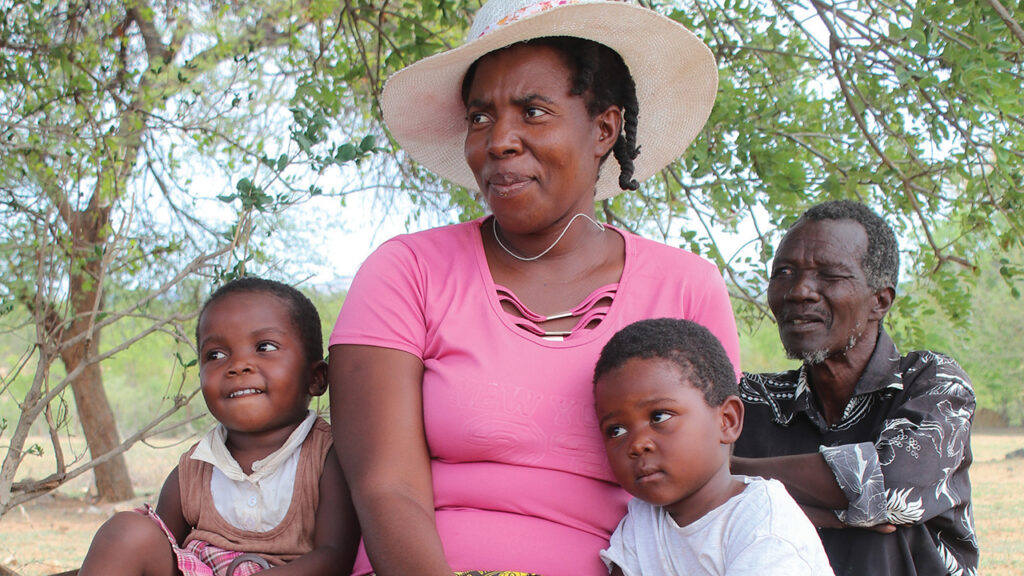
One recipient, Morlate Dube, “had a child strapped to her back and a smile ear to ear while she collected her family’s portion of food supplies,” Weaver said. “We conversed about how she was going to make her family beans for the first time in months.”

To everyone’s surprise and delight, rain began to fall during the distribution.
“We’re planting today!” Dube said.
Rain fell inconsistently in December and January, but it seemed to be enough for pumpkin and cow peas, a protein source, to begin growing. More rain came in February — so much that some roads flooded. Once-barren fields around Dube’s household brimmed with life, and the river had water they could use.
When Weaver visited in February, not only was the landscape different, but the people were too, now that they were eating three meals a day.
One child was in school, and the younger one, who had been listless in November, was playing peek-a-boo. She had more weight on her legs, and her clothes fit better.
“There is a big difference,” Dube said, “because we were in a difficult situation. We didn’t even know where to start. But ever since we received the food assistance, it’s now easier to think of other means of survival.”
With food to rely on, they can use the money that her husband, Milton Tshalibe, gets from piece jobs for other needs.
“We used to survive on piece jobs, so if you got maybe, let’s say, $5 or $2, we would use it all to buy food,” Dube said. “We couldn’t even buy other things like soap or shoes. But ever since you assisted us with food, we used that [piece-job] money to buy soap, shoes and even a dress.”



Have a comment on this story? Write to the editors. Include your full name, city and state. Selected comments will be edited for publication in print or online.