


Yet the households of thieves
are filled with abundance,
and those who provoke God are secure
while making gods of their violent ways.

                    Job 12:6, The Inclusive Translation by Priests for Equality
This Halloween season is spooky enough without a single horror film or zombie costume. The rich are getting richer, and the poor are getting poorer. Power-lusters strut their narcissism on social media, and bullies get the most clicks. When, I pray with desperation, will the first become last and the last become first? I long for Advent and Mary’s vision that the rich be sent away empty and the poor be filled. This year, could it be more than a hymn?
In the meantime, we have Halloween, Thanksgiving and all that fall decor. It’s a horror story unto itself. Did you know that the pumpkins we decorate our porches with are a significant contribution to climate change? Landfills are the third greatest producer of methane, and the majority of pumpkins end up in the landfill, rotting into methane and leachate.
Dealing with leftover jack-o-lanterns and fall decorations can be an introduction to composting for your grandkids, congregation or neighborhood association. If you already have a working compost pile, smash up pumpkins and add them on. But if you have no space or knowledge for compost, this could be a fun way to start.
But ask the animals, and they will teach you,
the birds of the air, and they will tell you;
ask the plants of the earth, and they will teach you,
and the fish of the sea will declare to you.
Who among all these does not know
that the hand of the Lord has done this?
Job 12:7-9, NRSV
For all of the following ideas that I mention, start by removing any stickers, candles, lights or other foreign matter from your fall decorations. Paint is okay.

If you have trees or bushes nearby, you could simply smash your leftover gourds and pumpkins and scatter the pieces underneath for wildlife to enjoy.
Your congregation could host a “pumpkin smash” for the whole neighborhood or town – an outreach and fellowship opportunity. Learn more about the possibilities (from catapults to baseball bats) with this video.
If your city offers curbside composting/organic waste pickup, you can put pumpkins and gourds in the bin.
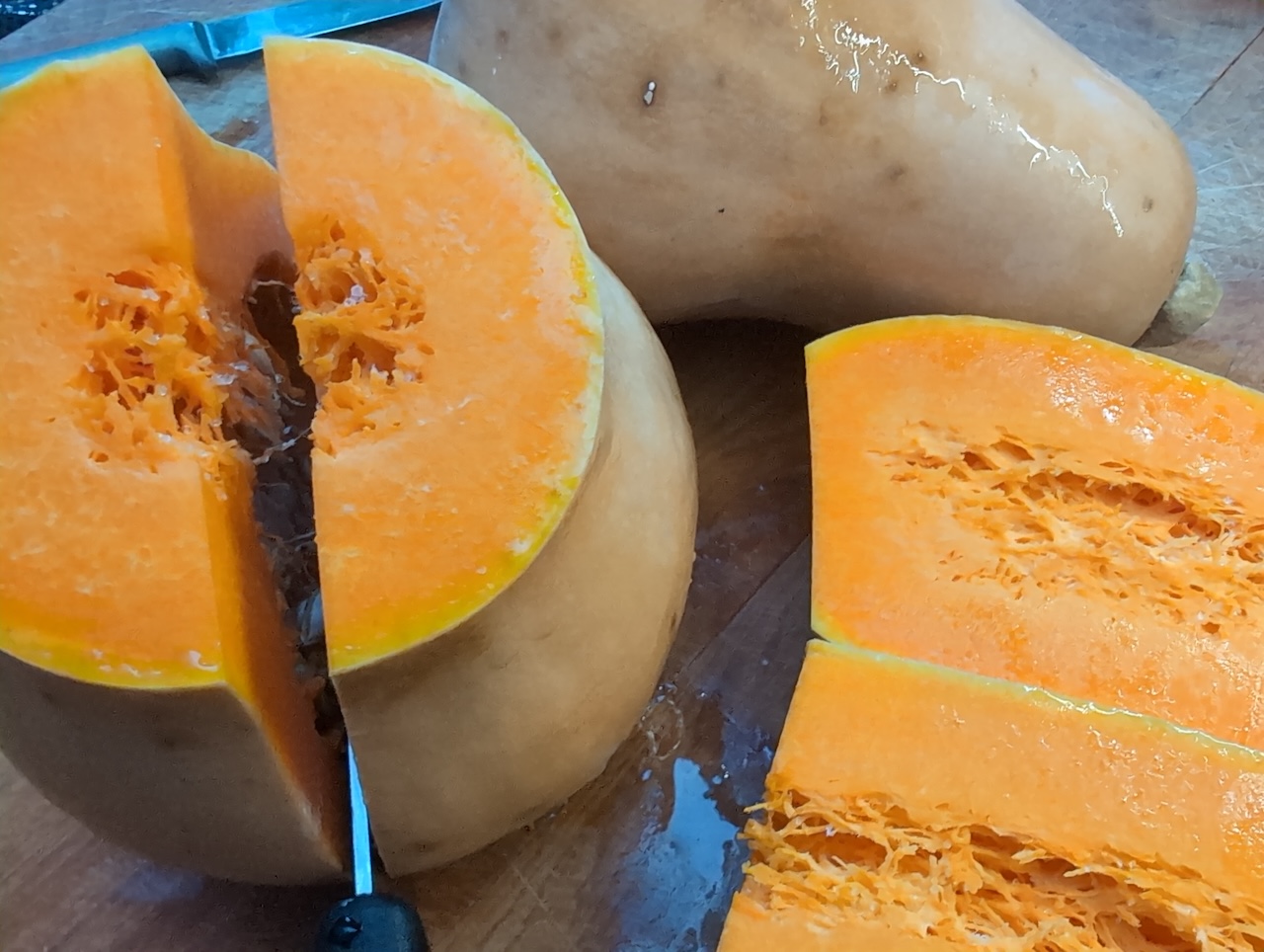
You can cook any previously uncut pumpkin decorations. I have made pumpkin soup, pumpkin pie and other various recipes to use up fall decorations. Honestly, pumpkin isn’t my favorite. I prefer butternut or acorn squash, which also make beautiful fall decor. Consider decorating with something you want to eat at the end of the season! You can paint faces on any of these vegetables and still eat them later — but peel the skin or wash off the paint, of course.
In his hand is the life of every living thing
    and the breath of every human being.
Does not the ear test words
    as the palate tastes food?
 Is wisdom with the aged
    and understanding in length of days?
With God are wisdom and strength;
    he has counsel and understanding.

                                                                Job 12: 10-13, NRSV
Recipe

Butternut squash soufflé-inspired casserole: savory or sweet
Every recipe I’ve found for any kind of pumpkin or squash souffle is at least 75% fats – eggs and dairy, and then a bit of vegetable tossed in. I mean, it does taste delicious. But it doesn’t include much vegetable, and it’s not healthy for me. So I created this recipe that maximizes the squash and minimizes the fats. It’s not low fat, because it wouldn’t have been enjoyed by my family that way! (And it doesn’t taste rich and probably shouldn’t be called a soufflé, but I wanted you to know the origin story.) There’s a point at which you can go savory or sweet, according to your mood or what the potluck needs more of.
Ingredients
- 3 tablespoons butter
- 10 fresh sage leaves or 5 dry
- 2 tablespoons milk (dairy or nondairy)
- 1 teaspoon salt
- 1 teaspoon pepper
- 5 eggs
- 1 cup grated cheese (Swiss, cheddar, etc.)
- ½ cup yogurt, sour cream or cream cheese
- 3 cups peeled, cooked butternut squash (or other squash or pumpkin)
- Savory options include a few cloves of garlic or 1 teaspoon garlic powder, as well as spices you like, such as paprika, or herbs, such as parsley or basil. Sautéed onion or shallot is another possibility.
- For a sweet option, add 1 tablespoon grated fresh ginger or candied ginger, or up to 1 teaspoon powdered ginger, as well as ½ teaspoon cinnamon and any other spices (nutmeg, allspice, etc.) you like. You can also add 1 teaspoon vanilla and 2 tablespoons maple syrup or honey.
Directions
- Melt the butter and add the sage, simmering until the butter browns. If you are NOT using a food processor or blender, strain out the sage, leaving the strainer over the pot to let as much butter drip back into the pan as possible.
- Combine all other ingredients in a food processor (or powerful blender) and process until smooth and uniform. Add in the butter. If you do NOT have a food processor or powerful blender, beat the eggs and then add the dairy. Beat until smooth. Add everything else and combine.
- Bake in a greased 13×9-inch pan or casserole dish. For a savory dish, sprinkle grated cheese, breadcrumbs, or almond flour around the pan before pouring the batter in. For a sweet dish, use a little sugar. (You can also bake in individual containers.)
- Bake in a fully preheated 375 oven for about 35-40 minutes, or until the soufflé-like casserole is brown and puffy on top. Resist the temptation to check by opening the door; just turn on the light to check.



Have a comment on this story? Write to the editors. Include your full name, city and state. Selected comments will be edited for publication in print or online.