


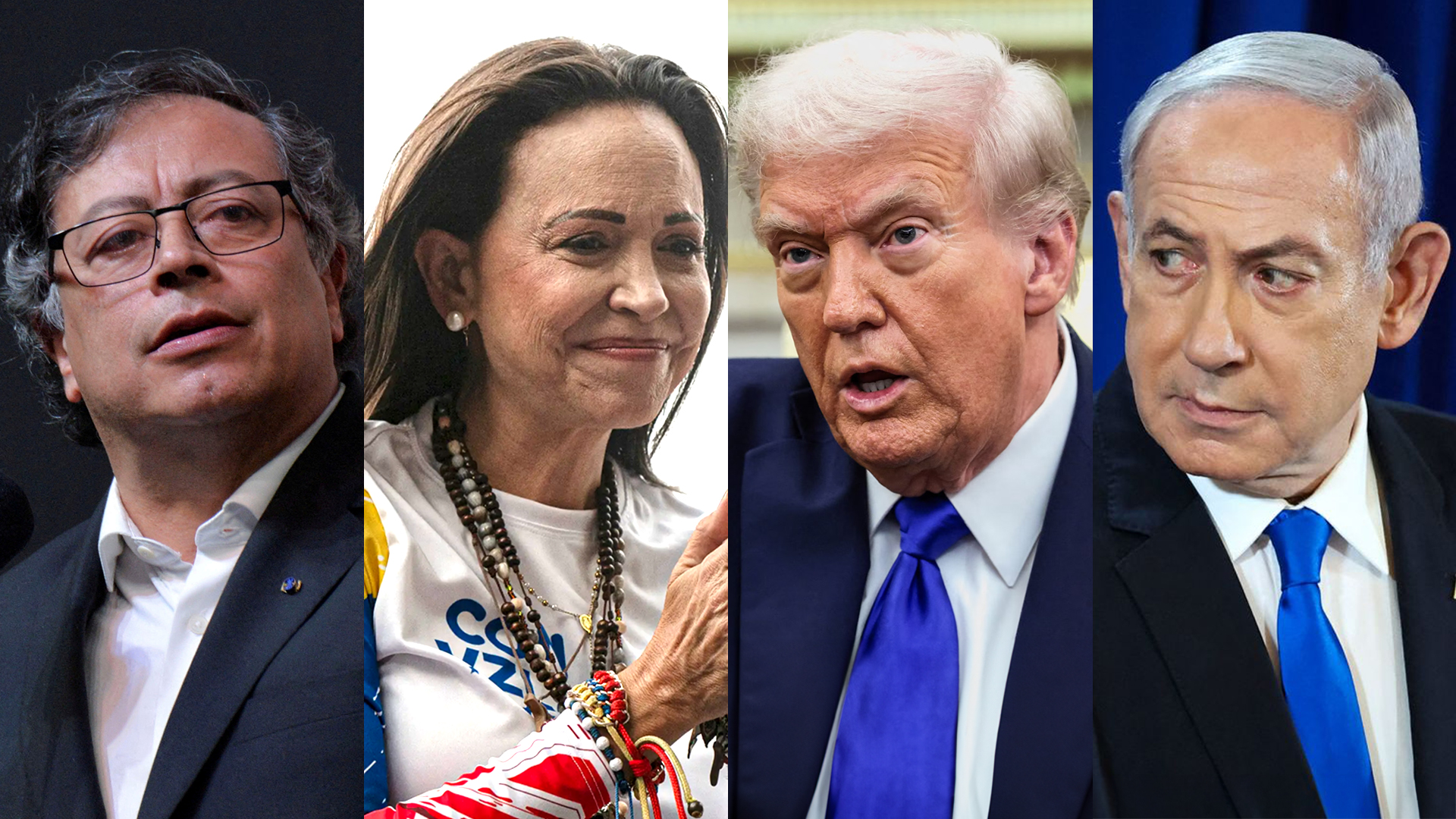
The Nobel Peace Prize was awarded this month to Venezuelan politician María Corina Machado for her “tireless work promoting democratic rights for the people of Venezuela and for her struggle to achieve a just and peaceful transition from dictatorship to democracy,” according to the awarding committee.
While this might sound like proper recognition of a leader seeking justice and peace, deeper questions arise from this decision. What are the politics of peace in today’s world?
International politics are moving along two distinct currents. On one side, there is a global agenda of privatization, military intervention, natural resource extraction, mass deportations, denial of climate change and the widening of socioeconomic inequality — all sustaining the expansion of capitalist economies.
On the other is an opposing vision: prioritizing public investment and social welfare, pursuing demilitarization, conflict prevention, protecting human rights of immigrants and vulnerable communities, developing green energy, promoting dialogue and solidarity between nations and reducing the gap between rich and poor.
Machado, unfortunately, does not align with the latter. She has publicly praised and aligned herself with right-wing leaders, including Argentina’s Javier Milei — widely criticized for his incendiary rhetoric against the opposition and corruption scandals — and her public admiration for Israeli Prime Minister Benjamin Netanyahu and U.S. President Donald Trump, both accused of human rights violations, as reported by activists and some international leaders. This raises doubts about her commitment to peace.
Machado has called for military intervention in Venezuela, marking a sharp departure from what is expected of a Nobel laureate. In 2018, Machado sent a letter to Netanyahu asking for “strength and influence to advance in the dismantling of the criminal Venezuelan regime.” Through her social media accounts after being awarded, she stated, “I decided to dedicate it [the Nobel Peace Prize] to President Trump because he deserves it.”
If Machado truly stands for peace, shouldn’t she do it without aligning with national leaders who are complicit in war crimes and humanitarian crises?
There’s a contrast between leaders being celebrated for “peace” and those genuinely working toward justice and equality. Colombian president Gustavo Petro is an example of latter.
In late September, at the United Nations, Petro called for a shift toward a sustainable global agenda. Central to his message was an end to the genocide in Gaza — led by Netanyahu, backed by Trump and enabled by the United States and its allies through military aid and diplomatic protection.
Petro also warned of the urgent need to confront climate catastrophe caused by global emissions. He encouraged nations to form a global army of peace to intervene in genocides, human rights violations and climate justice. His address was a rare message of hope amid destruction, one that positioned him as a genuine global advocate for peace.
Yet, after remarks at the UN and pro-Palestine events, the U.S. revoked Petro’s visa, while Netanyahu continues to be protected by the law and praised by many as a peace-seeking hero.
Netanyahu acts as if peace for Israel can only be achieved by crushing the Palestinian people. In November 2024, the International Criminal Court charged Netanyahu with war crimes and crimes against humanity. In December 2024, Human Rights Watch and Amnesty International both concluded Israel was committing genocide in Gaza.
Since the Gaza cease-fire, Trump has been praised as a peacemaker, even as his domestic policies rely on mass deportations, construction of detention centers that violate immigrants’ rights and the militarization of U.S. cities like Portland and Chicago. The cease-fire was not born from good will alone but from international pressure — protests, sanctions and global outrage over the atrocities in Gaza.
Trump has said he’d like to win a Nobel Peace Prize, and Machado’s win signals a growing alignment between the prize and the interests of U.S. foreign policy.
Pérez Esquivel, a Nobel Peace Prize awardee in 1980 and promoter of human rights during the Argentinian dictatorship, criticized the award given to Machado.
In an open letter published in Capital 12 in Argentina, Esquivel said: “I don’t recognize her in any way of working for peace. . . . On the contrary, she asked Trump to intervene in Venezuela.”
Machado’s status as a Nobel Prize winner may pave the way for deeper U.S. military intervention in Venezuela —foreshadowed by bombings in the Caribbean that Petro has denounced as extrajudicial killings without due process.
What has become of global peace when those who promote war and oppression are celebrated as its champions? The politics of peace today seems less about ending violence and more about legitimizing power.
If peace is to have meaning, it must return to its roots — justice, equality, nonviolence and the defense of all human life. The United Nations defines peace as not merely the absence of war but the presence of dignity, well-being and justice for all.
Anything less is not peace, but propaganda.


Have a comment on this story? Write to the editors. Include your full name, city and state. Selected comments will be edited for publication in print or online.