


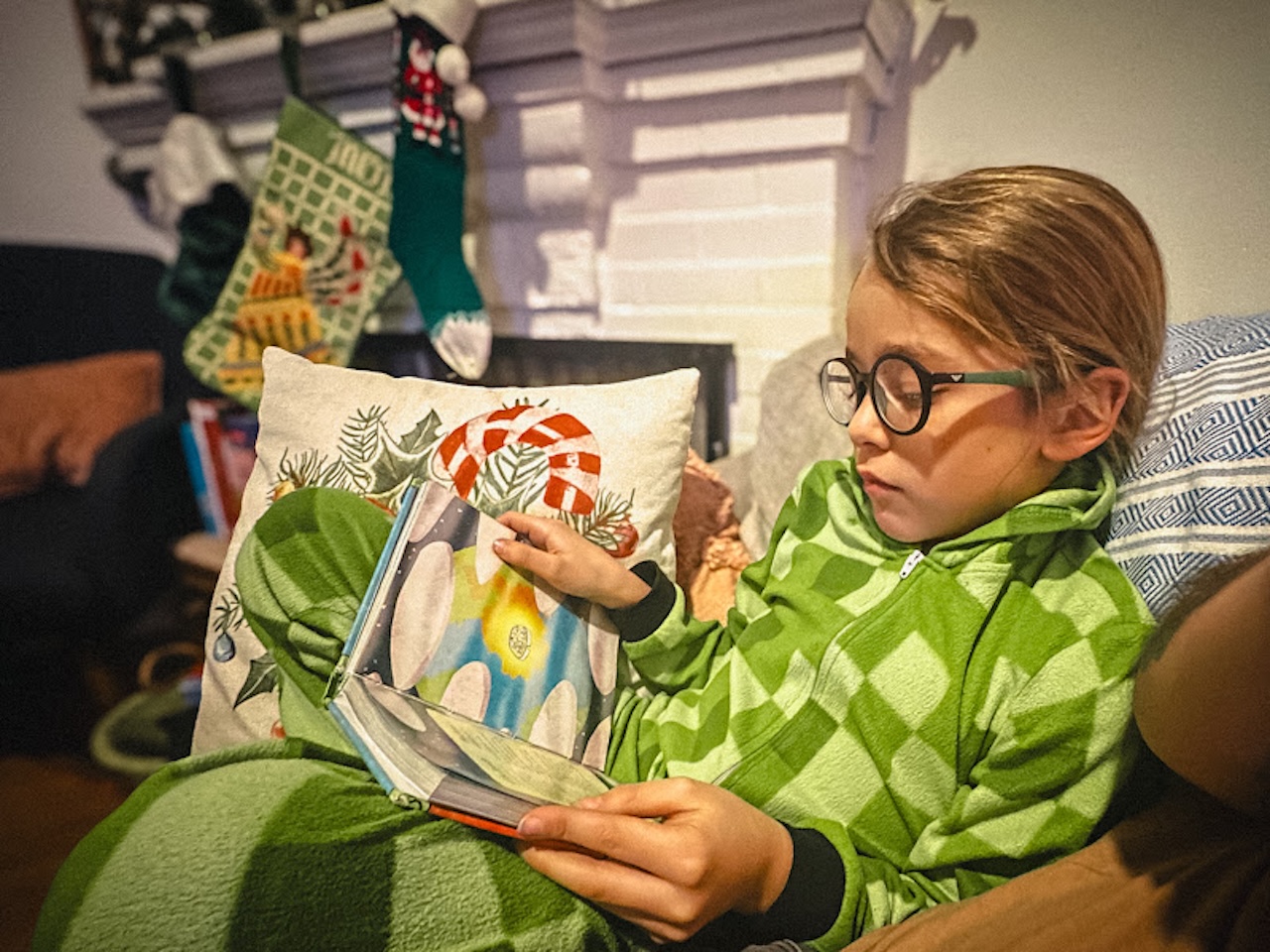
Christmastide, the twelve days from Christmas to Epiphany, invites us not to rush on, but to abide. To stay with the miracle a little longer. God came to us as a baby, born into noise, family dynamics, uncertainty and love. That matters for parents. It means Christ meets us not after the chaos settles, but right in the middle of it (John 1:14).
Here are five things that can help us parent well through Christmastide, keeping Christ at the center when the world keeps pulling us toward hurry.
1. Choose a shared rhythm of slowing down.
After Christmas morning, the world tells us to pack things away and move on. Christmastide invites the opposite: linger. Scripture reminds us that Mary “treasured all these things and pondered them in her heart” (Luke 2:19). As parents, we can help our children do the same.
That might look like reading the nativity story again after Christmas Day, lighting a candle at dinner or praying a simple breath prayer together: “Jesus, be with us.” These small rhythms help our families remember that God’s presence is not rushed, and neither should we be.
2. Let traditions point beyond themselves.
Trees, lights, cookies and carols are not the problem: they are tools. The question is what they point toward. The angels didn’t announce a holiday; they announced good news of great joy for all people (Luke 2:10).
As you keep traditions, name what they mean. Talk about light shining in the darkness (John 1:5) as you plug in the tree. Speak of hospitality as you set extra places at the table. When children learn to connect tradition with story, Christ becomes more than a background character in the season.

3. Release perfection and practice presence.
The birth of Jesus was anything but tidy, and the way we relate the story to our kiddos reflects this. A young couple. A borrowed stable. A feeding trough for a bed. And yet, this is how God chose to come (Luke 2:6–7). Christmastide reminds us that God does not wait for ideal conditions. Check out Madeleine L’Engle’s “First Coming” for a beautiful poem about just that.
Parenting well in this season often means letting go of how we think things should look and embracing how they actually are. By pursuing presence, not an artificial Pinterest polish, we can be the best communicators of love. When our kids see us choosing grace over perfection, they learn something true about God, whose power is made perfect in weakness (2 Corinthians 12:9).
4. Practice generosity as a way of life, not an event.
Sadly, in an overly consumeristic world, gift giving can easily become the main storyline to the Christmas narrative. Strangely, I agree it has its place in this holiday season. Scripture tells us, “For God so loved the world that he gave” (John 3:16). Giving is at the heart of the gospel. The how of giving can keep the spirit of Christ at the center.
Invite your children into giving that costs a little: time, attention, kindness. The shepherds didn’t just receive good news; they went to see, then returned glorifying and praising God (Luke 2:15–20). Generosity helps children experience themselves as participants in God’s story, not just consumers of it.
5. Look for Christ in the ordinary days.
Christmastide stretches beyond December 25 into the quiet days that guide us to Epiphany on January 6. In some ways, these days feel plain and unspectacular when compared to the glittering lights and lavish banquets of Christmas Day. And yet, Scripture reminds us that Jesus “grew in wisdom and stature” within ordinary family life (Luke 2:52).
Help your children notice God in the everyday of Christmastide: in shared meals, winter walks, acts of reconciliation and bedtime prayers. When we teach our kids to look for Christ in ordinary moments, we help them see that faith is not confined to holy days; it is woven into daily life (Deuteronomy 6:6–7).
Parenting through Christmastide is not about doing more; it’s about seeing more clearly. Christ has already come. Christ is already here. May we, like the magi, remain attentive enough to notice where God is leading our families, even (and especially) when the way is quiet, slow, and unexpected (Matthew 2:9–11).



Have a comment on this story? Write to the editors. Include your full name, city and state. Selected comments will be edited for publication in print or online.