


As a child of the midwestern United States, I (Alisha) know very well that dandelions aren’t seen as heroes . . . but rather as a blight in an otherwise perfectly manicured lawn. A father’s cries of disdain can be heard two counties over as his innocent children fill their lungs and blow their delicate wisps into the air, casting their wishes into the universe. So why have dandelions become our favorite symbol of resilience?
It’s true, like dandelions thriving in the cracks and the margins, that God’s reign often takes root where the world least expects it, among the overlooked and displaced (hallelujah!). But I submit that for too long, the dandelion has claimed the top ranking of the idyllic resilient plant, the one we’re meant to emulate when the going gets tough.
But I digress and now proclaim: The going is indeed tough, but we need new flora to shepherd us into an emerging era of hope. I submit to you five new plants to encourage, bolster and perhaps even invigorate you through the darkest of seasons.
1. Sunflowers
John 1:5 reminds us: “The light shines in the darkness, and the darkness did not overcome it” (ESV*).
“Heliotropic” describes the way sunflowers bend and rotate their faces toward the sun. They thrive in intense conditions and sometimes rocky soil. In a season where there seems to be so much darkness, what would it look like to live like a sunflower in your own life, turning toward the sun? Our resilience grows from orienting our lives toward God’s sustaining light, not toward fear, power or the false gods of distraction, consumerism or nationalism.
Let us pray: May we be heliotropic like sunflowers, turning toward God’s light.

2. Bamboo
2 Corinthians 4:8–9 encourages us: “We are afflicted in every way, but not crushed; perplexed, but not driven to despair . . .”
Bamboo bends in strong winds without breaking, and its flexibility under pressure echoes. It regrows quickly after cutting, representing flexibility and endurance. For anyone who has tried to dig bamboo out of their garden, they will attest that it’s darn near impossible to kill. What if, when life feels overwhelming, we were willing to flex, but not be overrun by despair?
Let us pray: May we be like bamboo, bending without breaking, surviving (and thriving) against all odds.
3. Aloe
In John 19:39, at the tomb of Jesus, “Nicodemus . . . brought a mixture of myrrh and aloes . . .”
Although prickly on the outside, aloe is a symbol of quiet strength and restoration. Desert dwellers know that aloe can mean life in a desolate landscape. It stores water to survive drought and can be a healing balm on a painful burn. Biblical aloes were linked with fragrance, burial and honor (most poignantly in Jesus’ burial), reminding us that resilience is sometimes shaped by costly love. Healing and hope often emerge from suffering.
Let us pray: Like aloe, may we store strength in dry seasons, offer healing from our wounds and bloom with hope even in the deserts of life.
4. Olive trees
Psalm 52:8 emboldens us: “But I am like a green olive tree in the house of God. I trust in the steadfast love of God forever and ever.”
Olive trees endure for centuries, twisting and warping as a reaction to the conditions and terrain they overcome. Their oil enriches religious ceremonies and dinner tables alike. Resilience in faith is long obedience rooted and anointed in faithful tradition, rather than political power.
Let us pray: May we be rooted, like an olive tree, anointed for the long haul.
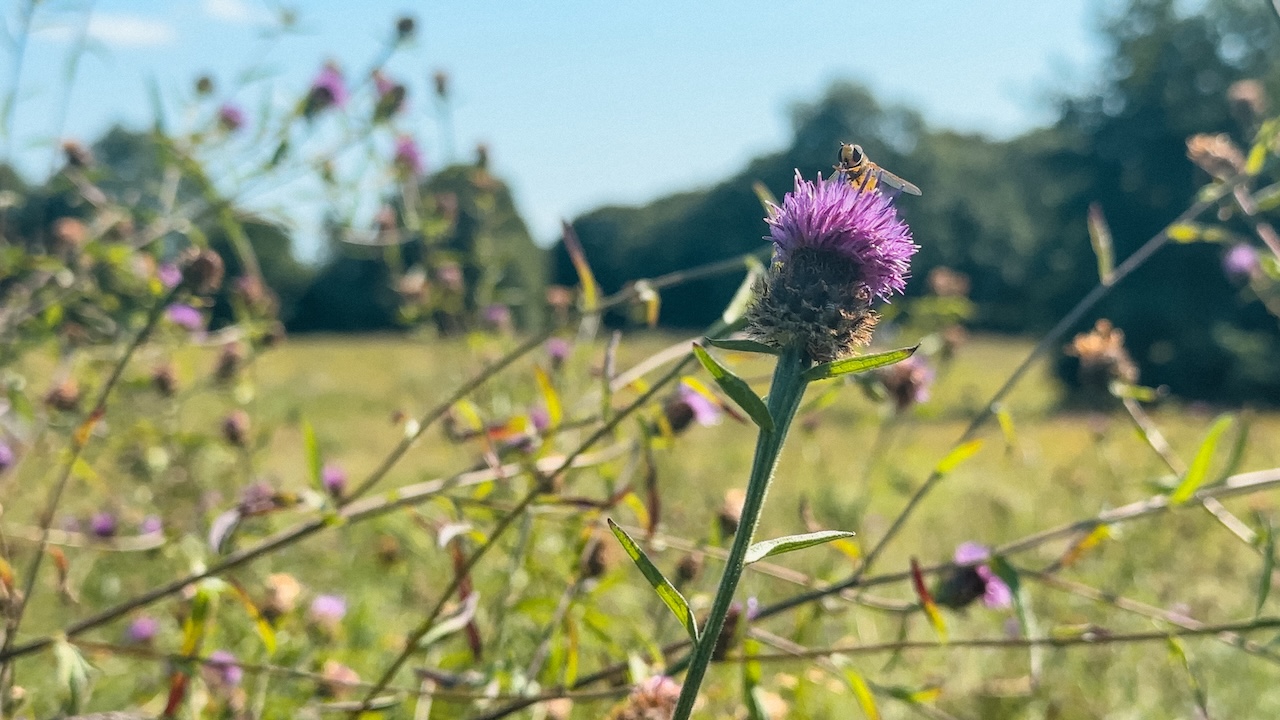
5. Thistles
In Genesis 3:18 God warned, “[The earth] will produce thorns and thistles for you . . .”
Thistles thrive in poor soil and difficult ground. They often symbolize hardship, curse and struggle, yet their persistence can also reflect resilience in that cursed ground. They’re armed with spines, but produce vivid blooms, whose nectar feeds the biosphere of neighboring bees and butterflies. Thistles remind us that resilience is sometimes forged in hardship. Scottish legend even has it that the thistle’s spiky exterior offered protection to their people in a perilous situation, elevating it to their national flower. Even in wounded soil, life persists. Faith does not deny struggle; it grows through it.
Let us pray: God, grant us the resilience to grow like thistles, even in cursed ground.
Maybe we shouldn’t crown one plant as champion of resilience, but rather cultivate a garden wide enough for sunflowers and bamboo, aloe, olive trees and even thistles. Each grows differently. Each survives in its own way. Each bears witness to a creator who does not fashion one-size-fits-all faith.
In a world that prizes dominance, speed and spectacle, the garden teaches another way: turn toward the light. Bend without breaking. Store up what heals. Root deeply for the long haul. Bloom, even in wounded ground, being invited into the slow, steady work of growth.
And so as we step into uncertain seasons, may we remember: resilience is not about winning the landscape. It is about remaining faithful in it. The one who tends the garden has not abandoned it. The light still shines in the darkness — and the darkness has not overcome it.
*Scripture quotations are from the ESV® Bible (The Holy Bible, English Standard Version®), © 2001 by Crossway, a publishing ministry of Good News Publishers. ESV Text Edition: 2025. The ESV text may not be quoted in any publication made available to the public by a Creative Commons license. The ESV may not be translated in whole or in part into any other language. Used by permission. All rights reserved.



Have a comment on this story? Write to the editors. Include your full name, city and state. Selected comments will be edited for publication in print or online.