


This might sound odd coming from an Anabaptist, but I hate the idea of civil discourse.
A student group on campus asked me to participate in a conversation about how Christians should respond to agents of Immigration and Customs Enforcement. The goal was to gather different perspectives for a civil conversation.
I understand the impulse. There is value in creating spaces where people can wrestle together with difficult questions, especially with those who see the world differently.
What bothered me wasn’t that the conversation was happening. It was that the terms of engagement were framed as civil.
That may surprise some, particularly because so much of my work is bridge-building. In the classroom, I engage students whose beliefs and practices differ significantly from my own. Outside the university, I move between very different communities: one day with White mainline liberals, another with White post-evangelical progressives, another with Black Baptists who are theologically conservative and deeply committed to social justice, another with multiracial congregations that describe themselves as politically “purple” and lean heavily toward interpersonal reconciliation rather than structural responsibility.
The point is simple: I spend a lot of time in urgent yet patient dialogue with people who understand our predicament and our Christian vocation very differently than I do.
So my resistance to “civil discourse” is not rooted in a rejection of dialogue. Nor is it a lapse in my commitment to peacemaking. It is grounded in a theological conviction: Participating in God’s shalom is inherently disruptive when it collides with the old order.
Jesus said: “Do not think that I have come to bring peace to the earth; I have not come to bring peace, but a sword. For I have come to set a man against his father, and a daughter against her mother, and a daughter-in-law against her mother-in-law; and one’s foes will be members of one’s own household” (Matthew 10:34-36).
These words are often plundered from their context, isolated and then universalized to suggest Jesus endorsed violence. I’ve even heard Jesus’ words deployed as a pro-gun prooftext. These hermeneutical sleights of hand (plundering scripture to prop up ideological commitments) are so routine in American Christianity that they hardly shock us anymore.
But those of us who understand our vocation as peacemakers must face a hard truth: Pursuing God’s peace in a world structured by violence and oppression is not polite or civil.
For Jesus, shalom (what he calls the kingdom of God) is not a gentle supplement to the existing order. It is a collision. An apocalyptic clash. Jesus proclaims that God’s reign has broken in now, even as the old order stubbornly remains. The kingdom is no longer only a future hope. It is here, among us, near at hand.
At the same time, the empire is also here, animated by unseen evil powers, by Sin and Death. This tension, this overlap of ages, is the cosmological and political imagination of the New Testament.
Inherent to the kingdom of God is a radical reordering of life: different power relations, different economic arrangements, different relational practices, communities being formed by the Spirit to reflect the character of the crucified and risen One.
When the most vulnerable are targeted, citizens of God’s reign do not respond with detached neutrality. They are angry. Grieved. Troubled in their spirit. Broken open by what is happening to people God loves.
When bodies are left lifeless in the street because of the state’s abuse of power, God’s new creation shows up right there, visibly, speaking truth without surrendering to dehumanization or retaliation of enemies.
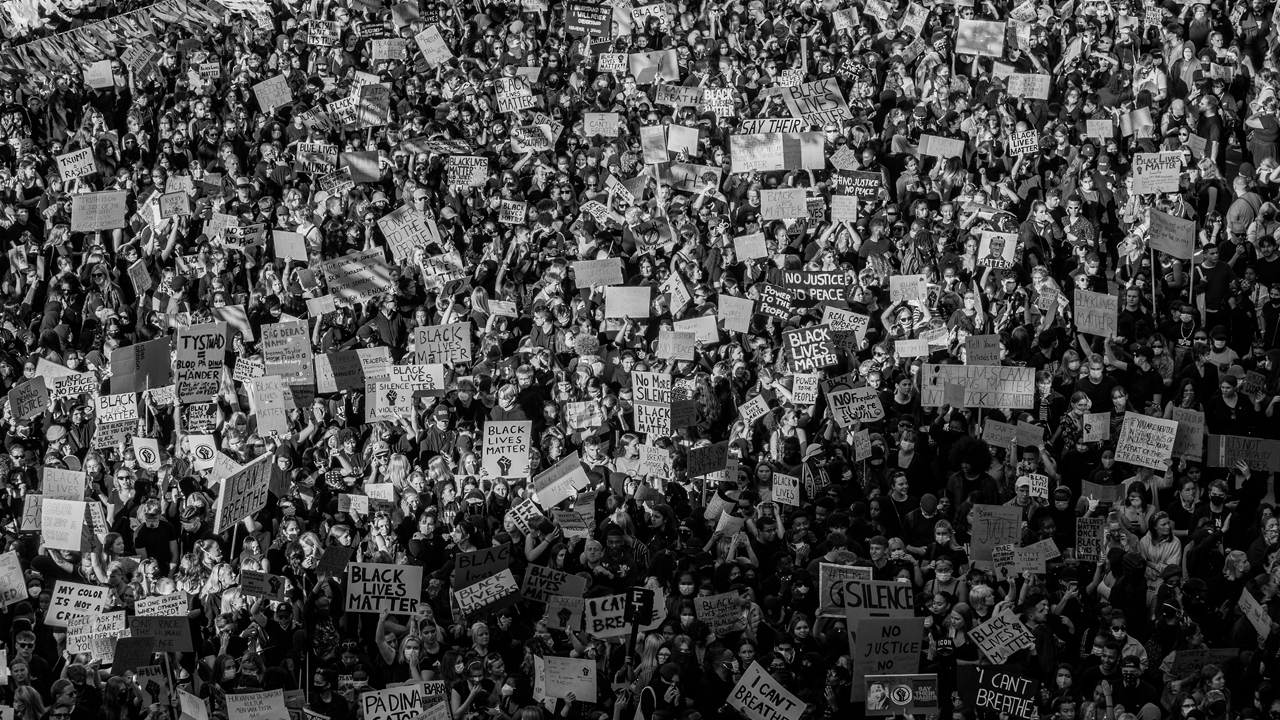
When entire communities over centuries (particularly Black ghettos and Native reservations) have lived under terror, extraction, degrading narratives and state oppression (violence deemed “civil” by those insulated from its effects), followers of Jesus cannot help but clash with those powers.
When Jesus challenged the Jerusalem establishment and defended the least, the last and the little ones, he was embodying the messianic age of peace. Rarely could what he said and did be labeled “civil discourse,” because he refused to let the comfort of the powerful determine the terms of engagement.
We practice a peacemaking that is inherently divisive. Let’s choose participation in the Messiah’s new order over compliance with the old order’s civility rules and respectability politics. God’s shalom does not leave unjust arrangements undisturbed, no matter how civil they appear.


Have a comment on this story? Write to the editors. Include your full name, city and state. Selected comments will be edited for publication in print or online.