


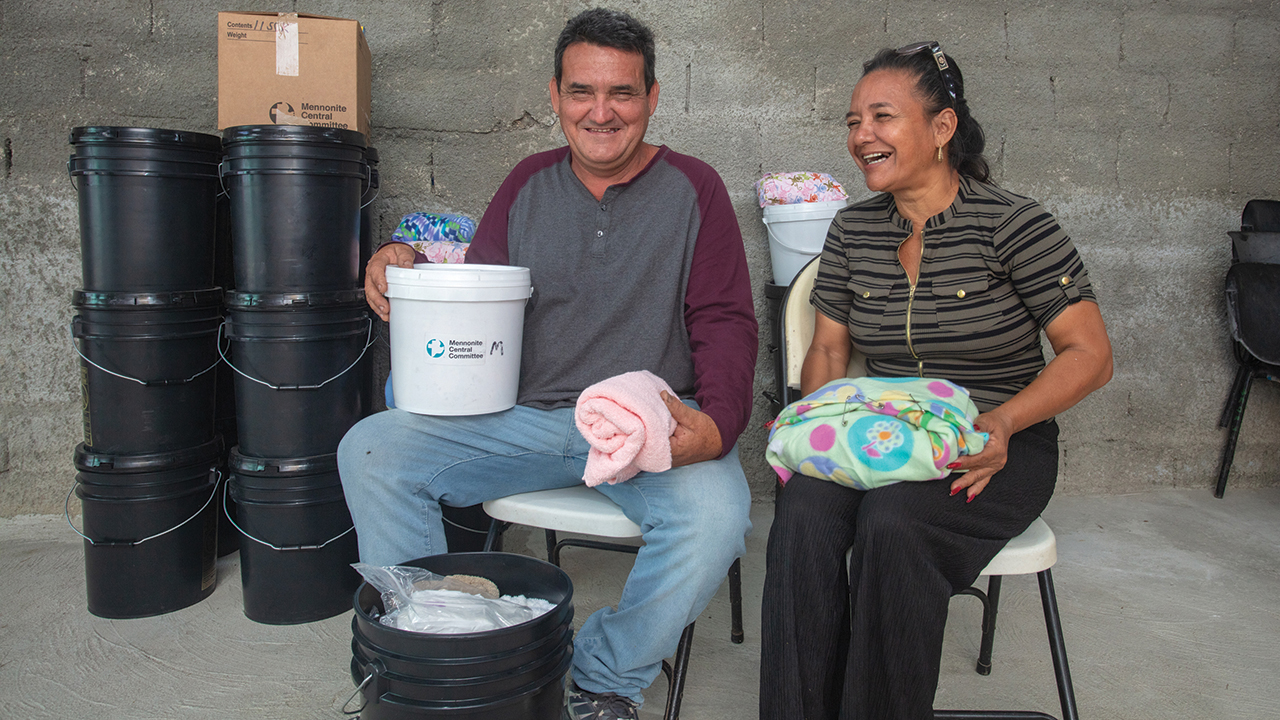
After Hurricane Melissa hit eastern Cuba on Oct. 29, Yanet stood in her rice field, assessing the damage. The storm destroyed her family’s entire crop. For the first time in years, she would need to buy rice — a difficult choice in a country already facing food shortages and high prices.
Despite her loss, she and her husband, a pastor, traveled to nearby communities even more affected by the storm to support families as they began their recovery.
She did what churches in Cuba have always done: brought food to the hungry, cared for the sick and made sure everyone has something they need.
For Mennonite Central Committee partners in Cuba, including the Brethren in Christ Church, Hurricane Melissa worsened ongoing disruptions in people’s fragile daily lives.
Two MCC containers filled with supplies were scheduled to arrive around the time the hurricane struck. Despite uncertain road conditions and damaged infrastructure, the items were delivered to those in need.
Months later, conversations focus not on the hurricane but on power outages, food shortages, high prices and other daily struggles. Transportation has been disrupted due to gas shortages made worse by a blockade of oil shipments from Venezuela that the U.S. imposed after its forces seized Venezuelan President Nicolás Maduro in January.
Damage caused by the hurricane has become part of the rolling disaster that is a daily reality for many in Cuba. Cubans have learned to jump into action when there is a crisis due to the blackouts, economic struggles and shortages they have faced for years. This has fostered problem-solving skills and community resilience.
For MCC and its partners, the response to Hurricane Melissa was an extension of relationships built on trust, presence and shared vulnerability.
The hurricane struck five eastern provinces with heavy rain, flooding and strong winds. Crops were damaged, trees uprooted and public spaces destroyed.
After the storm, relief kits containing towels, soap, toothpaste and other essentials were distributed to people displaced by flooding. Brethren in Christ churches distributed canned meat.
Another MCC partner, the Christian Center for Reflection and Dialogue, provided food packages, safe drinking water and psychosocial support.
MCC also supported ADRA Canada’s distribution of water tanks and hygiene items to St. Elizabeth and St. James parishes in Jamaica.
Damage to agriculture and public spaces will take time to repair. Families continue to face scarcity and instability, worsened by regional and global pressures beyond their control.
The church’s ability to act amid uncertainty demonstrates resilience and faithfulness.


Have a comment on this story? Write to the editors. Include your full name, city and state. Selected comments will be edited for publication in print or online.