


This year, the Christian and Islamic calendars aligned as if to create a symphony of peace here in Indonesia. Easter and Eid al-Fitr fell just two weeks apart. This timing felt like more than a coincidence. It was an invitation to reflect on the meaning of peace.
These two celebrations are central to their respective faiths. But what’s truly compelling to me is how they offer a shared vision of peace, healing and the mending of relationships.
In Indonesia, that vision doesn’t stay inside sanctuaries or private devotions. It spills out to a public liturgy — practices that invite communities to meet each other honestly.
Easter is the heart of our faith. We share in Christ’s death and resurrection, becoming a new creation. This newness fuels reconciliation. In my Mennonite congregation — Gereja Injili di Tanah Jawa Jepara — our Easter theme was “Christ Reconciles the Universe,” from Colossians 1:20. It’s a reminder that through Christ, all things are brought together. Christ invites us to be reconciled in four directions: with ourselves, with God, with others and with all of creation.
We started this journey during Lent through spiritual disciplines. For 40 days, church members were invited to fast or cut back on daily meals, setting aside the savings to help those in need. We created a Lenten calendar with daily prompts for small but meaningful acts of reconciliation.
On Maundy Thursday, we washed each other’s feet. In Javanese culture, where dignity and honor matter deeply, bowing to wash someone’s feet is a powerful act of laying down ego. There’s no room for pride if we truly want reconciliation. That ritual prepares us to leave the church walls with hearts washed clean of hatred.
A similar pulse runs through Eid al-Fitr. The name means “returning to purity,” achieved through a month of fasting. During Ramadan, Muslims are called to restrain desire, deepen their worship and practice kindness. Eid marks the end of Ramadan.
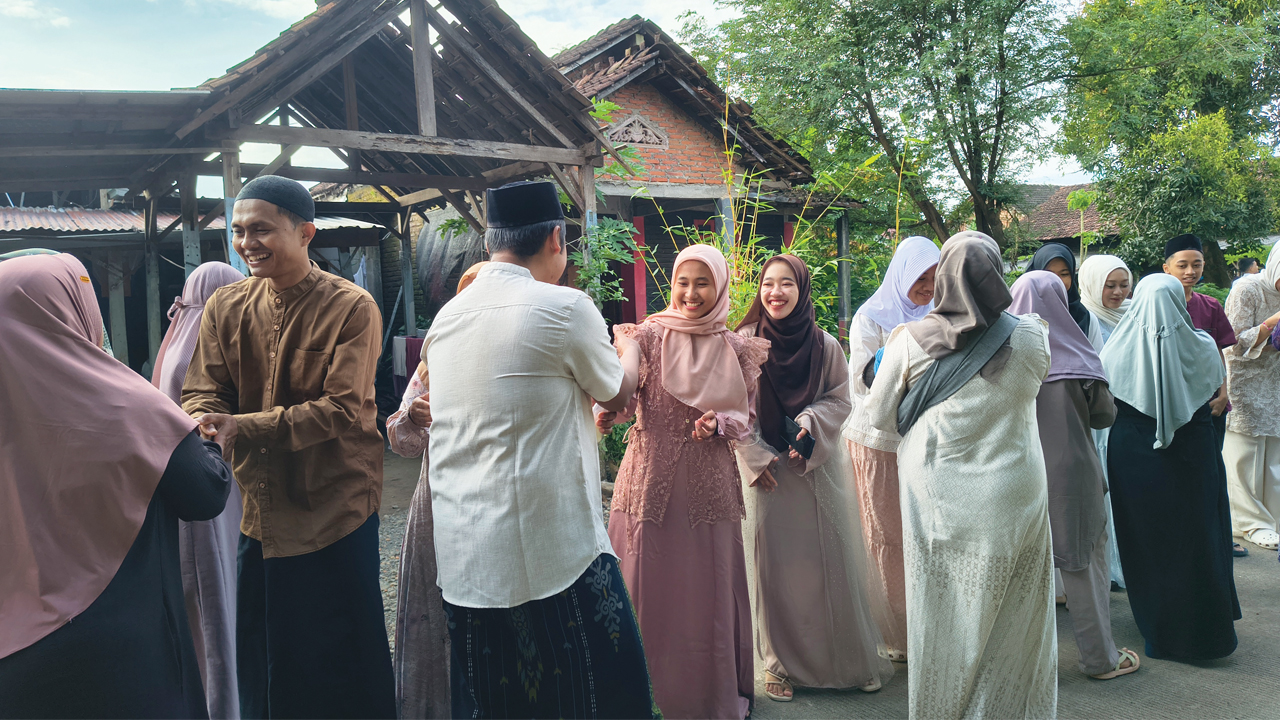
In Indonesia, Eid is a massive, joyful cultural celebration. The long national holiday lets everyone — including Christians — join in mudik, the tradition of returning to one’s home village. Our church suspends activities for a week so members can celebrate with extended family and old friends.
What touches me most — and stirs what I can only call a sense of holy envy — is the practice of halalbihalal. It’s an Indonesian Muslim tradition where people “compete” to admit fault and ask forgiveness.
It’s a remarkable practice of mutual forgiveness. Think of it this way: Christians confess our sins to God in church. In halalbihalal, Muslims confess to each other in public.
My family is the only Christian household in our neighborhood. But during Eid, neighbors visit us, shake hands and say, “Mohon maaf lahir dan batin (I seek forgiveness for all wrongs, seen and unseen).”
I also visit my Muslim friends to strengthen our bonds. It is a powerful moment of humility that fosters reconciliation. This is my holy envy: They have a cultural mechanism that encourages everyone toward peace.
After all, doesn’t conflict often arise because people compete to be right? During Eid, people compete to confess.
Words of forgiveness lead to acts of solidarity. At GITJ Pakis Swawal congregation, when Muslims gather for Eid prayers at the mosque, Mennonite youth and church members go out to the streets to manage parking and traffic so our Muslim brothers and sisters can worship in peace.
Muslim youth do the same thing at Christmas or during major church services. They stand watch at the church gates so Christians feel safe. These stories are powerful evidence that religion can build peace, especially when faith shows up in symbolic, public acts.
The inspiration for reconciliation we draw from Easter and Eid al-Fitr becomes strongest when it moves from the private to the public. In rituals like halalbihalal, faith and local culture intertwine to become friendship.
God calls the global Mennonite family to build bridges, not walls. Through small acts of humility, we participate in Christ’s great work of reconciling the universe.


Have a comment on this story? Write to the editors. Include your full name, city and state. Selected comments will be edited for publication in print or online.