


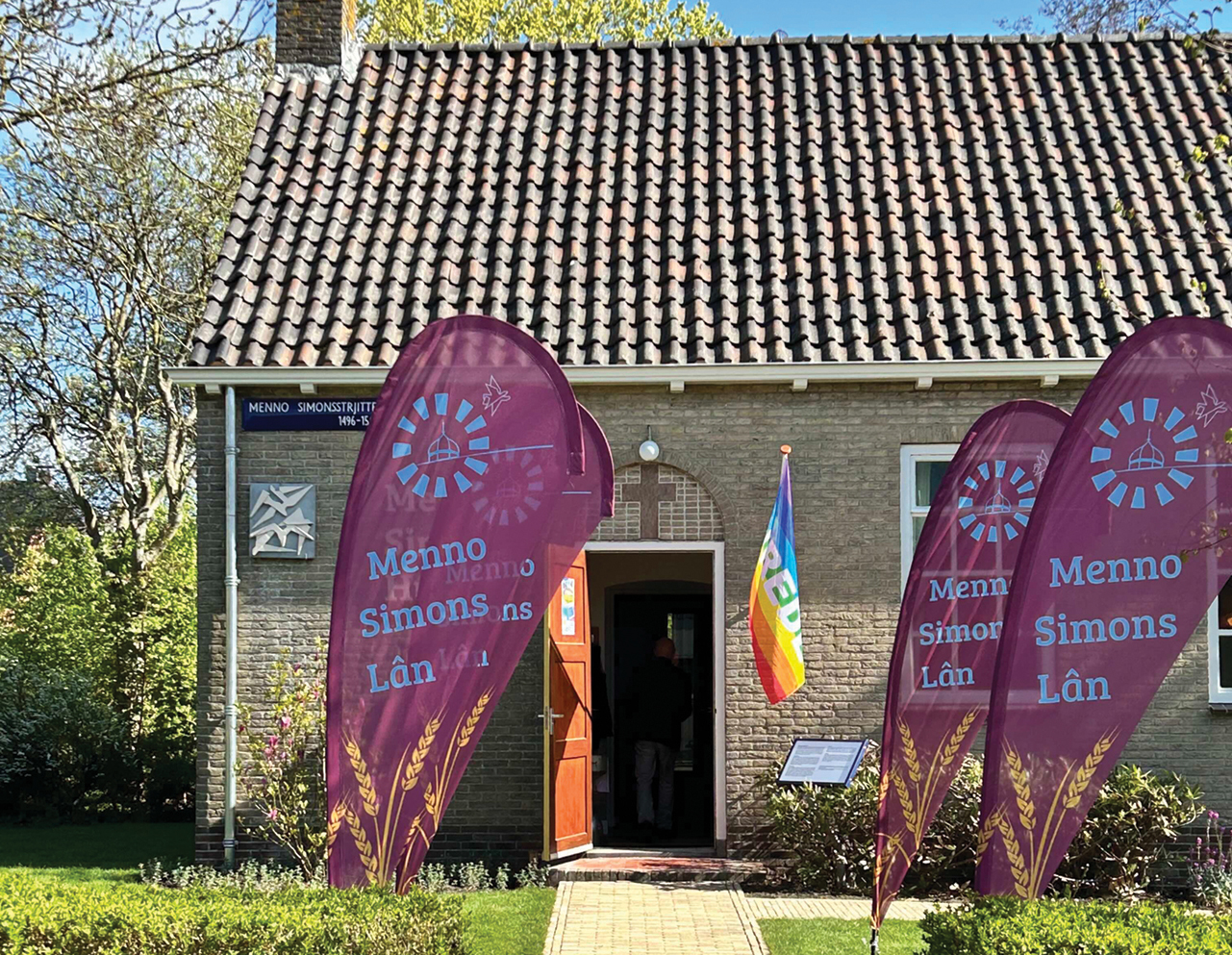
The Anabaptist congregation that worships in the Dutch village where Menno Simons was born and served as a Catholic priest has expanded its church building to better serve neighbors near and far.
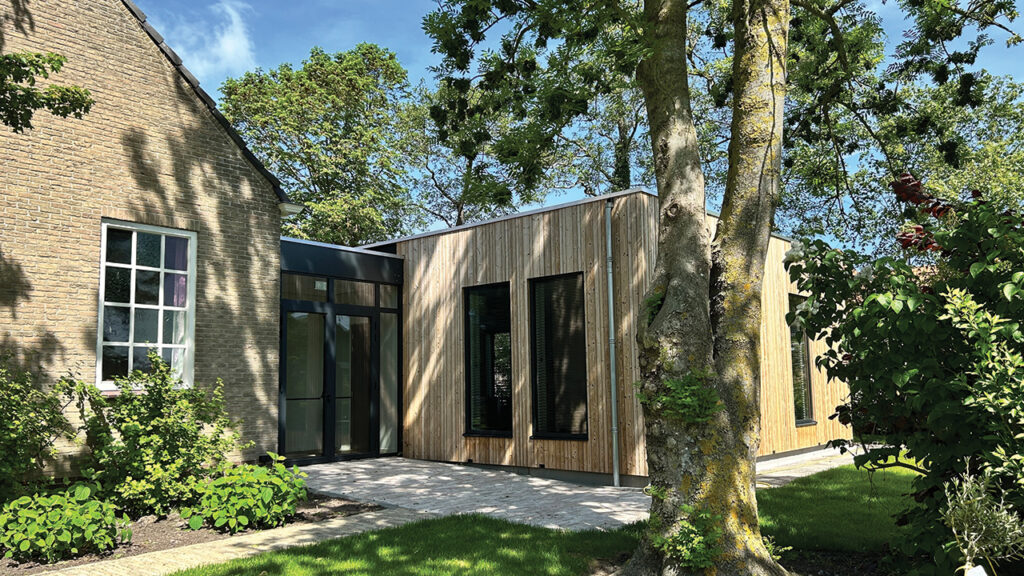
Menno Simons Hûs (House) hosted its official opening April 25 in Witmarsum, Netherlands. The Hûs adds on to the 1961 building that is home to Doopsgezinde Gemeente De Lytse Streek (Small Area Mennonite Congregation), which formed out of three congregations that came together in Witmarsum.
The region is home to several historical sites from Simons’ life. The Menno Simons Foundation worked with the congregation for seven years to raise funds from around the country to develop a reception space that can accommodate an influx of visitors from around the world.
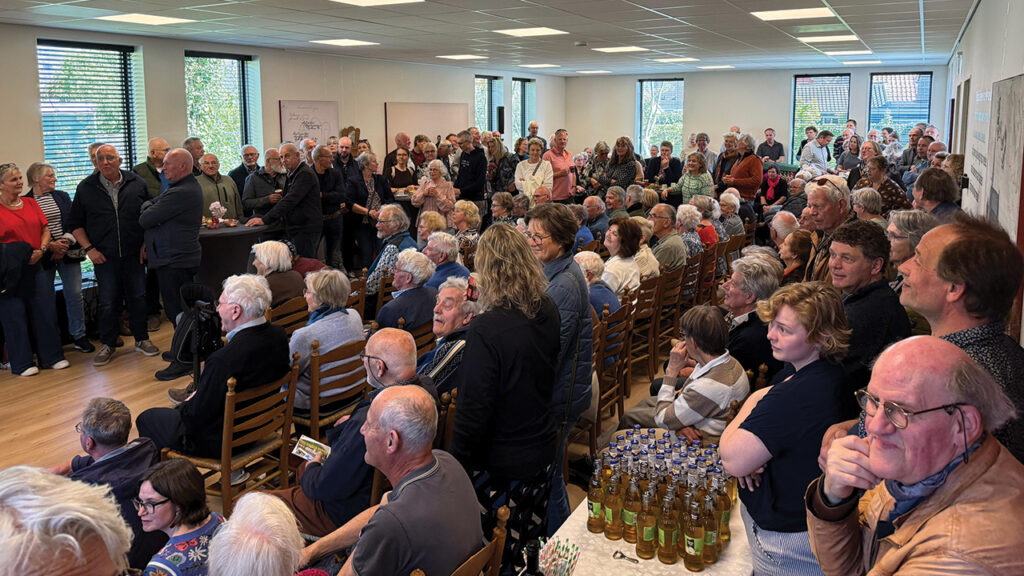
Pastor Flora Visser said the expansion adds a meeting room that can handle 150 people, a bigger and better kitchen and a room with an exhibit on Simons’ life and Anabaptist themes such as nonviolence and conscientious objection.
“The aim for the addition is people meeting each other, which we consider a way to peacebuilding through communication and getting to know each other,” she said. “The congregation meets each other; we meet with brothers and sisters from all over the world; and the village can have meetings in the room and also meet Anabaptists.
“There are several new volunteers from the village who have learned already about our congregation, about Mennonites and our stories.”

Menno Simons Foundation chair Rob Workel referenced such connections during the April 25 celebration, recalling Pope Leo’s message of reconciliation for Anabaptists a year earlier at events in Switzerland recognizing 500 years of Anabaptism.
“The world is in turmoil, and all people of goodwill must contribute their part to make this world a ‘world of peace,’ ” Workel said. “In doing so, we should not focus on the differences that exist among us but should instead connect with each other. Only by working together can we achieve that ‘world of peace.’ ”
Friesland King’s Commissioner Arno Brok called the Hûs “a place where history and current affairs come together” in his comments during the event.
“Listen, seek connection and reject violence as a solution,” said Brok, head of the provincial government. He advocated for cooperation, inclusivity and creativity, and encouraged that “this house may be a guide on our path.”
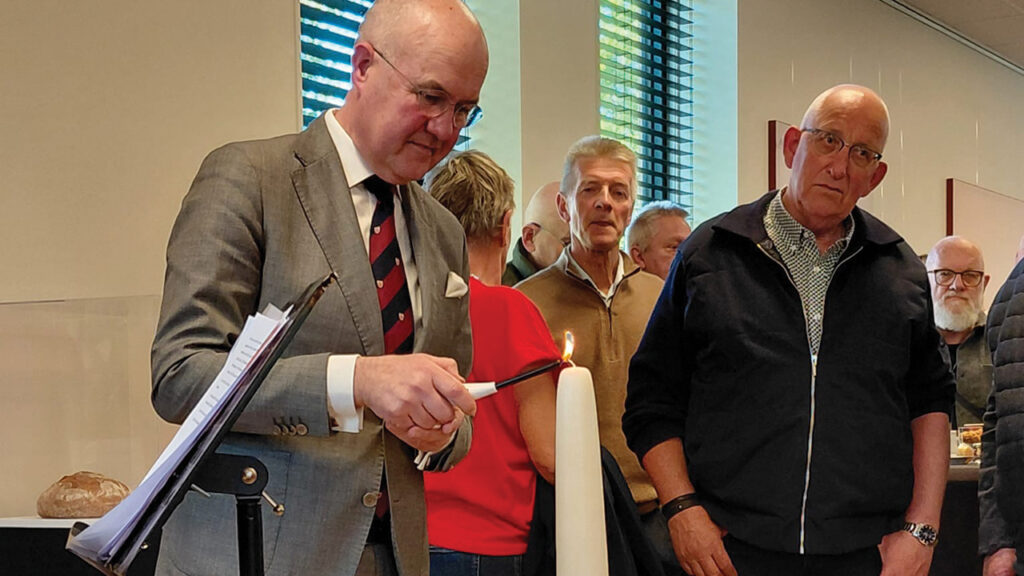
He lit a candle as a symbol of the never-ending endeavor of working for peace and justice, followed by a choir that sang — first in unison, then in harmony — “light that returns, hope that will not die, peace that stays with us.”
Menno Simons, an early leader in the Anabaptist movement, left the Witmarsum area when he left the Catholic church in January 1536. Still, the communities of Witmarsum and Pingjum have several sites of interest, and the Hûs can serve as a hub for exploring the area.
The congregation and foundation have developed a guide for experiencing “Menno Simons Land.” It starts at the Hûs and continues to the Menno Simons Monument outside the village where it is said he once preached at a hidden church. A roughly 10-mile route, which can be hiked or biked, also includes the Victoriuskerk in Pingjum where Simons worked as a Catholic chaplain (despite not having read the Bible yet) from 1524 to 1532; the “hidden” Schuilkerkje former Mennonite church in Pingjum; and the Koepelkerk church in Witmarsum, where Simons first encountered Anabaptists and preached from 1532 until 1536.
Visser said the Hûs project in Witmarsum also includes plans for upgrades of the hidden church in Pingjum, where there is an exhibit including old editions of Martyrs Mirror by Thielemans van Braght and Opera Omnia Theologica by Simons.
Developing the Hûs has energized the congregation and foundation beyond construction projects. An annual program on Anabaptist themes is in the works, and the congregation hopes to organize evenings in its new meeting hall to engage with young people considering joining the armed forces.
“Since this project, the foundation and the congregation are growing more together,” Visser said. “We do not only take care of the material monuments, but together we care for telling the stories — not just about history, but also about the choices we make now as believers in the Mennonite tradition, choices that are also important for all the people we meet.”
Cornelis Luiten contributed to this report.


Have a comment on this story? Write to the editors. Include your full name, city and state. Selected comments will be edited for publication in print or online.