


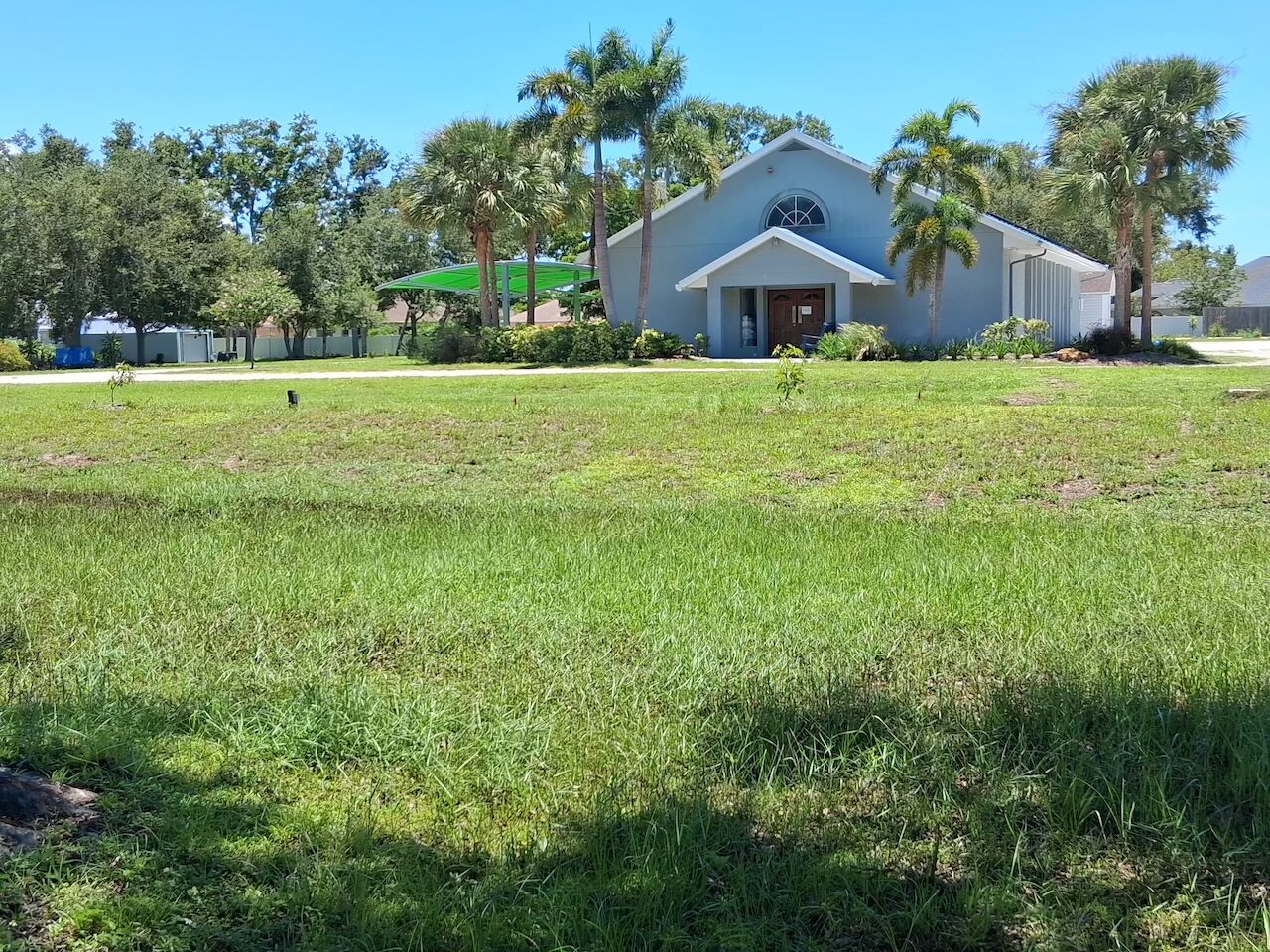
Let’s talk about lawns and the land underneath them.
Grass is meant to be seen but not really looked at. It’s simply what exists when there’s nothing else there. As an American society, we expect that any land not paved over or built upon will be carpeted in at least 50% lawn. It’s the assumed default — as standard and unquestioned as having toilet paper or running water in your home.
Yet, beneath that uniform green, something profound is waiting. Most Native cultures teach that land is inherently sacred. The Bible does too, though this might surprise many modern western Christians. Leviticus 25 emphasizes that the land belongs to God, and Numbers 35 strictly forbids polluting it. When people of almost any culture or faith tradition reflect deeply, the sacredness of the earth naturally rises to the surface. In daily life, however, we barely notice a lawn unless it’s time to mow.
Ah, mowing. Like the land itself, this weekly ritual is worth reflecting on a little deeper. What if we just stopped? First, we’d get sideways looks from the neighbors. Eventually, a citation from the authorities. But what if we let it grow anyway? Picture a grassy area you know well. Imagine it growing, shifting and evolving until it finally reached an equilibrium.
What you’re picturing is a living ecosystem. It likely resembles what your area was before it was “developed” into its current rural, suburban or urban state. Our modern landscapes are the result of heavy planning and control; they weren’t just created this way from the start. We have molded them to fit our preferences, which raises a compelling question: What if we cooperated with the processes of the Creator instead?
God acts in unique ways in each specific place, and the native ecosystem of your area is a distinct part of that work. It is vital to slow down and get to know that unique creation — to learn to see it, even if the land is currently muzzled under a blanket of turf.

Every patch of ground, even the most manicured lawn, is actively trying to become an ecosystem. If left alone, it would naturally express itself. There is a biblical word that describes this: telos. Aristotle famously noted that the telos of an acorn is an oak tree. The end goal is already present in the current thing. The telos of a patch of ground is a thriving, specific ecosystem waiting to emerge.
One of the core teachings of the Old Testament invites us to honor this process. In the Sabbath code, the people were commanded to let the land rest one out of every seven years, eating only what naturally grew there. While one year isn’t long enough for the land to fully reach its telos, it is a beautiful practice of surrender — of following the leading of the land and its Creator.
Practice
Consider how you can let the telos of the land express itself. Maybe you can let a section (1/7 would be a biblical fraction) of your garden rest for the coming year. Or maybe you’ve gotten ahead of the game and let part of your land go in the direction of its telos. Are there edible weeds (Lev. 25:6) you can put on your salad or in a tea?



Have a comment on this story? Write to the editors. Include your full name, city and state. Selected comments will be edited for publication in print or online.