



One hundred years ago, 1,700 Mennonites left Manitoba for new lives in Paraguay. Now a new film is under production to tell the story of their journey.
Titled Under the Lapacho Tree, the film is being produced by Toronto filmmaker Dale Hildebrand. It follows his 2025 documentary, Where the Cottonwoods Grow, which marked the 150th anniversary of Mennonites coming to Manitoba from Ukraine/Russian Empire.
“When I was asked to do this, I immediately thought it would be an absolutely amazing adventure to tell this story,” Hildebrand said of the request from Mennonite community and church leaders in Paraguay.
The film is about the decision made by over 8,000 Mennonites, who came to Canada in the 1870s from Russia, to leave Manitoba and neighboring Saskatchewan after those provinces made it mandatory for their children to attend public schools and receive instruction in English.
The move, which was taken after World War I, was seen by these Mennonites as a violation of a promise given to them by the Canadian government to be able to operate their own schools — something they considered essential for preserving their faith and community.
Most of those who left went to Mexico, but in 1926-27 a smaller group went to Paraguay, which also promised them freedom to run their own schools.

But upon arrival in Paraguay, they discovered the land they bought wasn’t ready for them. For 16 months they lived in tents in Puerto Casado, 120 miles from their new home, until the land was surveyed. About 10% of the group died while waiting for that to happen.
“They got typhoid, they got everything under the sun, and so many children and adults died,” Hildebrand said.
Despite those hardships, they were resilient — which is why he chose to use the Lapacho tree, the national tree of Paraguay, in the title since it represents hope, endurance and rebirth.
“It’s symbolic of their story,” Hildebrand said.
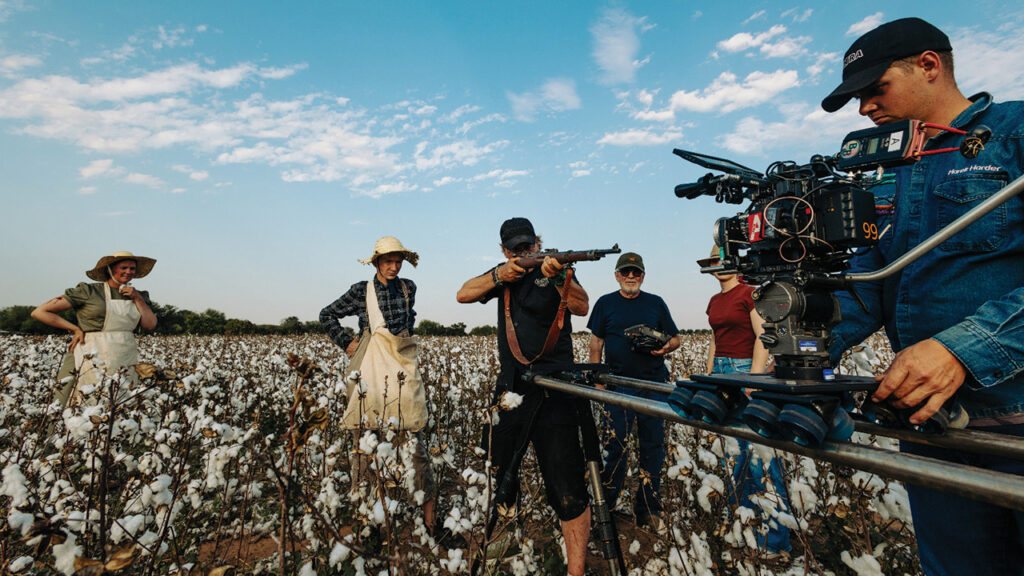
Making the film had its own hardships and challenges. The crew had to build a tent city to represent the camp in Puerto Casado, along with planting a cotton field. A field of cotton planted months earlier for use during the filming wasn’t ready when they arrived.
“The cotton field we planted did not mature in time due to cold and rain, so we transplanted over 900 mature cotton plants from one field and replanted on our set,” Hildebrand said.
They used 20 ox carts, 40 oxen, 20 drivers, 14 speaking parts and 50 extras to recreate a travel scene. And all of this was in heat of over 100 degrees F. while dealing with bush and swamps filled with yacarés — Paraguayan alligators — and “crazy-large snakes.”
Hildebrand was bitten by one. “Fortunately, it was nonpoisonous, and I’m still here,” he said.
“It’s an insane amount of work,” he said, noting filming was done in three languages: English, Spanish and German, with translators on the set. “But I appreciated every second. I had fun every step of the way.”
The film is an opportunity to tell the story of how Mennonites back then resisted efforts by the provinces of Manitoba and Saskatchewan to assimilate them into Canadian culture, said Conrad Stoesz, archivist at the Mennonite Heritage Archives in Winnipeg.
“The idea was if they couldn’t change the minds of adults, they would change the minds of children by requiring them to go to public schools,” he said.
Mennonite parents who refused to send their children to public schools were fined and even jailed, Stoesz said, explaining their reason for leaving for Paraguay and Mexico.
For Stoesz, what makes this film unique is it is being made at the request of Paraguayan Mennonites, and with their input.
“It’s a chance for them to tell their own story,” he said, adding that Canadians who see the film will become aware that “Canada has not always been the welcoming place we think it is.”
Under the Lapacho Tree was made with support from Mennonites in Paraguay and the Plett Foundation, which supports projects related to the migration and settlement of Mennonites who came to Manitoba from Russia in the 1870s. It will premiere in 2027 in Paraguay and Canada.


Have a comment on this story? Write to the editors. Include your full name, city and state. Selected comments will be edited for publication in print or online.