


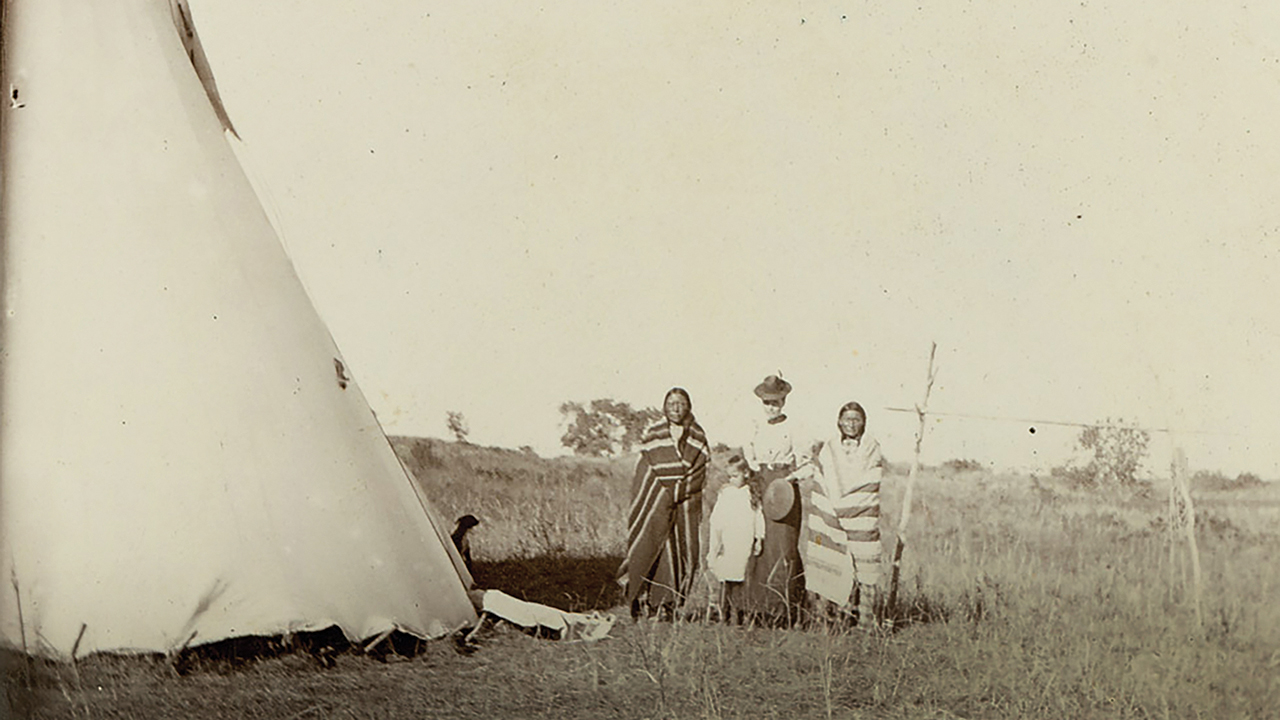
In a notable volume on American religion, Yale University historian Tisa Wenger explores geographic borderlands and cultural clashes in the late 18th and 19th centuries. Federal agents and White Christian settlers encountered and sought to control, “save,” forcibly remove and kill Indigenous peoples in the Great Lakes region and the broader Midwest.
The histories that unfold in Spirits of Empire: How Settler Colonialism Made American Religion (University of North Carolina Press) are nuanced in the telling. Geographically, the confrontations range from northern Michigan to eastern Kansas.
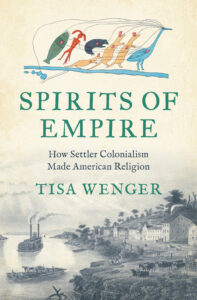
Through the formative decades of the new nation and beyond — up to and including the present — Wenger writes: “Christianity shifts in and out of view, layered in the service of empire alongside other (nonreligious) systems of cultural prestige and social power.”
Wenger’s careful tracing of ascendant U.S. Christian institutions (churches, missions, schools) along geographic borderlands makes for unsettling reading. She lays out example after example of the violence that settler colonialism inflicted on competing Indigenous worldviews.
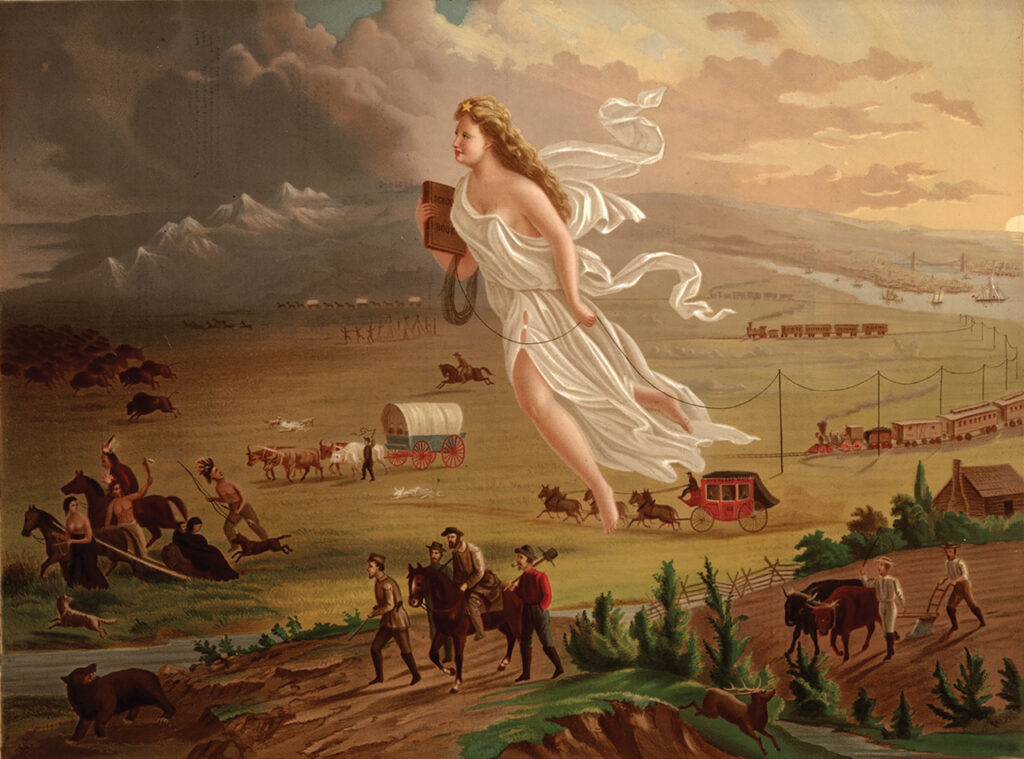
From the pre-Revolutionary period of U.S. history through decades of westward expansion and so-called “Manifest Destiny,” Native communities sought variously to resist, accommodate and deftly sidestep White Christian perceptions of Indigenous spiritual ways as “heathen” — or, as Wenger puts it, “bad religion.”
Her scholarship contextualizes the actions of both White Christian power brokers and Indigenous leaders across contested lands. She makes plain the ways in which the valorizing of Christian figures in U.S. history — land surveyors, priests, missionaries, ministers and the burgeoning communities they led — obscures erasures, again and again, of Indigenous peoples, nations and ways of being.

“Bad religion” is the author’s shorthand for how many White U.S. government agents and colonizers viewed and misconstrued Native American spiritual ideas, from ancient origin stories to traditional and contemporary sacred practices.
As Wenger notes, for many Indigenous people in the 18th and 19th centuries, religion was not an idea that carried meaning distinct from other facets of life, including the natural world, law or economics. At the same time, she argues, key ideas about religion (particularly Protestant Christian manifestations of it), gained currency among U.S. political figures.
These White Americans, from the nation’s founders to land surveyors and western-bound clergy, increasingly delineated religion as distinct from other categories of ideas — scientific and legal principles, capitalism and more.
Protestant and Catholic leaders’ ideas about separation of church and state, she argues, helped solidify their presumptions of Christian benevolence and charity. This elevated the culturally prevalent view of Christianity as “good religion.”
A prime example of these American leaders is the Baptist churchman Isaac McCoy. Along with missionary colleagues, McCoy “helped to build the social networks and capitalist infrastructures of western Missouri and eastern Kansas . . . [contributing] to the ongoing delineation of religion as a tool for settler colonial rule.”
From the late 1820s onward, Wenger writes, “McCoy spent many long months surveying lands that had been tentatively designated by treaties for the Shawnee, Piankeshaw, Peoria, Wea, Kanza, Myaamia, Wyandot, Potawatomi and many other Native nations. . . . His work as a surveyor and a missionary fit together, in this vision, to remake Native people in a ‘civilized’ and Christian mold.”
As Wenger’s account of land grabs and forced removal of Native people from their homelands demonstrates, these forms of setter colonialism helped define, shape and justify American religious outlooks that harmed Indigenous peoples and irrevocably altered their ways of life.
For readers seeking to understand the legacies of the centuries-old Doctrine of Discovery and its justifications for land transfers from Native people to White U.S. citizens, including Mennonite settlers and members of other Anabaptist groups, Spirits of Empire is an accessibly written primer.
Indeed, the author, who acknowledges her own identity as a non-Native, offers a brief account of her Amish and Mennonite ancestors in Pennsylvania, Ohio, Indiana and Kansas. She describes them as both proud of their Christian pacifist heritage and implicated in the erasure of Indigenous ways.
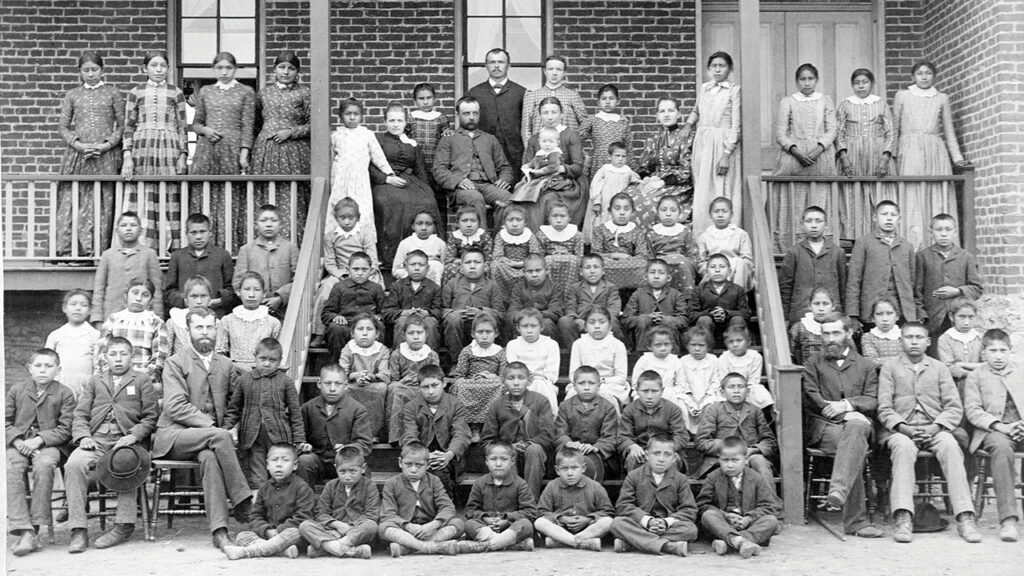
Alongside military outposts along western routes, Wenger notes, “Christian churches and missions were technologies of empire. They promised to subdue Indigenous peoples in ways that could be celebrated as benevolent. In so doing, they offered a high-minded rationale for seizing Indigenous lands.”
A valuable aspect of Spirits of Empire is its use of illustrative source materials for both Indigenous and non-Indigenous figures. Drawings, paintings and maps enhance each chapter. As Wenger notes, visual and textual accounts of 19th-century Christian standard-bearers, as well as of influential women and men in Native societies, “help us narrate American religious history to account both for the violence of settler colonialism and for the creative adaptations of Indigenous, mixed-descent and other marginalized people who continue to live as vibrant communities.”
Spirits of Empire is essential reading for anyone seeking to reckon with the legacies of Christianity and colonialism.
Rachel Waltner Goossen of Topeka, Kan., is professor emerita of history at Washburn University.


Have a comment on this story? Write to the editors. Include your full name, city and state. Selected comments will be edited for publication in print or online.