


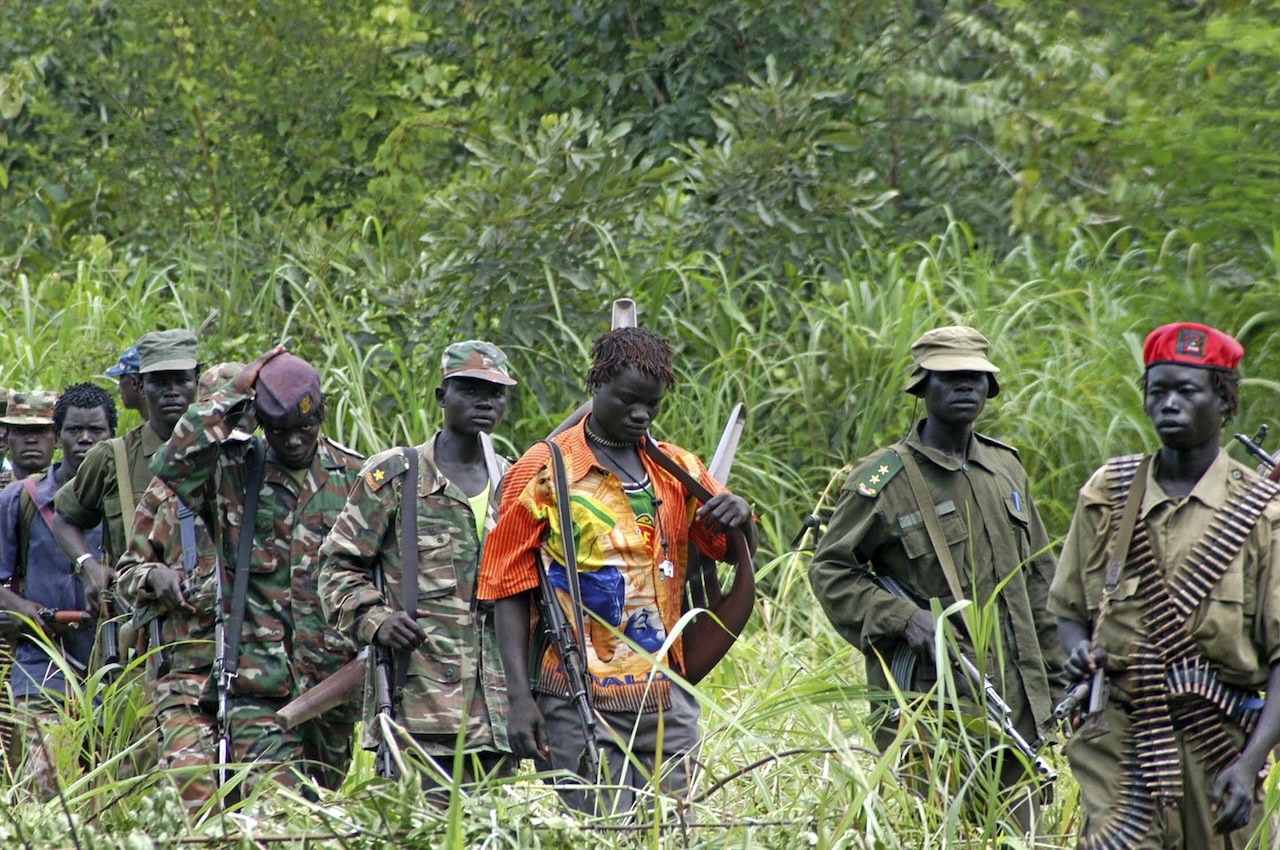
He was 17 years old when armed men from the Lord’s Resistance Army abducted him from his northern Ugandan home, killed his mother and father and took his sister, whom he has not seen since.
The wave of violence that engulfed his family eventually led to violence he perpetrated on others.
“We could be sent to attack villages and slaughter people,” said the man, now 40, who asked not to be identified because he fears retaliation from the community to which he recently returned.
But, he added: “We are also victims.”
On Sept. 12, he joined more than 2,000 former LRA captives, combatants and family members in Lira City in northern Uganda for a prayer service of healing, forgiveness and reconciliation.
Organized by the Anglican Diocese of Lango in partnership with LRA returnees, the gathering brought together people carrying one of the conflict’s most complicated legacies: Many were abducted, some as children, and forced to fight and kill. Some were forced to marry warlords.
Years after returning home, some struggle not only with what was done to them, but also with what they were forced to do, and with communities that sometimes regard them as perpetrators rather than victims.
“This initiative that brings us together to tell our stories and seek forgiveness and reconciliation is very crucial to us because most of us were also abducted,” one returnee said.
The LRA emerged in northern Uganda in the late 1980s under the militant warlord Joseph Kony. It initially drew on grievances among the Acholi people against Uganda’s government but increasingly began attacking civilians, including northern communities it claimed to represent. Tens of thousands of civilians were killed, nearly 2 million people displaced and an estimated 25,000 Ugandan children abducted.
The International Criminal Court, which opened an investigation in Uganda in 2004, has documented alleged LRA crimes, including murder, rape, sexual enslavement and the forced recruitment and use of children. The court issued arrest warrants in 2005 for Kony and four other senior commanders on allegations of war crimes and crimes against humanity. Kony, who is now 65, remains at large, the ICC’s longest-standing fugitive.
The 40-year-old returnee said he escaped from Kony’s camp in the Central African Republic in 2023 and returned to northern Uganda around June.
After the LRA killed his parents and abducted him and his sister, he said his grief turned into anger and a desire to take revenge.
Over time, he said, he realized the violence he participated in was perpetuating the suffering inflicted on his own family, contributing to his decision to escape.
For other survivors, that acceptance has taken years.
Agnes Akuku was 13 when LRA gunmen came to her home at night in 2002, killing both her parents.
Akuku was abducted along with three siblings. She said she underwent military training and remained in captivity for 14 years before escaping in 2016.
Returning home did not immediately end her ordeal.
“They called me a murderer, not knowing that I had also been abducted and forced into captivity,” said Akuku, now 37, who lives in Gulu, in northern Uganda’s Acholi sub-region. Gulu became the center of the LRA conflict and later an important center for the return and reintegration of former captives.
Akuku said community members initially refused to accept her. She also carried memories of sexual violence and the unresolved disappearance of her siblings.
Her experience began to change after elders and church leaders organized a gathering last month focused on healing, forgiveness and reconciliation.
“We went through a process where we said our stories, cried and accepted ourselves,” Akuku said. “We were prayed for, and the elders integrated us in the communities.”
Morris Okello, chairperson of the returnees’ association, said the service allowed former captives to “thank God for surviving and returning home and to entrust their future and families to God.”
James Okaka, provost of Uganda’s Boroboro Cathedral and chairperson of the organizing committee, said returnees proposed the initiative. “Participation by Christians and Muslims was important,” he said, adding that the conflict affected people across faiths and communities.
Pastor Joseph Okot, who leads a small Pentecostal church in Gulu, said faith leaders have been helping former LRA captives reconnect with families and communities after long periods in displacement.
“Churches and other faith groups provide counseling and use prayer and Scripture to encourage forgiveness and reconciliation,” he said. “We urge communities to accept returnees and repair relationships damaged by the conflict.”
Prayer is not the only approach northern Ugandan communities have used to attempt to heal the trauma.
Some former captives have undergone Nyono Tong Gweno, a traditional Acholi cleansing ritual whose name refers to stepping on an egg. The ceremony marks a person’s return after a prolonged or troubled absence and facilitates acceptance back into the community.
The practice carries particular significance for Acholi abductees.
Returnees also seek psychological, social and economic assistance.
John Baptist Odama, the former Catholic archbishop of Gulu and a longtime advocate for peace in northern Uganda, has urged communities to forgive and welcome people back.
For Akuku, faith and community acceptance have become part of learning to live with her past.
Years after first taking part in a reconciliation process, she continues to attend religious gatherings and listen to Christian teachings.
For the 40-year-old returnee who came home this year after decades away, that process is only beginning.
His request to the community he left as an abducted teenager is straightforward:
“I urge the people of my community to accept me as their son,” he said, “who was also a victim.”


Have a comment on this story? Write to the editors. Include your full name, city and state. Selected comments will be edited for publication in print or online.