


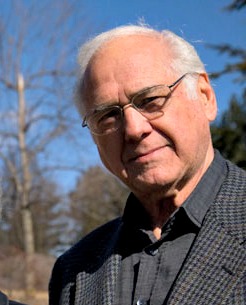
Introduction: One of Gordon Cosby’s last statements was that the church needs a return to the gospel. We need a renewal in relationship with Jesus, moving this front and center. The suggested weekly themes need to be enhanced by materials for the worship service from scriptures, Psalms and readings from John 6-17, as well as from other scripture; also notes should be drawn from our Mennonite Confession of Faith, from letters in Martyrs Mirror, articles in the Mennonite Encyclopedia, Mennonite poets of history and more.
Jan. 4: If anyone will come after me, let him deny himself and take up his cross… Luke. 9:23-26
Anabaptists had a strong emphasis on discipleship, on walking with Jesus in faith. When one is converted to Christ rather than simply to church the next question is how one understands and follows Christ Jesus in life. Discipleship is not a legalism but a relational faith.
Jan. 11: If the Son makes you free you are free indeed. John 8:31-38
Anabaptists witnessed that the new life in Christ is a life of inner freedom, a release from being dominated by sin, but affirmed that this was not perfectionism. This inner release in grace stood in contrast to a ‘works righteousness’ of religious exercises. We need to discover how to ‘behave our beliefs’ as a walk in the Spirit.
Jan. 18: In Christ one is a new creature. II Cor. 5:15-17
Menno had a strong emphasis on the new birth as a new life in the Spirit. He was converted as a priest after a long ten year struggle in 1536 he found peace in Christ. In fact this emphasis as well as that of the believer’s church marked his preaching.
Jan. 25: He that believeth and is baptized shall be saved. Mk. 16:14-20, Acts 2:37-42.
Felix Manz of Zurich strongly emphasized believer’s baptism. He died as a martyr, Jan. 5, 1527 by being drowned in the Limmat River in Zurich. As a prominent evangelist, in and out of prison, he was faithful to the death.
Feb. 1: No Other Foundation can be laid. I Cor. 3:10-17
This was Menno’s favorite text, 3:11, being converted to Christ after much study and searching, 1/30/1536. It is the witness that he had come to focus on identification with Jesus rather than his earlier engagement with the sacraments.

Feb. 8: He himself is our peace. Eph. 2:14-22
Michael Sattler wrote of this in the Schleitheim Confession, Feb. 1527, and witnessed to this peace at his trial and martyrdom, May of 1527. This confession is the earlier such expression in Anabaptist history that was used broadly to unite the many followers.
Feb. 15: Community with a spiritual bonding. Eph. 2:17-22 (see Bonhoeffer, Life Together)
Leonart Bowens, Menno’s colleague, who personally baptized some 10,000 persons, had a strong emphasis on the community of believers, similar to but long before Bonhoeffer. More legalistic than Menno, he was a strong leader and may have developed a feeling of ‘ownership’ in his leadership.
Feb. 22: We are baptized into His body I Cor. 14:13-21
Hans de Ries, prominent and gifted preacher and writer, emphasized baptism into the body of Christ, the living church in contrast to a state organized church. He lived under threat of martyrdom as he worked across the Netherlands. Earlier he witnessed the death of his friend, Hans Bret, son of the woman he was later to marry, and found the tongue-screw in the ashes, used to keep Bret from witnessing, and it is preserved in Amsterdam. His ‘Evening Prayer” reflect his faith under persecution.
March 1: The Dynamic Power of Love. I Cor. 13:1-13
Elizabeth Segersz wrote of this superior love to her husband Jerome, while both were in prison facing their death. Their extensive letters are found in Martyr’s Mirror and well worth one’s time in reading them.
March 8: Loving one’s neighbor I John 4:4-21
Anna Jansz, in prison for her faith, writing to her son Isaiah, called him personal faith and a practice of loving others in the spirit of Jesus. Love for one’s neighbor is in good deeds of sharing, true, but a unique expression was that of many Anabaptist Martyrs who were tortured including on the rack to get them to tell the names of other such believer, but this they would not do.
March 15: Accepting each as brother and sister. Philemon. (St. Patrick’s Day)
For Anabaptists, the ‘believers’ church’ was central, membership is to be those who believe and are baptized. Such persons then own one another as brothers and sisters. In his treatise, “The Anabaptist Vision,” Harold Bender said that with the Anabaptists we h old that the church is a voluntary and visible community of believers.
March 22: Forgiveness as release of the other. Matt. 18:15-35
Hans Landis, in 1614 in Zurich, was led to the block to be beheaded, and the executioner asked him, “Can you forgive me for what I have to do? Landis said, “I already have”. He was the last martyr in Zurich but for the next two centuries they were persecuted, sent as galley slaves, an expelled from the country.
March 29: The Cross, the cost of forgiveness. I Peter 2:21-25
Michael Sattler interprets the cross in his article, “Concerning the Satisfaction of Christ.” The focus of the article is primarily on the identification with Jesus that accepts his call to faithfulness to the Kingdom of God even in and through suffering.
April 5: Our risen Lord is at God’s right hand. Rom. 1:1-3. (Easter Sunday).
A young Anabaptist man, Algerius of Naples, converted as a student at the University of Padua, was tried in Venice and then taken to Rome. Sentenced to death for not recanting, on the way to the stake he was offered a crucifix by a priest, inviting him to kiss it and express his repentance. He refused to kiss the crucifix, saying “My Lord is in heaven God.”
April 12: Walking in the resurrection. Rom. 6:1-4
Pilgrim Marpeck made his case for the believer’s commitment as walking with the risen Lord. Apart from belief in the resurrection there is no meaning in the emphasis on discipleship.
April 19: “Simon, son of Jonas, Do you love me?” John 21:15-24
For Anabaptists, the question primary for all is the first commandment, the need call to love the Lord, opening one’s life intimately to Him. This is an identification in faith and is not just sharing in religious ritual.
April 26: Glorying in the Cross. Gal. 6:14-16
Menno’s associate, Dirk Philips, wrote extensively of salvation in the cross of Christ. He, with others, held the meaning of redemption as expressed in the cross. Actually, Menno himself spoke of being forgiven through the ‘rose red blood’ of Jesus.
May 3: Baptism WITH the Spirit. Acts. 1:1-8
Menno writes of his conversion, that “nine months later the gracious Lord gave me his Spirit”, his witnessing to the inner presence of the Holy Spirit. Actually the Anabaptists were unique, even among Protestants, on this witness of a personal experience of the infilling with the Spirit.
May 10: Faith expressed by love. II Tim. 1: 1-7 (Mother’s Day)
One of the many witnesses to family love is in the numerous letters of Matthias Servaes, in prison, was written to his wife who was also in prison, expressing his love and continuing so to write until their death.
May 17: Two Kinds of obedience Rom. 8:8-14
Michael Sattler, martyr. 5/23/1527, wrote an insightful treatise on “Two kinds of obedience”, filial as the obedience of a child of God, and servile as obedience of law. This is a major emphasis to avoid legalism in their emphasis on a life of discipleship.
May 24: Faith transforms life. Eph. 2:1-10 (Memorial Day)
Dirk Willemsz witnessed to this, when having escaped from prison, being pursued he crossed a frozen stream, followed by the officer who broke through the ice, and Dirk went back and helped him out and in turn was taken in and executed for his faith.
May 31: Discipleship as apprenticeship Heb. 12:2-11
Jacob the Chandler, in prison, wrote numerous letters to his children to orient them in the meaning of faith and discipleship.
June 7: Sovereign Presence in/by the Spirit Acts 2:1-18
Witness of the indwelling Spirit in the story of Maiken at Delft, this in her ministry and in her witness at martyrdom.
June 14: He who is righteous by faith shall live. Rom. 1:16-17 (Father’s Day)
Elizabeth Dirks, in her extensive trial and approaching martyrdom witnessed to the nature of her bible teaching in calling persons to walk with Jesus.
June 21: The Jesus of History as the Christ of Faith. Phil. 2:1-11
The Anabaptist’ emphasis on Jesus was to recognize his life as well as death and his resurrection, and to base their teaching on discipleship in the teachings and example of Jesus.
June 28: Being honest in spirit. Ps. 51:1-17
The many letters by Joost Verkindert to his wife are filled with praise for the grace of God as well as with admonition.
July 5: My Kingdom is not of this world. John 18:33-38
Anneken Heyndricks, martyr at the stake in Amsterdam, 1571, said, “Though I am sentenced and condemned by you, yet what you say does not come from God who shall help me out of my distress.” They filled her mouth with gunpowder so she could not witness to the crowd, hastening her death in the fire.
July 12: Believers are in the world but not of the world. Rom. 12:1-21
Hans van den Wege, arrested at market, with two young women, Janneken van Hulle and Janneken van Rentegem, tried and the three burned at the stake, 1570, at Ghent in Flanders.
July 19: Be engaged in doing justly…. Mic. 6:6-8
Conrad Grebel, 1525, baptized several dozen persons on Palm Sunday, calling them to live the new life in Christ as they witnessed to a new order in the Kingdom of God.
July 26: Agents of reconciliation. II Cor. 5:19-21
George Blaurock, went from Switzerland to the Tyrol, then serve a congregation at Clausen as pastor which had just seen their pastor executed. Within a year Blaurock with Hans Langegger were burned at the stake, 9/6/1529.
Aug. 2: While going…make disciples. Matt. 28:19-20
Felix Mantz became an evangelist, traveling across Switzerland and beyond, in prison and out three times, then on the fourth sentenced to death, 1/5/1527. Evangelistic, yes, there were many so engaged, how else do we account for thousands of martyrs who were people called to faith?
Aug. 9: Teach me Thy Way, Oh Lord Psalm 27:1-14
Menno was a preacher of biblical exegesis, his sermon on Psalm 27 is a classic example. It is worth a read and can introduce the emphasis in worship.
Aug. 16: The spirit of peace reaches to all II Cor. 4:1-7
Susanna Doucher, member of the Augsburg Anabaptist congregation, wife of the sculptor Adolf Doucher, invited meetings in her home, the last being surprised with the arrest of eighty eight persons. Persons hosting church groups had their cheeks burned through, but she was an expectant mother and escaped this treatment but was expelled from the city.
Aug. 23: A righteousness that transforms Phil. 3:3-11
Leonard Dorfbrunner, when the church leaders were expelled from Augsburg, in the fall of 1527, was called to leadership. Preaching and baptizing he was credited with baptizing 3000 people before being arrested at Passau and executed.
Aug. 30: Holding the material in common Acts. 2:38-42
Because of their mutuality in sharing early Anabaptists were often held goods in common, especially the followers of Jacob Hutter with the migrant group into Moravia. Ambrosius Spittelmayer, of Linz, Austria, was a University student when converted and baptized in 1527. He wrote, “Nobody can inherit the kingdom unless he is poor with Christ, for a Christian has nothing of his own; no place where he can lay his head. A real Christian should not even have enough property on earth to be able to stand on it with one foot. This does not mean that…he should not have fields and meadows, or that he should not work, but alone that he might not think they are for his own use and be tempted to say: this house is mine, this field is mine, this dollar is mine. Rather he should say it is ours, even as we pray: Our Father.”
Sept. 6: We should give to one who is in need. James 2:14-26
The charge was made against Felix Manz of teaching community of goods, but he denied at his trial saying that he taught, ‘what is mine is the churches if my brother has need’.
Sept. 13: Compassion toward All peoples. II Peter. 3:8-10
Anabaptists were very active in Austria for several years, until crushed. In 1529 the entire Linz congregation was martyred, two elders and seventy five members. Peter Riedemann was in chains for three years, released on conditions of cooperation but in prison 9 years, did extensive writing, died at age of 50 after 27 years of ministry.
Sept. 20: Nonviolence as a strategy of love. Lu. 6:27-37
Menno said, “The regenerated do not go to war, nor engage in strife. They are the children of peace who have beaten their swords into plowshares and their spears into pruning hooks and know of no war . . .Since we are to be conformed to the image of Christ, how can we then fight our enemies with the sword?
Sept. 27: God is above the Powers. Rom. 13:1-7
Bern, Switzerland, saw an Anabaptist community begin in 1527, a conference soon followed for Swiss Anabaptist churches, but the conflict with government continued with many being expelled, the last martyr being in 1614 at Zurich. The persecution and expulsion continued deep into the 18th century, with government oppression over the matter of Military participation into the first half of the 19th century. Their position in answer to the authorities was that they were committed to live by the authority of their Lord, and they would let military engagements to other. This was seen as treason.
Oct. 4: The fruit of the Spirit. Gal. 5:16-22
The fruit of the Spirit marked the lives of so many Anabaptists, they were known as a people of love and of peace, a people who did not defend themselves with force but who submitted to others rather than to seek to dominate others.
Oct. 11: The spirit of scripture above the letter II Cor. 3:4-18
A state church pastor, Ottelinus of Lahr, wrote to Martin Bucer of Strasburg to report about one Michael Sattler who was preaching in their city. He said that Sattler “rejects those of us who take the letter of scripture, saying that there is a spirit of scripture that we are to follow.” This is an important emphasis, beyond words we seek to know its inerrant meaning.
Oct. 18: A believers church witnesses in freedom. II Cor. 1:15-22
Of the many martyrs, young and older, men and women, the latter were often so very impressive. Cathalijn and Suzanneken Claes, daughters of Lieven who had been martyred at Gent, 159, were arrested, imprisoned in Gent and the inquisitors vainly tried to make them recant their faith to no avail. With a ball put in their mouth to keep them from speaking to the people, they were burned at the stake, 1572.
Oct. 25: Faith is personal but not private. Rom. 10:9-11
This theme of faith as something we share in a covenant fellowship with other believers is prominent in the emphasis among Dutch Anabaptists. It is an especially strong emphasis in Menno and in his associates Dirk Philips and Lenart Bowens, calling for an accountability to one another in community.
Nov. 1 Ethics are Christological, not legalistic. Rom. 12:1-2, 9-21
Since the Christian life is discipleship of Jesus, the Anabaptists saw ethics as taking the teaching and example of Jesus as our guide. They saw the new life “in Christ” as a very transforming covenant relationship.
Nov. 8: A covenant community of love. Rom. 13:8-13
Amazingly most Anabaptist leaders didn’t get to live and work more than several years. One exception was Menno who had over twenty-five years and died in his own bed! But the power of the movement was in the fellowship of love that bound members together with a sense of community. As Bonhoeffer says, community is to relate to one another in and through Christ, not directly (Life Together).
Nov. 15: The Sermon on the Mount is our life-style. Matt. 5:1-20
We should periodically read Matt. 5-7, perhaps in various translations, as in this sermon we understand Jesus’ teaching. As he said, he didn’t come to destroy the law or the prophets, but to fulfill, that is, to fill full, the meaning of God’s commandments.
Nov. 22: The Kingdom is our priority Rom. 14:7-19
We should thank God frequently for our heritage. I have been impressed with the faith of the woman Soetgen, 1560. For her, as for the other Anabaptists, belonging to the Kingdom of God had priority over all other associations in life.
Nov. 29: Christocentric hermeneutic. Luke 24:13-27
When Catharina and Lijsbeth Somerhuys were arrested with ten other Mennonites, in Deventer, 1571, they were interrogated by the Catholic priest in prison. While the priest sought to convince them of the State Church faith using the Old Testament, Catharina answered by showing him from the New Testament that his assertions were unscriptural. She interpreted through the full disclosure of the will of God in Jesus.
Dec. 6: Jesus announcing the presence of the Kingdom. Matthew 5:1-12
The Schleitheim Conference was held in February 1527, the first such Free Church Synod, called in freedom apart from the State Churches. This modelled the priority they gave to the Kingdom of God in life. In the Confession says the Christians’ citizenship is in heaven again Christians are the family of God and citizens of the saints, not of the world.
Dec. 13: Jesus our reconciler Rom. 5:1-11
“Faith in Christ reconciles us with the Father and give access to him”, article three of the Schleithiem Confession. Their testimony of assurance of salvation apart from continued practice of the religious rites of the State Church confounded their hearers in the many trials. But this assurance was a special appeal in their proclamation for the State Church community was dominated by seeking grace through works.
Dec. 20: Jesus our Savior Luke 2:1-14
Quoting again from Schleitheim, beginning with article one, “Christ has come to save all who believe in Him. He who believes and is baptized will be saved, but he who does not believe will be condemned…Christ is the head of His body, that is, of the believing church. As the Head, so shall the body be….”
Dec. 27: Members of God’s family. Eph. 1:3-14
A most characteristic feature of Anabaptist thought, as in the Schleitheim Confession, “Christians are the family of God,” expressing their concept of the church. They did not see it as an institution but as a ‘brotherhood’ separate from the State and the magistracy. This means freedom of conscience, no use of force or compulsion. As a body it works together to interpret the way of life for its members, having authority over the individual’s behavior, and controls admission of new members requiring evidence of repentance, a new birth and a holy life. (See ME. Church)


Have a comment on this story? Write to the editors. Include your full name, city and state. Selected comments will be edited for publication in print or online.