


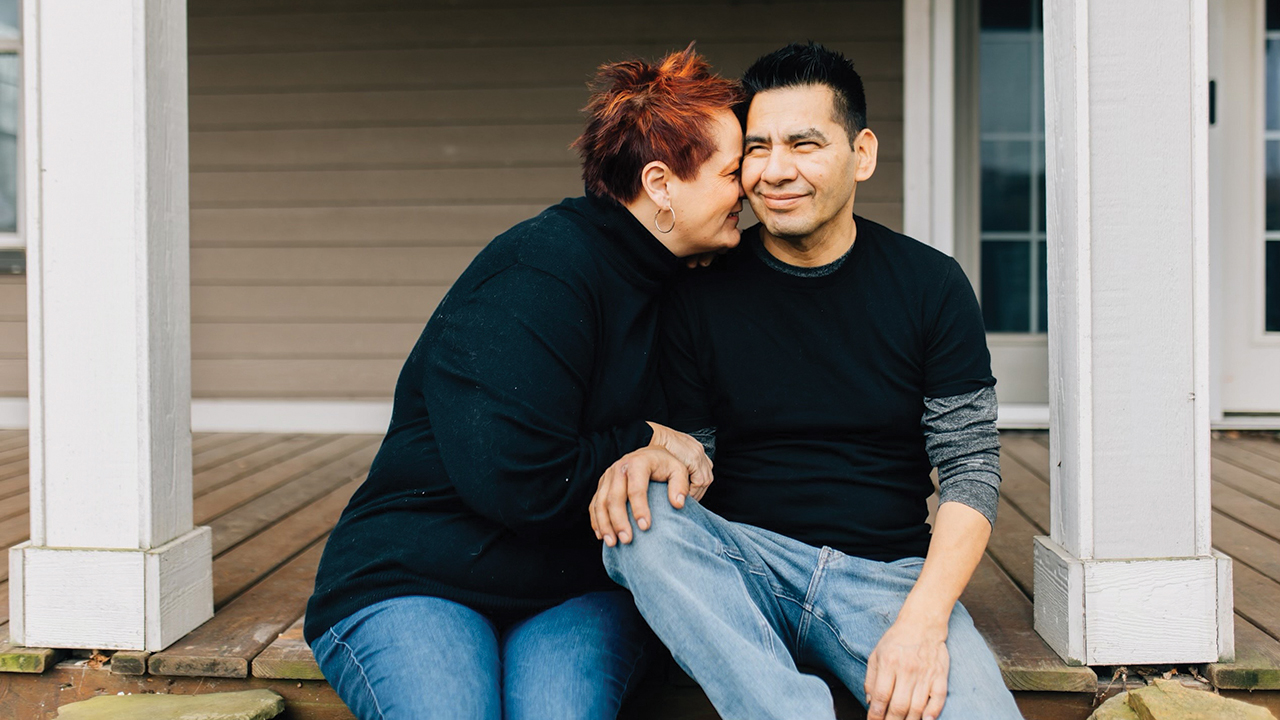
In the olden days I’d be what they called a backslider. “That Missy, she’s off the path. We need to rein her in.”
A better description of me now would be “deconstructed.” I’ve taken each piece of my Mennonite heritage and separated it piece by piece, carefully examining it.
At 57, I’m a swirling vortex with a calm center. I know what my beliefs are. I’m just weary of the Christianese and especially the people speaking it.
I grew up in Holmes County, Ohio. Very conservative in my youth, our church believed in women wearing coverings after baptism. My mom wore hers for years, and when “Praise God from Whom All Blessings Flow” was over, she’d carefully fold it on our short walk home and place it between the pages of her Bible.
When I was baptized at 11 years old, I refused to wear a covering. We were the first ones not to in our church, and thus began my pushback of norms.
I never thought much of the pushing back, and when I left for a Voluntary Service term eight years later, they sent me off with a prayer and joy in their hearts. I was one of their own. But I was ready to see something else.
In San Antonio, Texas, I worked at a shelter for abused children. I was not a good candidate for VS work. I had no experience outside the bubble I’d grown up in. I was kind but naive.
I met and started dating George, a man from Mexico, undocumented, handsome and charming, and we fell in love. I knew what being undocumented meant but not the repercussions. I was young and dumb and had no idea who I was or what my place in the world meant.
I shirked VS duties to meet him, and when my stint there was done, I’m sure they were glad to get rid of me. I laugh about it now, but my behavior still stings when I think of it.
That undocumented man became my husband. We have been together for almost 38 years. Something very good came out a lot of naïveté.
I wasn’t prepared for the reactions to bringing him back to Ohio. Though some people opened their minds to cultural differences, others stumbled in their attempts to understand him or never quite learned how to try.
It hurt that he wasn’t allowed to take communion because he was Catholic. “He doesn’t have a personal relationship with Jesus, and he prays to Mary,” people said. “He’s a Mexican who doesn’t know how we do things here.”
The rot underneath those words was revealed to me inch by inch.
Because he was undocumented and we wanted to marry, I went with him to the INS (Immigration and Naturalization Service) so he could turn himself in. They gave him 30 days to leave the country, but in the meantime, he was approved for the K-1 fiancé visa we applied for.
We drove 2,000 miles to his home in southern Mexico. We spent nine months in Mexico gathering his paperwork so we could return here and begin our married lives together. I learned to love Mexico. I learned to speak Spanish. His family embraced me without hesitation.
Papers in hand, we returned home through the Texas border, where they stamped his passport with the visa that would allow us to be together forever.
How we loved each other inside that tidy vortex of assumptive norms in a small corner of Ohio! We had three children, bought a home and built a business.
And life, with all its ups and downs, brought us to the current downward spiral from what America was when he entered legally to now, unrecognizable in its hatred of immigrants.
A White woman in America with a Brown husband, both of us feel like refugees. We peer out the windows of our home each morning to check for unknown cars. Is ICE nearby? Would they come for a business owner who’s been here legally for 35 years? Is it time for us to move to Mexico and reintegrate?
When I posed this question in a newspaper column I wrote in my hometown, the backlash came swift and furious. How dare I break their bubble and make them think about others? How dare I reject this administration’s authoritarian leanings? I had written on hard topics for years, and suddenly I had pierced their veil.
Fascist regimes deport the weak and different, those deemed less than others. It’s not easy or safe to say these things out loud right now, yet I do it to never stay silent, even when I want to melt into the fabric of my couch and watch Netflix.
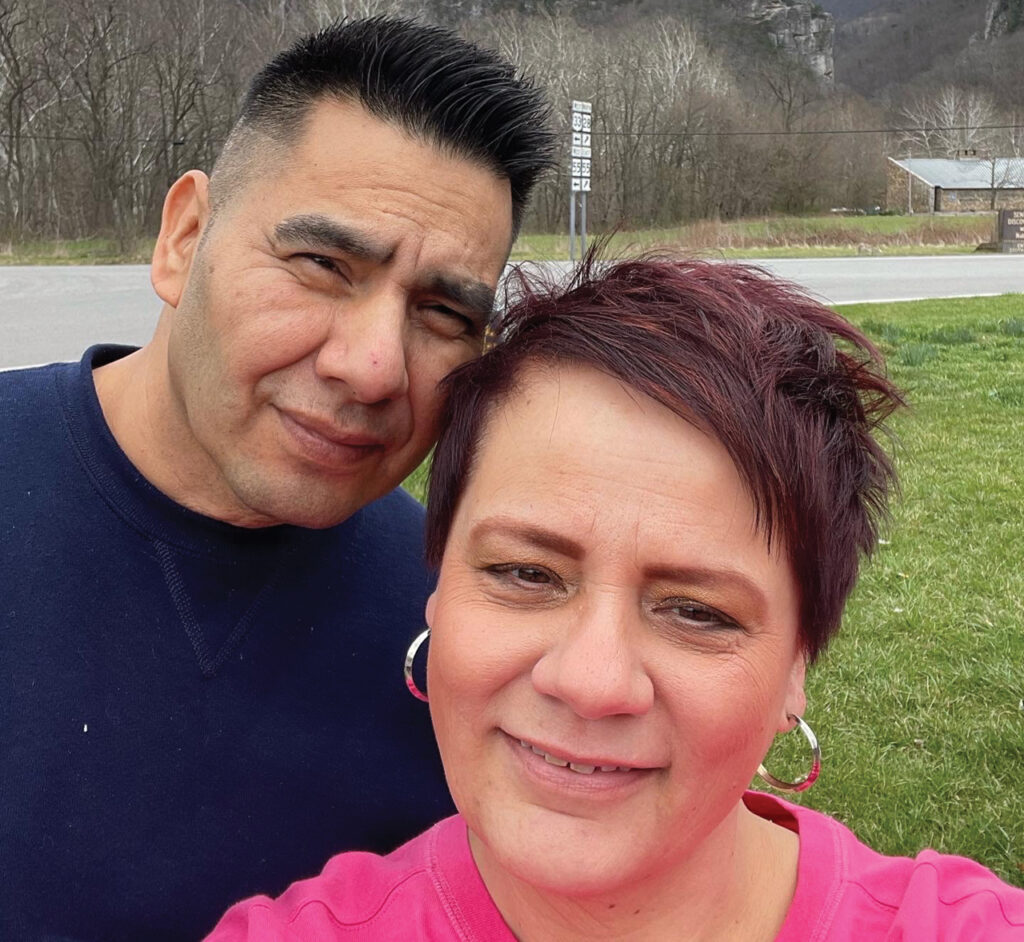
I write for that girl who messed up in VS and learned her lesson the hard way. She had to grow up fast. She learned to be resilient and protect her children from careless words. She learned to expose the putrid mess that lies underneath our upbringings.
Do I still fit neatly inside my Mennonite upbringing? I don’t think I ever did. Where do I belong?
Organized religion has not been beneficial to me and mine. The tightness of its parameters fed those who would believe my husband has no place here. That my children, despite being born in Ohio, have no place here.
If we drive in the wrong lane or look at someone the wrong way, will ICE come running to take them away?
The terror of it is the point: It keeps us afraid.
And while I am afraid for my husband, I will not stop speaking out. I refuse to have my head in the sand while those around me are in danger. I refuse to sit behind a Mennonite belief system in which some profess to love their neighbor but wish them gone.
So, we create moments. We build a nest on the floor of our living room and watch movies. We hang out with our adult kids and grandkids like we did when they were small, a protective circle. We look inward so that we can exist in outward ways.
As the midnight sky spreads like a thick blanket, we think of the future. We are only in our 50s and know that to hold what’s left of our life boldly we must make decisions that rattle norms and shake our foundations.
My husband has more faith than I in these troubled days. I see him sitting on the edge of the bed at night, his eyes closed as he whispers words into the ether. My faith is shattered, yet my righteous anger is like an enormous shawl that keeps me warm.
I’ll use it for fuel to do what I must.
Melissa Herrera lives with her husband and four cats in Canton, Ohio. The book she wrote about her husband’s life, Toño Lives, is available on Amazon.


Have a comment on this story? Write to the editors. Include your full name, city and state. Selected comments will be edited for publication in print or online.