


“I want to do something about climate change, but I don’t know where to start.”
This sentiment is guiding an online Lenten book study being hosted by Mennonite Church Canada and Mennonite Central Committee Canada with the first of five sessions happening tonight, Thursday, February 19, 2026. I’ll share the link to register later in the Resources section of this article, because it isn’t too late to join.
Mennonite Church Canada and MCC Canada are using Climate Pollinators: Stories on Anabaptists and the Climate, a book by Sierra Ross Richer that was first released by Anabaptist Climate Collaborative as a web series over the course of Lent 2023.
My story, “Cooking with Climate in Mind,” is part of this collection, which is freely available online from Anabaptist Climate Collaborative. While we cannot all put solar panels on our rooftops or buy electric vehicles, we do all have to eat.
Every time we eat is an opportunity to consider how our choices can support the health of both our body and the body of Earth. On Project Drawdown’s list of the top 100 solutions to draw down global warming, decreasing food waste is ranked number three and plant-rich diets number four. The food that we (as individuals, a society, and the greater system) eat or throw away really matters.
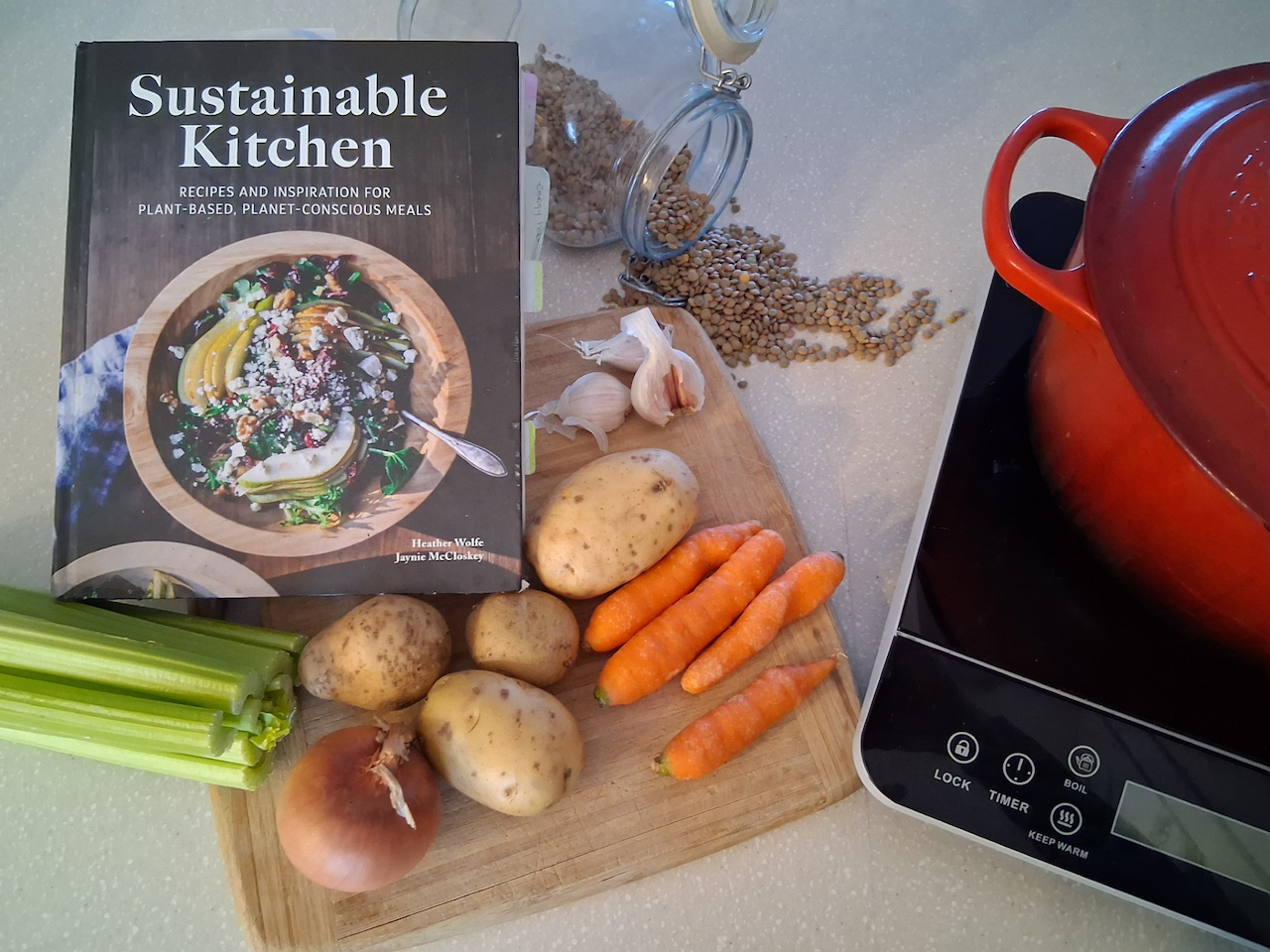
Eating is a daily act of healing and hope for a hurting world. This realization encouraged me to say yes when approached about writing a plant-forward (vegetarian) cookbook published by MennoMedia in 2020 called Sustainable Kitchen: Recipes and inspiration for plant-based, planet conscious meals.

I was a new mom at the time, wrestling with the joys and sorrows of bringing new life into a climate-changed world. My kitchen became an empowering place where I had agency to promote health for myself, my family, my community and my world. We can cook with climate in mind by choosing more plants and wasting less food. Here are a few tips.
Less food waste. Meal plans are your best friend. Sketch out ideas for what to eat throughout the day inspired by opening up cupboards, freezer, fridge. Take note of what you have already on hand. This helps you use food before it spoils. Make a shopping list based on your plan, which helps prevent waste since you are more likely to get just what you need and has the added benefit of saving money.
More plants. Are there areas where you could make small changes that shift you towards a more plant-based diet? For example, beans can substitute for some or all meat in many recipes.
The Lentil Shepherd’s Pie reprinted here from Sustainable Kitchen deliciously replaces ground hamburger with lentils. Lentils have a low carbon footprint, and with “lent” in the name “lentils,” I couldn’t help but offer this one up! Catholics routinely give up eating meat (flesh) on Fridays during Lent to honor Christ who sacrificed his flesh on a Friday. In the secular world, a Meatless Mondays campaign also encourages giving up meat one day a week.
There are other considerations to explore when it comes to cooking with climate in mind. How far does food travel to get to our plates? Can we source more local, seasonal ingredients?
Take a look at your kitchen trash and notice how much is food packaging waste. Consider the energy-efficiency of preparing meals, such as induction cooking. All these also contribute to the overall carbon footprint of our food.
Lent is a reflective season with dietary changes (fasting, sacrifice) being a common Lenten spiritual practice. While I did not grow up with these traditions in my Mennonite upbringing, I do appreciate the intention of being mindful, which this season can invite us into. This Lent I am remembering and renewing my commitment to cook with climate in mind. Join me!
Resources
Sustainable Kitchen cookbook
Climate Pollinator story #37: “Cooking with Climate in Mind”
Mennonite Church Canada and MCC Lenten book study
Project Drawdown
Meatless Mondays
Recipe

Lentil Shepherd’s Pie, as found in MennoMedia’s Sustainable Kitchen.
Serves 6
1 tablespoon olive oil
1 cup finely diced onion
1 cup finely diced carrots
1 cup finely diced celery, or celeriac kosher salt and freshly ground black pepper
3 cloves garlic, finely chopped
1 cup green lentils, sorted and rinsed
3 cups vegetable broth or water
2 bay leaves
4 sprigs thyme; or ¼ teaspoon dried
1 (4-inch) sprig fresh rosemary; or ¼ teaspoon dried
2 pounds Yukon Gold potatoes (about 5 medium), chopped into 1-inch cubes
½ cup milk
¼ cup butter
3 tablespoons tomato paste
1 cup frozen peas
Instructions
- In a large Dutch oven or oven-safe skillet with a lid (so that it can be covered later), heat oil over medium heat. Add the onion, carrots, celery, and a pinch of salt and pepper. Cook for 10 minutes.
- Add garlic and stir for about 30 seconds before adding lentils, broth, bay leaves, thyme, and rosemary. Bring to a boil. Reduce heat to low, cover, and simmer for 30–35 minutes, or until lentils are tender and most of the water has been absorbed. Stir occasionally.
- While the lentils are cooking, prepare the potatoes. Place potatoes in a medium saucepan and cover potatoes with water by 1 inch. Stir in 1 teaspoon salt. Bring water to a boil. Reduce heat to medium and simmer potatoes until they are fork tender, about 15 minutes.
- Drain the water from the potatoes and return them to the saucepan along with the milk and butter. Mash the potatoes to your desired consistency. Season to taste with salt and pepper.
- Once lentils are cooked, remove the bay leaves, any thyme sprigs, and the rosemary sprig. Stir in the tomato paste and peas.
- If your skillet is not oven-safe, transfer the lentil mixture to a 2- or 3-quart casserole dish. Spread the mashed potatoes over the lentil mixture in an even layer, using a spoon or fork to add texture to the top of the potatoes for browning.
- Place in a cold oven and turn to 375°F. Start timing and bake for 35 minutes, or until potatoes are beginning to brown in spots.
Recipe from Sustainable Kitchen by Heather Wolfe and Jaynie McCloskey, © 2020 Herald Press. Used with permission.


Have a comment on this story? Write to the editors. Include your full name, city and state. Selected comments will be edited for publication in print or online.