


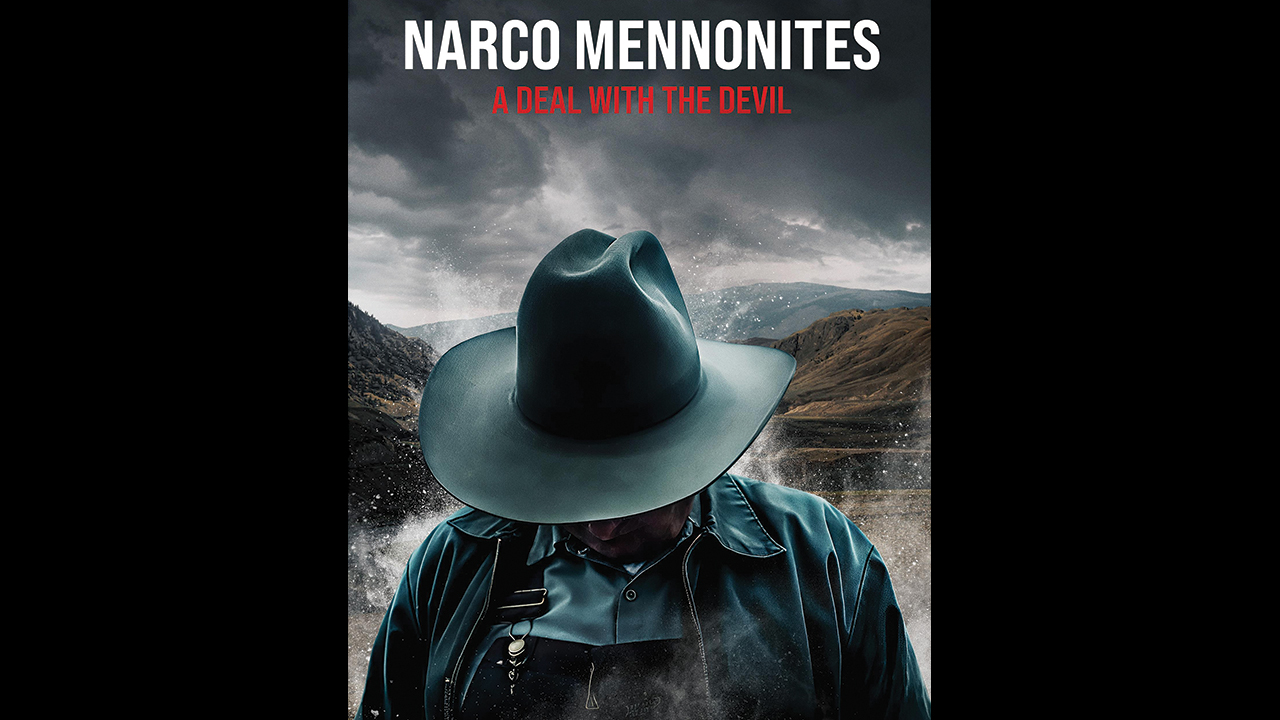
“The shocking rise of a Mennonite clan who turned faith, family and farming roots into one of North America’s most elusive drug networks.”
That’s how Crave, a Canadian streaming service, bills Narco Mennonites, a recently released true-crime documentary it calls “Breaking Bad in the countryside.”
The investigative series follows the family of Leamington, Ont.-based drug smuggler Abraham Harms, who fled to Mexico in 1989 after being charged for smuggling marijuana from Mexico into Canada.
In 2017, his son Enrique was also indicted on charges of trafficking thousands of kilograms of drugs in the U.S. He became a fugitive himself from American law enforcement and is still at large. His father died in a car crash in Mexico in 1996.
Sherry Fynbo of Last Word Entertainment in Sydney, Australia, wrote, directed and produced Narco Mennonites for Toronto-based McGillvary Entertainment Media. She said the documentary “opens a hidden underworld that has never been documented on this scale.”
Ben Nobbs-Thiessen, chair in Mennonite Studies at the University of Winnipeg, isn’t so sure that’s the case.
His first reaction after watching the documentary is that it’s an old story covered by the media before. This includes a documentary by the Canadian Broadcasting Corp. in 1992 called The Mennonite Mob and another one in 2017 on the same network titled The Mennonite Connection.
While the makers of Narco Mennonites proclaim the material is shocking, Nobbs-Thiessen said it didn’t shock him. But he acknowledged some viewers will be surprised to learn Mennonites were smuggling drugs.
“They will wonder how such a pious people could become involved in something like that,” he said.
While the documentary is accurate and well-sourced, it doesn’t detail the forces that propelled some in that direction, he said — things like poverty, drought and pressure from cartels in northern Mexico.
“These were people who were easy to take advantage of,” said Nobbs-Thiessen, who is the project leader for “Settlers, Braceros, Narcos,” a study of Mennonite life in and migration from Mexico since the 1920s.
In addition to poverty, they were easy targets for the cartels because many had dual Mexican-Canadian citizenship and traveled frequently between the countries.
While some may be dismayed to see this old material made public again, Nobbs-Thiessen said it is important that the story is not overlooked — even if Narco Mennonites does it imperfectly.
“Some in the community want to minimize the drug smuggling,” he said, noting that only a few Mennonites were involved. “Some people still seem to be in denial.”
Marvin Dueck, who has served the Low German-speaking Mennonite community in Ontario since 1988, including as a settlement coordinator with MCC Ontario, said of the drug smuggling: “This is part of our history; there’s no denying it. It has caused a lot of hardship for some families.”
For Dueck, it’s also an old story — and poverty played a big factor for why some became involved in it.
Once people become involved in smuggling drugs, “it was very difficult to get out of,” he said.
The new documentary could make things challenging for the many Mennonites in the U.S. who are undocumented by bringing unwanted attention to that aspect of their history, Dueck said.
“There are many undocumented Mennonites from Mexico living in Texas, Nebraska and Kansas who may be worried,” he said. Increased attention could put them at risk of being detained and deported by the Department of Homeland Security.
Dueck has no interest in watching Narco Mennonites. “Those were very difficult years,” he said, remembering when the story broke. “I really don’t want to go there.”
In addition to Crave, Narco Mennonites can be streamed on Amazon Prime Video.



Have a comment on this story? Write to the editors. Include your full name, city and state. Selected comments will be edited for publication in print or online.