



The wonder of forgiving grace and its cost for God in self-substitution
Paul writes of the gospel he preached, “Christ died for our sins in accordance with the scriptures, and that he was buried, and that he was raised again, … and that he appeared” (1 Corinthians 15:3-5). Again he wrote, “May I never boast of anything except the cross of our Lord Jesus Christ, by which the world has been crucified to me, and I to the world” (Galatians 6:14). In these two quotations we have rich aspects of the cross.
Coming to the cross, we deal with our sin as estrangement from God.
Further, in our experience with the cross, we deal with our sinfulness. The latter is too often missed. We come to the cross for reconciliation with God, and we identify with the Christ of the cross in a sharp separation from the self-centered way of the world. Paul actually uses the terms “the world has been crucified to me and I to the world” to emphasize this break.
To pursue this point further, we must look at Romans 6:6 and Colossians 3:3. Paul teaches that our break with the way of sin is as definite as a “death” to sin so that we can share a new life in the will of God. We no longer live primarily by our own self-will. There are numerous other passages on this aspect of the sanctification of those whose identity is with Christ, passages that speak of what one might call the moral implication of the cross. By identification with Jesus at Calvary we commit ourselves to live by the will of God to the death, to accept his model of love and nonresistance so that we do not let the way of the world shape us into its mold but live by the model of our Lord.
But is the cross of Christ only an example, a moral influence in our lives for the way of love and peace?
What is the meaning of the statement that “Christ died for our sins” and the many passages focusing on this? What is the meaning of forgiveness in the cross and of reconciliation with God? Paul also writes: “While we still were sinners Christ died for us. Much more surely then, now that we have been justified by his blood, will we be saved through him from the wrath of God. For if while we were enemies, we were reconciled to God through the death of his Son, much more surely, having been reconciled, will we be saved by his life” (Romans 5: 8-10). This passage moves the cost and the reality of reconciliation front and center. And here is the dynamic of peace, a loving acceptance while we were enemies, and this now calls us to express the same acceptance to people who may be our enemies.
The church in dealing with the word “atonement” has argued about various theories but has failed to keep this relational aspect of reconciliation with God at the center. Those theories are numerous, but there are two basic ones from the 12th century, that of Anselm, known as the substitutionary theory, and that of Abelard, known as the moral influence theory. Hesitance to follow Anselm comes from the image of God punishing Jesus as our substitute, since it presents God as other than a loving, self-giving Father. Hesitance to follow Abelard is that his approach exaggerates our ability to do the will of God and minimizes our sin of estrangement and need of reconciliation.
Among other interpretations that others have followed is the theory of Hugo Grotius, a Dutch lawyer whose emphasis is on God as the moral governor of the universe, needing to control sin by judgment, is called the governmental theory. Many other theories are primarily interpretations of the two views from the 12th century, such as Calvin’s treatment of Anselm’s substitutionary theory and his development of what is known as the penal theory. This interpretation by Calvin emphasizes that substitution means that Christ had the penalty for our sin laid on him.

It has been dominant in evangelical thought for five centuries.
But this view makes God a judgmental being punishing Christ in our place. This does not do justice to the presentation by Paul that God was in Christ suffering and reconciling the world to himself (2 Corinthians 5:19).
One good reading of these theories is the work by John R.W. Stott, an evangelical Anglican, in his book The Cross of Christ (IVP). He confronts us with the limitations of the various views in interpreting the mysteries of reconciliation in the cross as well as those writers who have reinterpreted these views from Anselm and Abelard to the present.
Stott writes: “We must not then speak of God punishing Jesus or of Jesus persuading God, for to do so is to set them over against each other, as if they acted independently of each other. We must never make Christ the object of God’s punishment or God the object of Christ’s persuasion, for both God and Christ were subjects not objects, taking the initiative together to save sinners.” Forgiveness should be seen as central for our understanding of the cross.
Forgiveness is the most costly thing in the universe.
It does not excuse or pass over sin. It is costly, for it means the forgiving one bears the cost of resolving the sin and releases the other. This release begins within the heart of the one forgiving, putting the resolution of the estrangement ahead of any retaliation, the cost of reconciliation ahead of any retribution.
The story of the prodigal son is a central illustration given by Jesus on forgiveness. As the son comes home, the father is waiting and asks for nothing other than for the lad to return. He does not say, “Where have you been, boy? What have you done?” The whole scene, with his humiliating act of running to meet the son in a social setting in which an elder just doesn’t do that, says, in essence, “Son, it is so good to have you at home.” Putting the robe on the young man symbolized full acceptance and restoration.
Love moves beyond the issue to the person.
In this light, the cost of forgiveness in self-substitution gives us a window on the heart of God opened at the cross. Here God in Christ paid the price of forgiveness: “He himself bore our sins in his body on the cross” (1 Peter 2:24). At the cross, Jesus absorbed all of humanity’s hostility to the death, he bore the whole brunt of our sin against himself yet resolved this in himself and spoke back the word of forgiveness.
Anticipating this, Jesus said at the table, “This … is the new covenant in my blood” (Luke 22:20). This was not a simple statement at the end of his life; he had lived by this self-giving love, anticipating its cost.
He said, “For the Son of Man came not to be served but to serve, and to give his life a ransom for many” (Mark 10:45). How is the cross a ransom? Is it penal, suffering at the hand of God in our place? Or is the cross his suffering at the hand of humankind, to bear this in a loving grace that is nonretaliatory, expressing the depth of God’s love in a forgiveness that restores rather than punishes. The cross is reconciliation, not just a model. What marvelous grace!
My concern is twofold: one, that we don’t let the differences in views of the atonement prevent our celebration of the cross of Christ, and two, that we not fail to emphasize the wonder of forgiving grace and its cost for God in self-substitution.
There is no other religion that expresses such a self-giving God.
With Paul we should move the preaching of the Christ of the cross front and center, to know in Christ the depth of God’s forgiving grace. “For the message of the cross is foolishness to those who are perishing, but to us who are being saved it is the power of God” (1 Corinthians 1:18). We can sing joyfully, “And can it be … that Thou, my God, should die for me” and, “Hallelujah for the Cross.”
Once again we should read the Gospels with a focus on the Christ of the cross.
As Jesus said, “It is for this reason that I have come to this hour” (John 12:27b), giving the cross a special place in his mission. There are only brief references to the cross in the Gospels; the interpretation awaits in the book of Acts and the writings of Peter and John and Paul especially. John, in his first epistle, writes that “the blood of Jesus his Son cleanses us from all sin” (1 John 1:7b). The verb “cleanses” is in the present tense, which means continues to cleanse, continues to stand between us and the old life we have confessed and for which we have received forgiveness. But Paul makes the most references to the cross and the suffering of Christ on our behalf.
One of the more focused Scriptures on the blood of the cross is in the letter to the Hebrews.
It was probably written by Pricilla as Paul’s amanuensis, and it clearly reflects Paul’s theological insights. It begins with the statement, “When he had made purification for sins” (Hebrews 1:3), and moves to affirming that he “offered himself” (7:27), then to several statements that we are reconciled “with his own blood” (9:12), and again in 10:29, with its emphasis on the “blood of the covenant.” It is significant that the words in 12:2 are that “he endured the cross,” an emphasis on the suffering in forgiveness. Further, Christ is here referred to as the one who mediates reconciliation with the Father and that this is through “his own blood” (13:12). The writer concludes with the beautiful benediction that includes the words, “by the blood of the eternal covenant, make you complete in everything good so that you may do his will” (13:20-21).
In conclusion, I note the words of Menno Simons about the message in Hebrews, that this is “the blood of his love.”
With John we say, “To him who loves us and freed us from our sins by his blood, and made us to be a kingdom, priests serving his God and Father, to him be glory and dominion forever and ever. Amen. Look! He is coming with the clouds; and every eye will see him. … Amen” (Revelation 1:5-7).
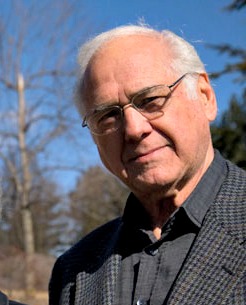 Myron S. Augsburger is an evangelist in Harrisonburg, Va.


Have a comment on this story? Write to the editors. Include your full name, city and state. Selected comments will be edited for publication in print or online.