


When anyone invokes the Ten Commandments in a conversation on politics, perhaps your skin crawls as much as mine does. That is, until I realized one commandment can topple Empire by itself: the fourth one. More specifically, both of the fourth ones.
I’m talking about the commandment that’s traditionally understood to mean it would be a sin to mow the lawn on Sunday afternoon.
It’s about a lot more than that, and it has political implications.
The Ten Commandments are listed in the Bible twice (Exodus 20 and Deuteronomy 5), but the lists aren’t identical. One of the subtle differences is in the commandment to observe the Sabbath. The instruction to rest is followed by a reason why, but each list gives a different rationale.
Let’s take a look at both versions, paying special attention to the last sentence of each:
Remember the Sabbath day and keep it holy. Six days you shall labor and do all your work. But the seventh day is a Sabbath to the Lord your God; you shall not do any work — you, your son or your daughter, your male or female slave, your livestock, or the alien resident in your towns. For in six days the Lord made heaven and earth, the sea, and all that is in them, but rested the seventh day; therefore the Lord blessed the Sabbath day and consecrated it.
— Exodus 20:8-11, NRSVUE
Observe the Sabbath day and keep it holy, as the Lord your God commanded you. Six days you shall labor and do all your work. But the seventh day is a Sabbath to the Lord your God; you shall not do any work — you, or your son or your daughter, or your male or female slave, or your ox or your donkey, or any of your livestock, or the resident alien in your towns, so that your male and female slave may rest as well as you. Remember that you were a slave in the land of Egypt, and the Lord your God brought you out from there with a mighty hand and an outstretched arm; therefore the Lord your God commanded you to keep the Sabbath day.
— Deuteronomy 5:12-15, NRSVUE
The Exodus version highlights how, at Creation, God enshrined rest in the fabric of the universe. Sabbath rest invites us to reenact that seventh day and rest with God.
The Deuteronomy version points back to the Israelites’ exodus from Egypt with a social focus: When you rest, make sure everyone around you can rest too, because you know what it’s like to not be able to rest. God is not above social upheaval (liberating enslaved people) to make resting possible.
In the United States, not everyone can afford to rest. When bills won’t stop piling up, you have to juggle multiple jobs just to put food on the table. You can make prudent financial decisions and still have to choose between paying rent or paying for electricity. The choice you don’t have is to rest.
Yet the inability to rest is bigger than finances. Even if slavery is technically abolished, its legacy in my country is long and deep. Certain bodies are allowed to rest while others are treated as tools and machines, suffering through unjust labor practices or performing labor that isn’t paid or recognized as such.
Capitalism and consumerism will play powerful guilt trips if you try to slow down and catch your breath or if you dare to be unproductive.
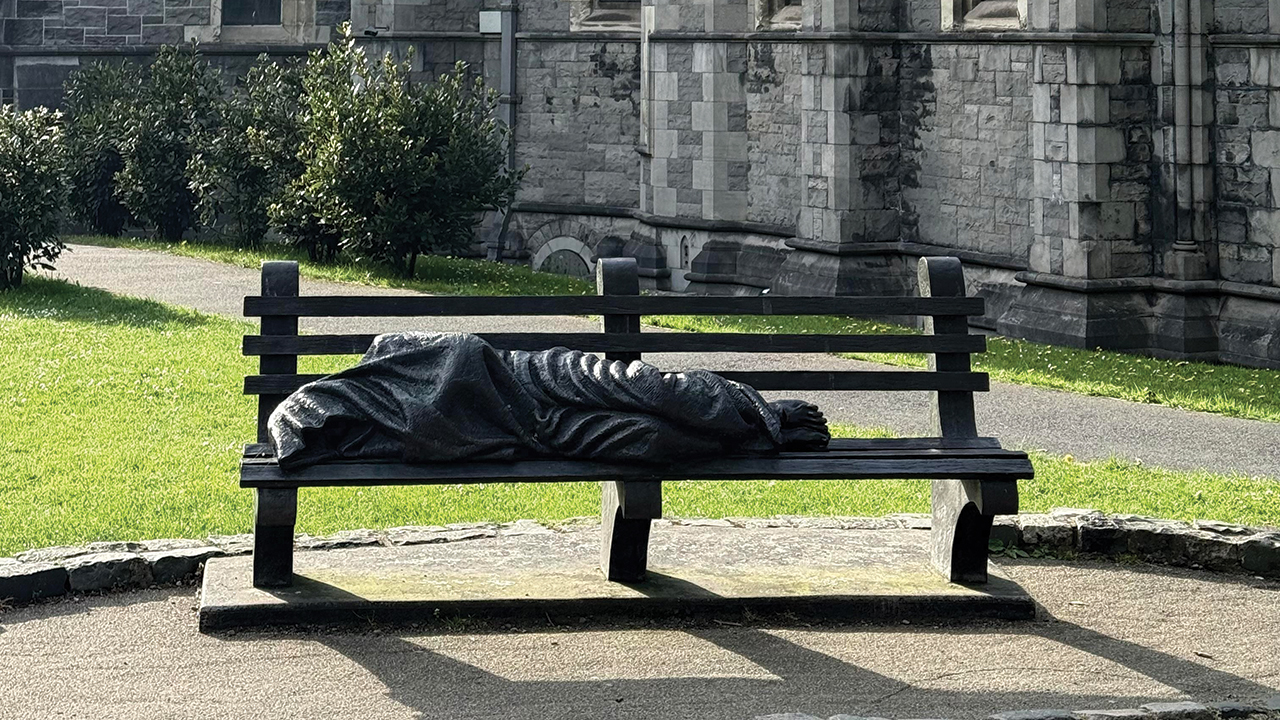
Our social systems have already failed when there are unhoused people on the streets and vagrancy laws on the books. “Hostile architecture” adds insult to injury in urban areas by designing public spaces in a way that prevents anyone from being able to lie down. Where, then, can you rest?
You cannot truly rest if you’re unsafe. Whether it’s White supremacy or police brutality, xenophobia or ICE raids, misogyny or domestic violence, homophobia or transphobia (and the list goes on) — if you aren’t safe, your nervous system will always be on alert, unable to fully unwind and relax.

Once I recognized that the ability to rest is locked behind social privilege, God’s command to make sure everyone can rest — even if you have to upend society to do it, like God did in Egypt — suddenly held implications for every form of systemic inequity.
Marginalization and dehumanization are not compatible with rest, especially not with rest patterned after God’s resting at Creation. Understood this way, observing the Sabbath comes with a sprawling to-do list of social transformation until all can safely rest.
The catch is that that’s an exhausting list. If I treat my own body like a machine while I seek to liberate others from being treated as machines, I do violence to myself and undercut the whole endeavor.
As Anabaptists, we understand this well in terms of peace: If we want peace for all, we need to use peace, not violence, to get there. What we understand less well — and what a traditionally strong work ethic can cloud — is that if we want rest for all, our means toward that end need to be restful. We can’t co-create with God if we neglect to co-rest with God.
My political engagement circles back to Sabbath to guide my actions. The outward focus of Deuteronomy-style Sabbath clues me in to what work still needs to be done for all to rest. The inward focus of Exodus-style Sabbath reminds me that resting is part of that work, too.
The outward-facing Sabbath issues a rallying cry around the parts of society that fall short. The inward-facing Sabbath grounds me in a sustainable life rhythm and offers a foretaste of what should be. When held together, both Sabbath commandments can leave any Empire shaking in its boots.
Maybe Empire should kick off those boots and rest a while. Who knows? Some beauty sleep might be just what the Good Physician ordered to restore Creation’s original beauty and put Empire to bed for all time.
Monica Miller (she/her) is proudly disabled and an ordained minister in Mennonite Church USA. She resides in Goshen, Ind.


Have a comment on this story? Write to the editors. Include your full name, city and state. Selected comments will be edited for publication in print or online.