


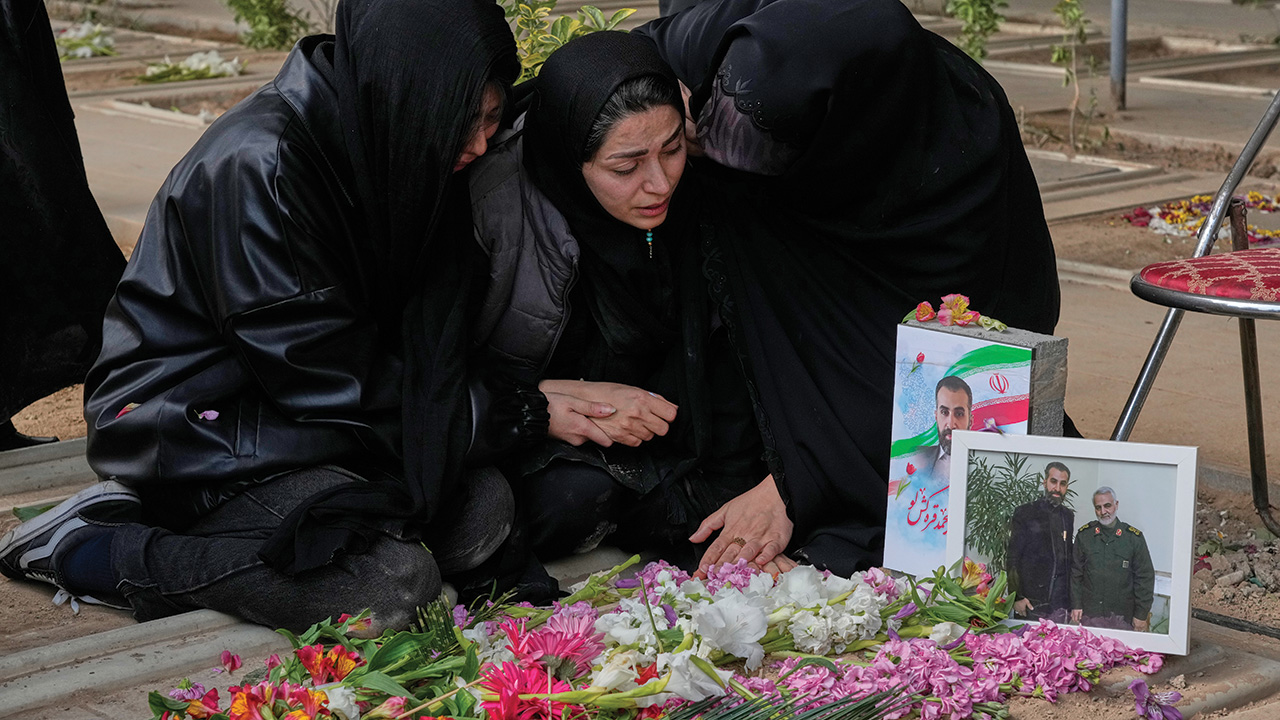
We have all seen the images: Bombs falling from the sky. Apartment buildings ripped open. Schools and the students in them disintegrated. Smoke rising over cities where people were making dinner an hour earlier. And then: Small graves. Parents standing beside them with the stunned look grief leaves on a human face.
This is what war does. This is what we are paying for.
Right now those bombs are falling because of decisions made by Donald Trump and his administration against targets in Iran. They are treating this like a video game or a meme war.
The explanation being offered is the usual one. Security. Strength. Necessity.
But there is a basic problem. There has been no evidence of an imminent threat.
No proof that Iran was preparing to strike the United States. No emergency that required bombs today, instead of diplomacy tomorrow. Just explosions first, explanations later. Death now.

That is not defense. That is aggression.
And the timing is obvious. When a political leader is drowning in scandal, legal chaos, collapsing polls and ugly headlines about staff and support, he wants the focus shifted. From scandal to war. From accountability to patriotism.
When a country is focused on explosions and enemies, it often stops asking hard questions about the people in power.
Fear is a political tool. And war is the loudest form of fear a government can produce.
But the Christian church is not supposed to fall for it.
The Anabaptist movement was born in a century when rulers wrapped their wars in the language of God. Churches blessed the armies. Pastors told soldiers their violence was holy. Kings claimed divine authority for whatever battlefield they wanted to fight on.
The early Anabaptists refused to play nice with that lie.
They read the Sermon on the Mount and they took Jesus seriously. When Jesus said love your enemies, they believed Jesus meant it. When Jesus told Peter to put away the sword, they heard a command directed at the church itself.
For that refusal, many were drowned, imprisoned or executed.
Their descendants became the communities now known as the Mennonites. And our tradition carries a conviction that still won’t bend for political convenience.
Human beings are not disposable.
War is not a policy debate on cable television. War is the organized destruction of people made in the image of God. War is organized killing. Murder with medals.
Every bomb dropped on a city lands somewhere specific. A kitchen table. A schoolyard. A bedroom where a child was sleeping. Every explosion tears through a life that will never be rebuilt.
When missiles start flying, the question becomes brutally simple. Who is about to die so a politician can look strong? So we’ll be distracted?
Our instinct should be to distrust the stories leaders tell when they want a war. They promise safety. They promise victory. They promise the violence is unfortunate but necessary.
History has heard that speech before.
Again and again those promises leave behind burned neighborhoods, grieving parents and generations of anger that no speech can erase.
Which is why the church cannot speak softly about moments like this.
Launching attacks without evidence of an imminent threat is reckless violence. It is the powerful choosing destruction because destruction is available. It is the oldest trick of empire. Create fear. Start a war. Hope the public stops asking questions.
Using war to distract from political collapse is grotesque. It is sick. It is evil. It turns human lives into a shield for a leader’s reputation. It means families across the world bury their children so a politician can survive another news cycle.
Christians should be the first people to call that what it is.
Jesus refused the logic of empire. Rome ruled by spectacle and terror. Crosses lined the roads to remind everyone what happened to people who resisted power.
Jesus answered empire with a kingdom that refused to play the game.
When bombs fall and politicians demand loyalty, followers of Jesus have to ask a question that cuts through slogans and noise.
Is this the way of Christ?
If the answer is no, then silence is not neutrality.
Silence is surrender.
The church can’t prevent war. But we can refuse to bless it. It can refuse to baptize aggression in the language of faith. It can refuse to let political theater hide the bodies piling up beneath it.
Love your enemies.
Pray for those who persecute you.
Blessed are the peacemakers.
Jesus’ call was spoken to the face of the Roman Empire, the most powerful war machine the world had ever seen. They sounded dangerous then.
They still do.
Especially when bombs are falling and someone in power is hoping the explosions will make the rest of us stop paying attention.
Chris Scott is pastor of the exchange in Winchester, Va., facilitator for emerging faith communities for Mennonite Mission Network, and an AW columnist. This article first appeared on his blog at missiomenno.wordpress.com.



Have a comment on this story? Write to the editors. Include your full name, city and state. Selected comments will be edited for publication in print or online.