


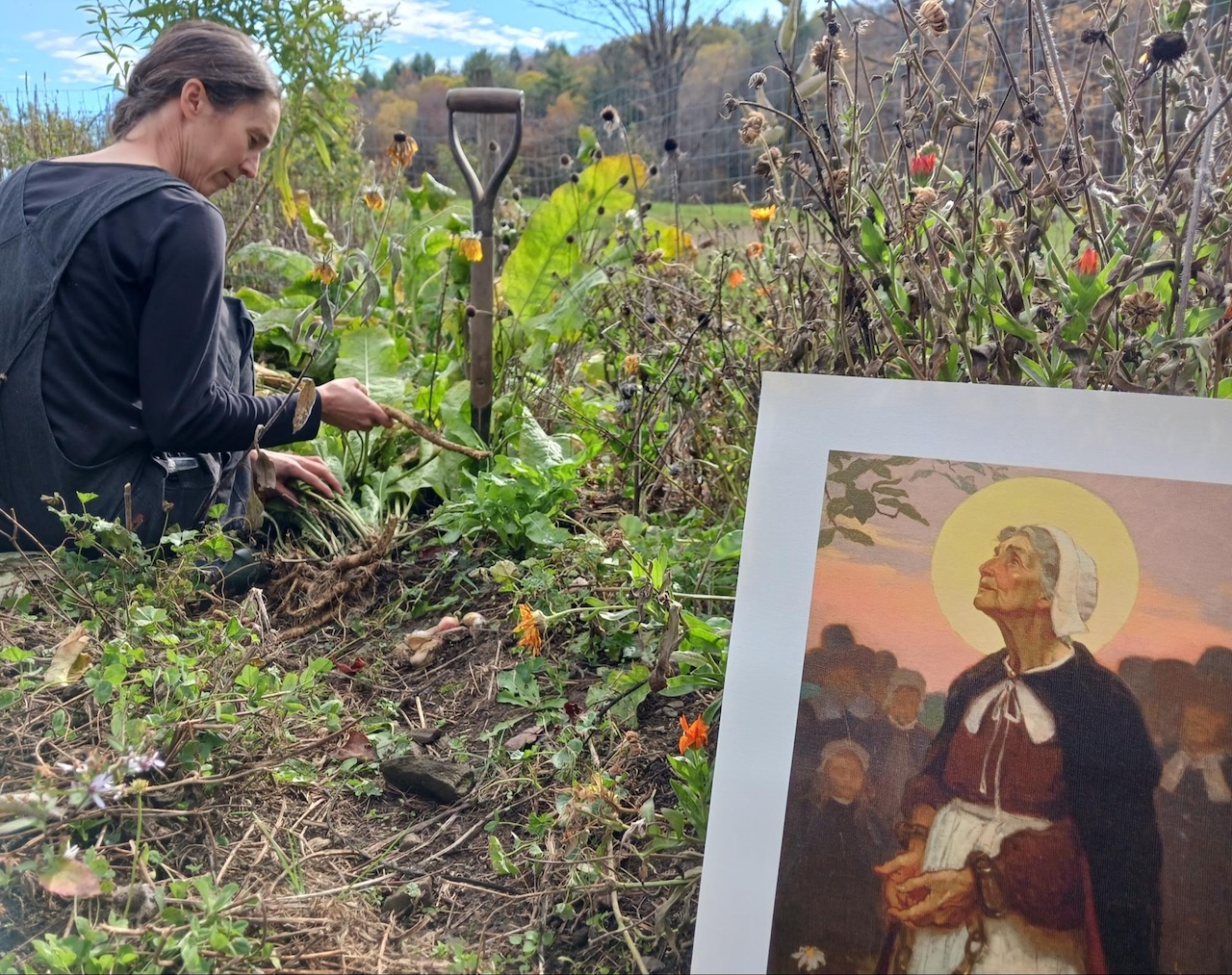
As we approach Hallows Eve (a.k.a. Halloween), the evening before All Saints Day, I am reminded that this holy holiday (hallows means holy) is meant to be observance to commemorate the dead, including ancestors and martyrs in the faith.
Meet my (many greats) gramma, Rebecca Nurse. Born in 1621 in England, her family emigrated to the Massachusetts Bay Colony. She went on to marry Francis Nurse, and they had eight children. Rebecca was well-respected in her community, a Christian known for her kindness, generosity and faithfulness. During the Salem Witch Trials she was accused and hanged as a witch at age 71.
At her trial Rebecca is quoted to have said, “I can say before my Eternal Father I am innocent and God will clear my innocence.” Less than 20 years after her hanging, she was fully exonerated by the state, and the following year the church reversed its excommunication of her so as “not to reproach her memory.”
This was a dark period in American history, as were the witch hunts that had taken place in Europe in the years prior. Notably witch hunts really took off after the Protestant Reformation, and they were led by prominent Christian leaders.
Historians looking back note that most victims were women, many with deep knowledge of plants and who practiced herbal medicine, some working as midwives. Targeting “wise women” during this craze likely was unfounded anxiety and lack of understanding that confused treating ailments using natural herbal remedies with practicing “dark magic.” It is estimated that somewhere between 40,000-60,000 people were executed in the European witch hunts and colonial America, as a result of religious extremism, false accusation and lapses in due process. This is a cautionary tale we need to remember and tell.
This year, Anabaptism at 500 (the 500th anniversary of the Anabaptist movement) has invited us to reflect on the past, to celebrate God’s ongoing faithfulness and to dream about the future. While I don’t have family history that traces back to Anabaptist martyrs, I can look to Rebecca Nurse as an ancestor who is a symbol of injustice and a martyr for truth (her memorial is inscribed “Oh, Christian martyr!”).

My ancestor was not known to be an herbalist, but I give thanks as I work in my herbal garden today for the wisdom of women herbalists past and present. I’m also grateful for the plants themselves whose healing properties have been at work long before (and later inspired) modern medicines.
I hope for a future where heresy and herbs are no longer linked, where all see herbs as God-given gifts with potential to promote health and healing. And I pray that we awaken to the lessons of horrific times in history, take courage and action now so that future generations may look back on us, the future ancestors, as good and faithful servants.
RECIPE:
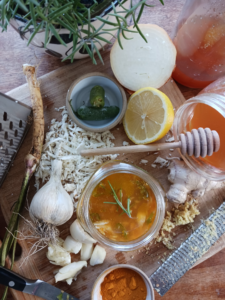
Fire Cider
Rosemary Gladstar, an herbalist who resides here in Vermont, popularized this home remedy. Here is my version of her herb and veggie vinegar infusion to benefit circulatory and immune systems. This tonic can be taken daily, 1 tablespoon straight or diluted in another drink (water, tea, juice, seltzer), or used in culinary ways, such as in salad dressings, marinades or soups.
Ingredients:
- ½ cup grated horseradish
- ½ cup chopped onion
- ¼ cup grated fresh ginger
- ¼ cup crushed or chopped garlic
- 1 to 2 jalapeño peppers, chopped or ½ to 1 teaspoon cayenne powder
- zest of 1 lemon (optional)
- 2 tablespoons or 2 sprigs of rosemary (to honor the herbalist!)
- 1 tablespoon turmeric powder
- raw apple cider vinegar, to cover
- honey, to taste
Instructions
- In a quart sized Mason jar, add horseradish, onion, ginger, garlic, peppers, lemon, rosemary and turmeric.
- Pour in enough vinegar to cover the ingredients by about three inches. Cover with a tight-fitting lid. (Glass or plastic lids are preferable. If using a metal canning lid, first put wax or parchment paper over top before screwing on the lid as acid will corrode metal.)
- Shake well and set aside on the counter. Shake daily. After a month, strain out and compost the solids. To the vinegar infusion liquid add honey, which will temper the fiery spice, titrating to a tolerance that suits your taste buds (warming honey first will help it mix in better).
- Bottle, label and enjoy this homemade herbal remedy. It can last on a pantry shelf a few months but is best kept refrigerated and used within the year.



Have a comment on this story? Write to the editors. Include your full name, city and state. Selected comments will be edited for publication in print or online.